
Fabula Ultima - Japanese Influences on TTRPGs - March 15, 2026
March 15 at 1PM at Meanwhile Coffee
Sign Up on Discord!
Also come roll some dice at Reston Plays Games where we will be teaching:
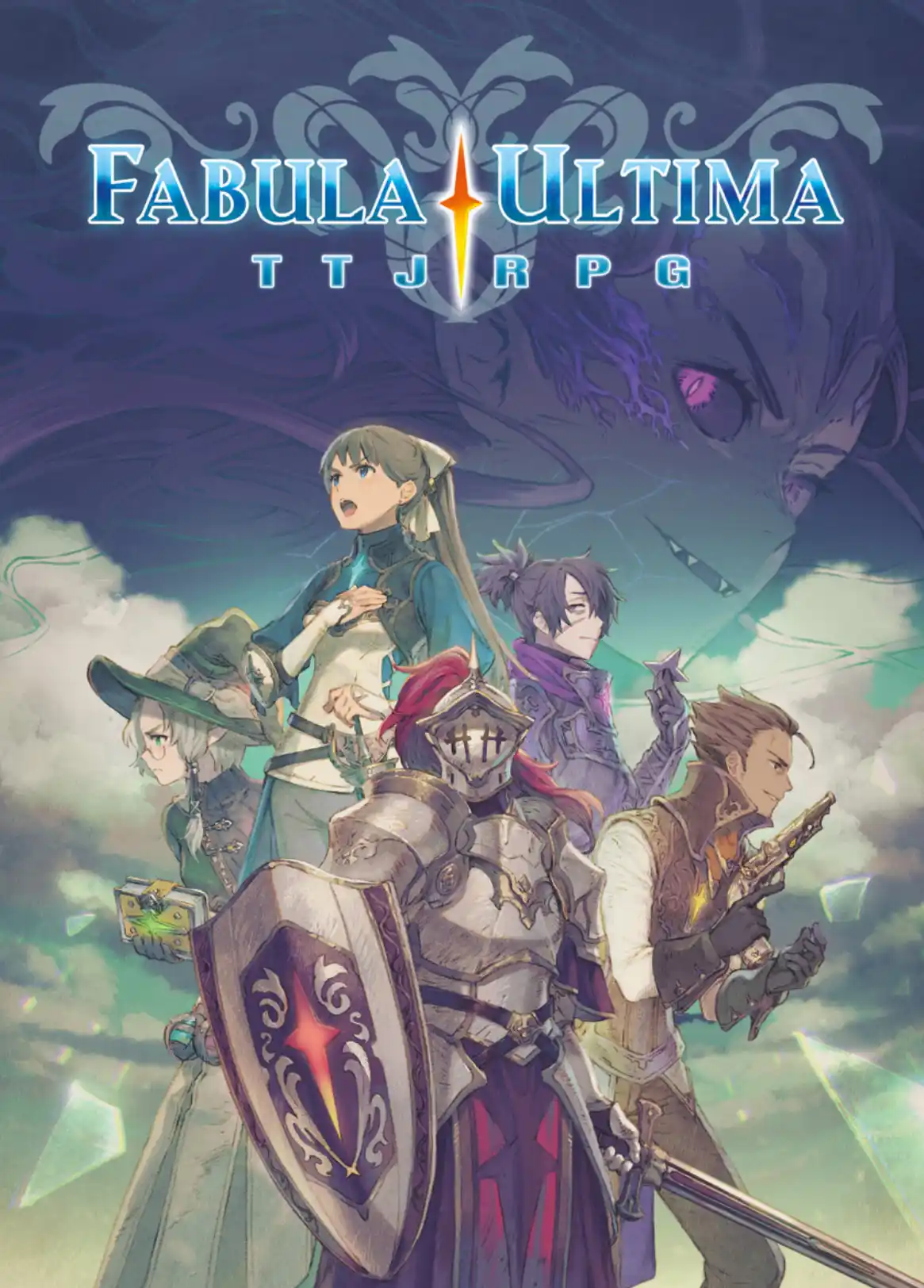
A collaborative tabletop RPG built from the ground up to put you and your friends inside the epic, emotional, world-saving adventures of your favorite JRPGs.
Fabula Ultima calls itself a TTJRPG — a Table Talk JRPG — and that label tells you almost everything you need to know about what we are getting into here. Inspired by classics like Final Fantasy, Chrono Trigger, Octopath Traveler, Dragon Quest, Bravely Default, and many JRPGs, this game is engineered to recreate the feel of those stories at the tabletop. Larger-than-life heroes, powerful villains with devious plans, worlds on the edge of ruin, and characters who grow and change through struggle — it's all here. You and your group build your own story together, little by little, rewarded for playing your character in a way that fits who they actually are.
One of the most distinctive things about Fabula Ultima is that it has no default setting. Your group builds the world from scratch — kingdoms, ruins, monsters, mysteries — it's all yours to invent. To keep things feeling like a true JRPG, every setting is anchored by The Eight Pillars:
|
Ancient Ruins and Harsh Lands |
A World in Peril |
Clashing Communities |
Everything Has a Soul |
| Magic and Technology | Heroes of Many Sizes and Shapes |
It's All About the Heroes |
Mystery Discover and Growth |
These are the core principles that every Fabula Ultima world follows.
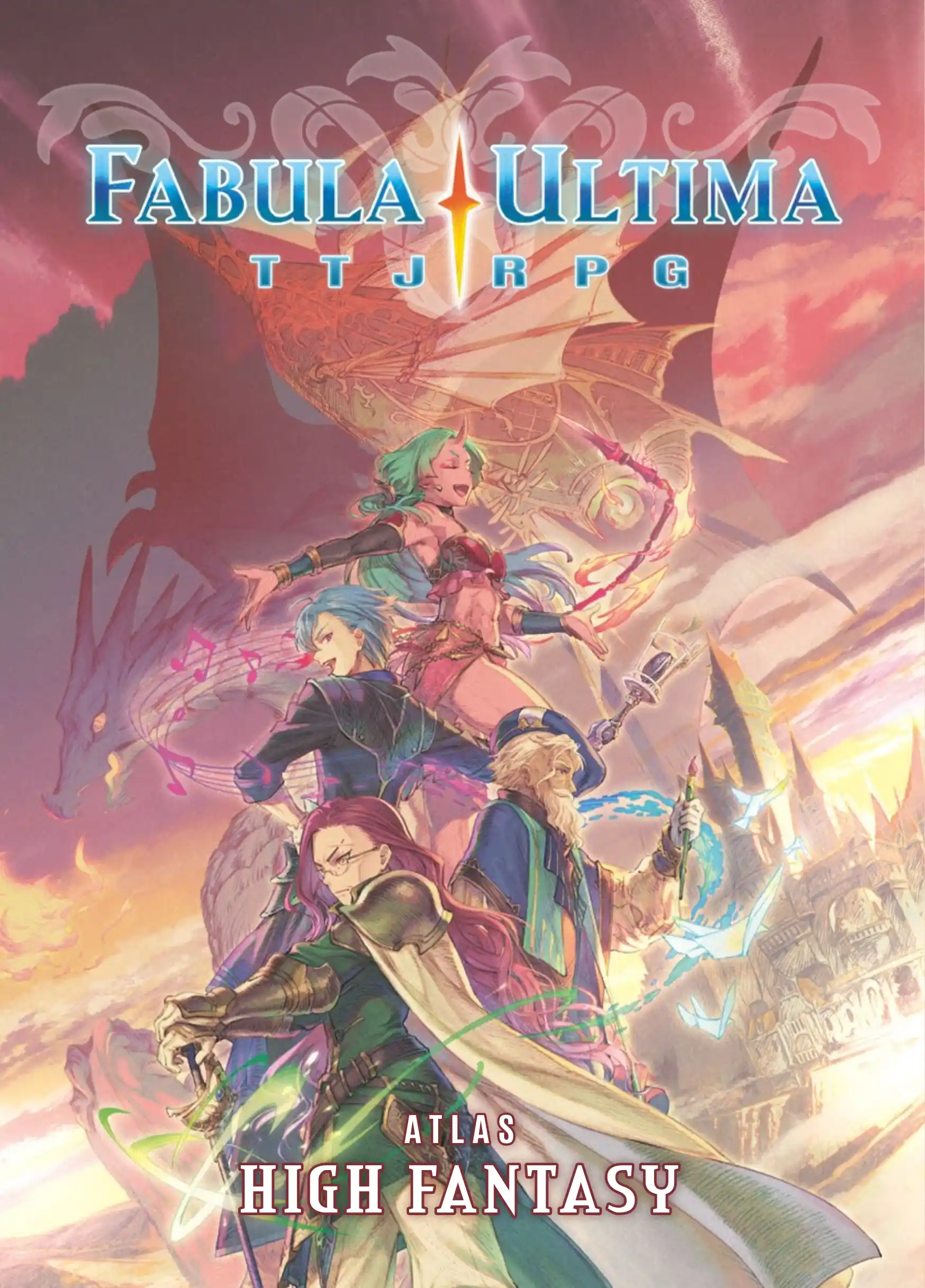
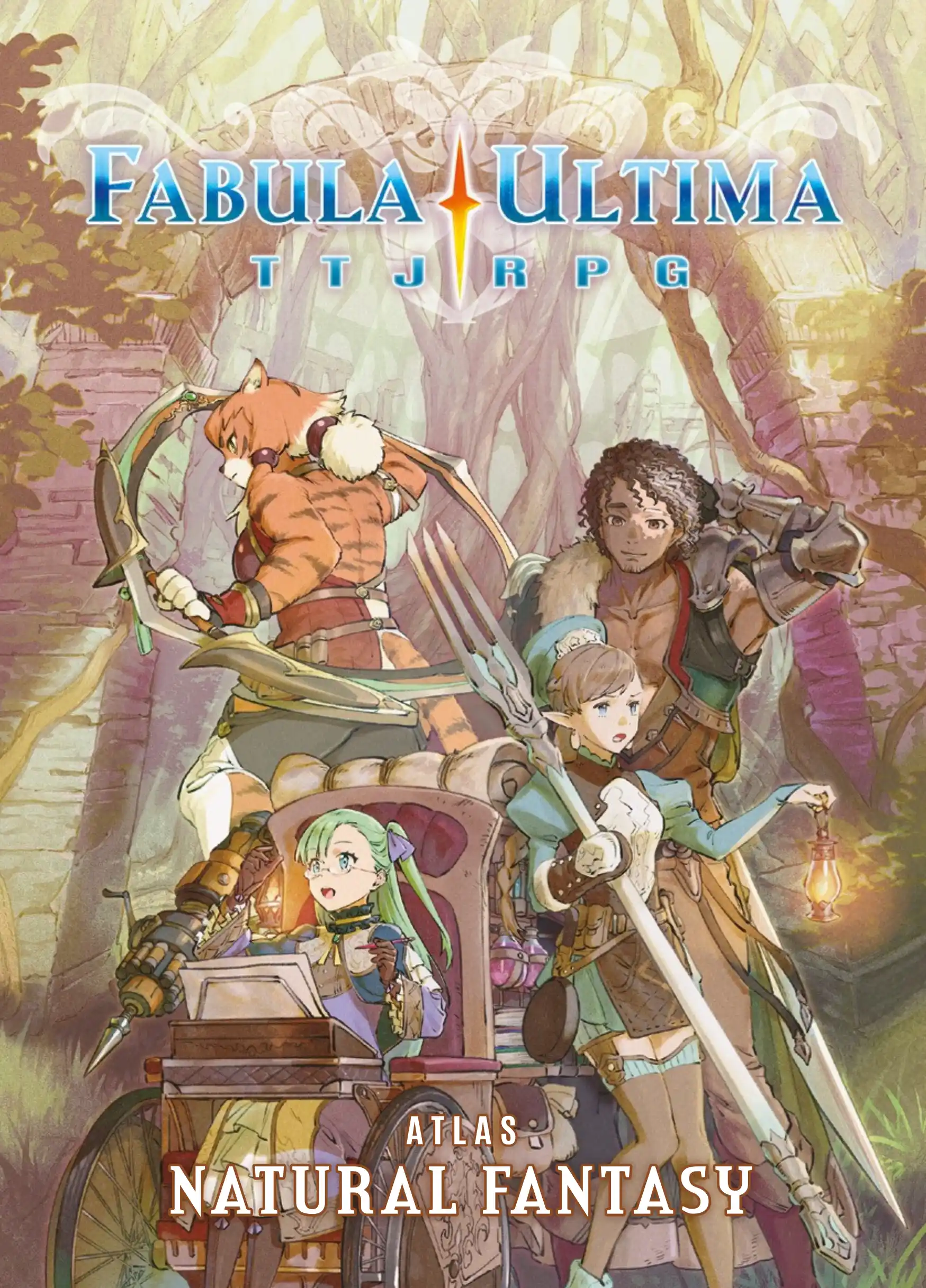
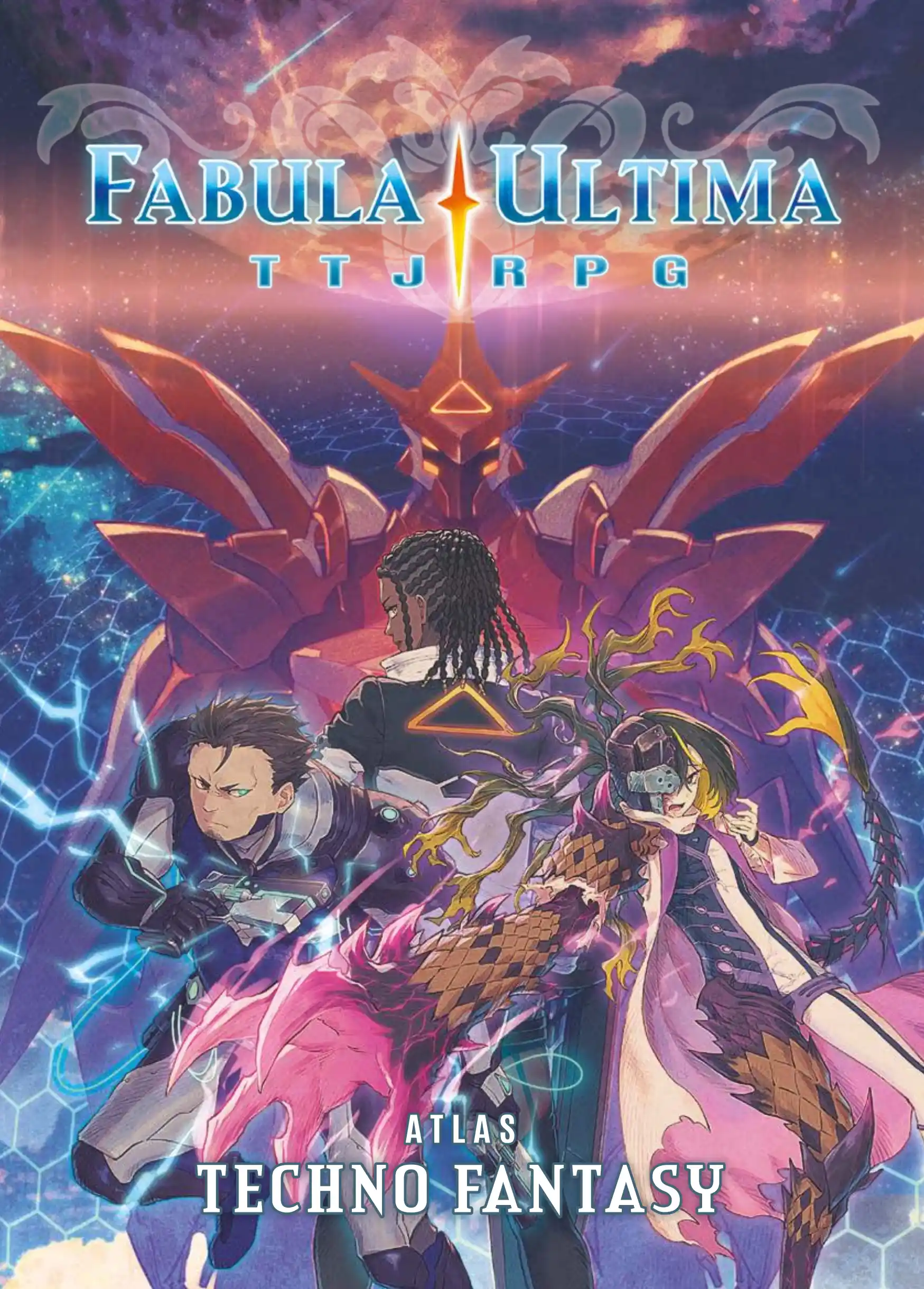
They keep your world grounded in the genre without locking you into a specific story. The game also offers three flavors of world to help spark ideas — High Fantasy, Natural Fantasy, and Techno Fantasy — though plenty of groups will blend all three, just like the games that inspired this one.
The heroes in Fabula Ultima are extraordinary individuals, and the rules don't pretend otherwise. A child with incredible magical powers and a veteran warrior who can take on an entire army are equals here — what matters is strength of spirit. Each character is defined by three Traits (an Identity, a Theme, and an Origin) and up to six Bonds — emotional connections to people and places that carry real mechanical weight at the table. Heroes can also have complex, contradictory feelings in those Bonds: admiration and inferiority toward the same rival, affection and hatred toward a villain from your past. Those tensions make for great storytelling and stronger mechanics.
The core resolution mechanic is the Check — you roll exactly two Attribute dice (Dexterity, Insight, Might, or Willpower), add them together, and compare the result to a Difficulty Level. Roll double 1s and you've fumbled: automatic failure, but you earn a Fabula Point. Roll matching 6s or higher and you've scored a Critical Success: automatic win plus an Opportunity — an unexpected narrative twist you can spend to shape the scene.
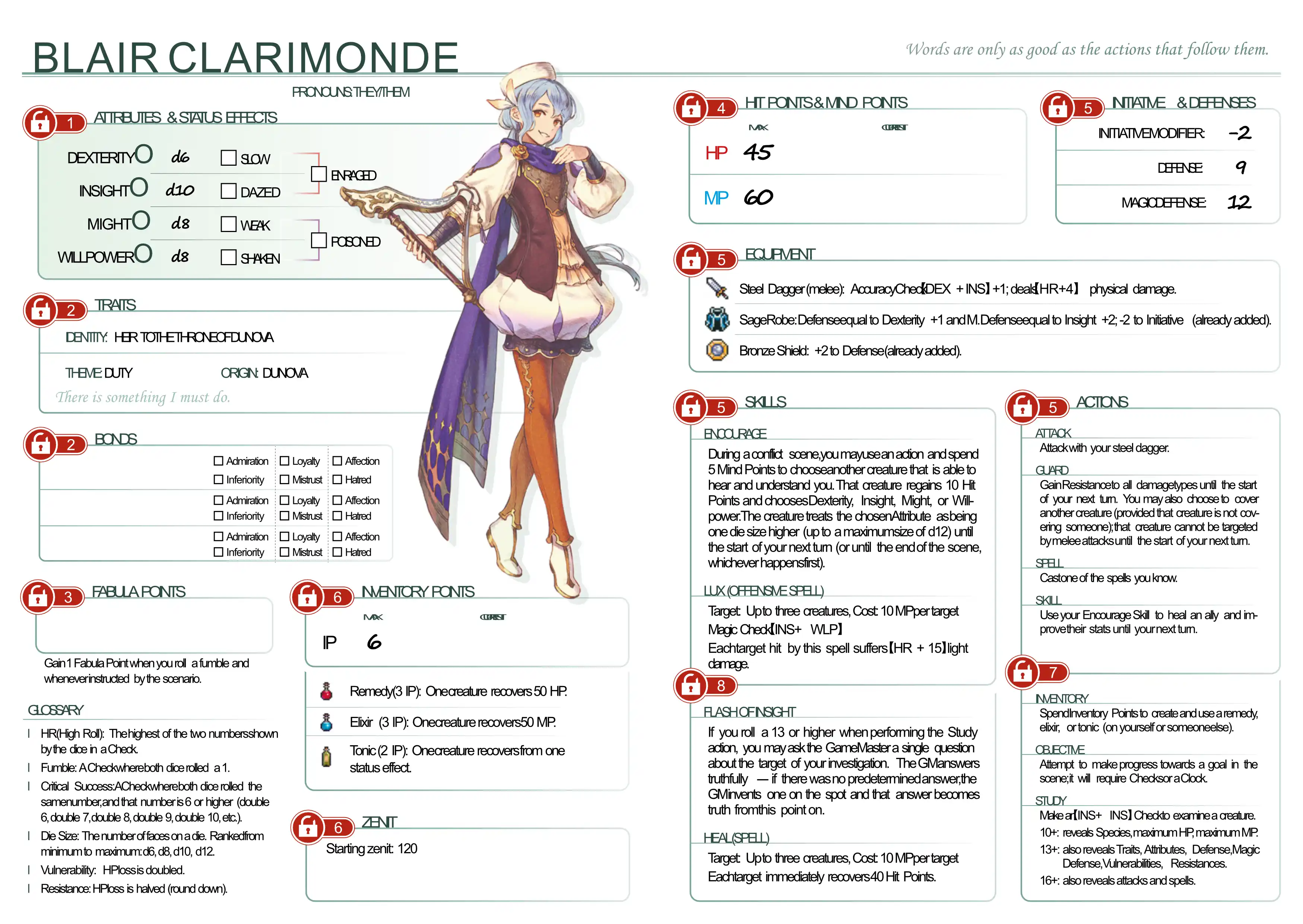
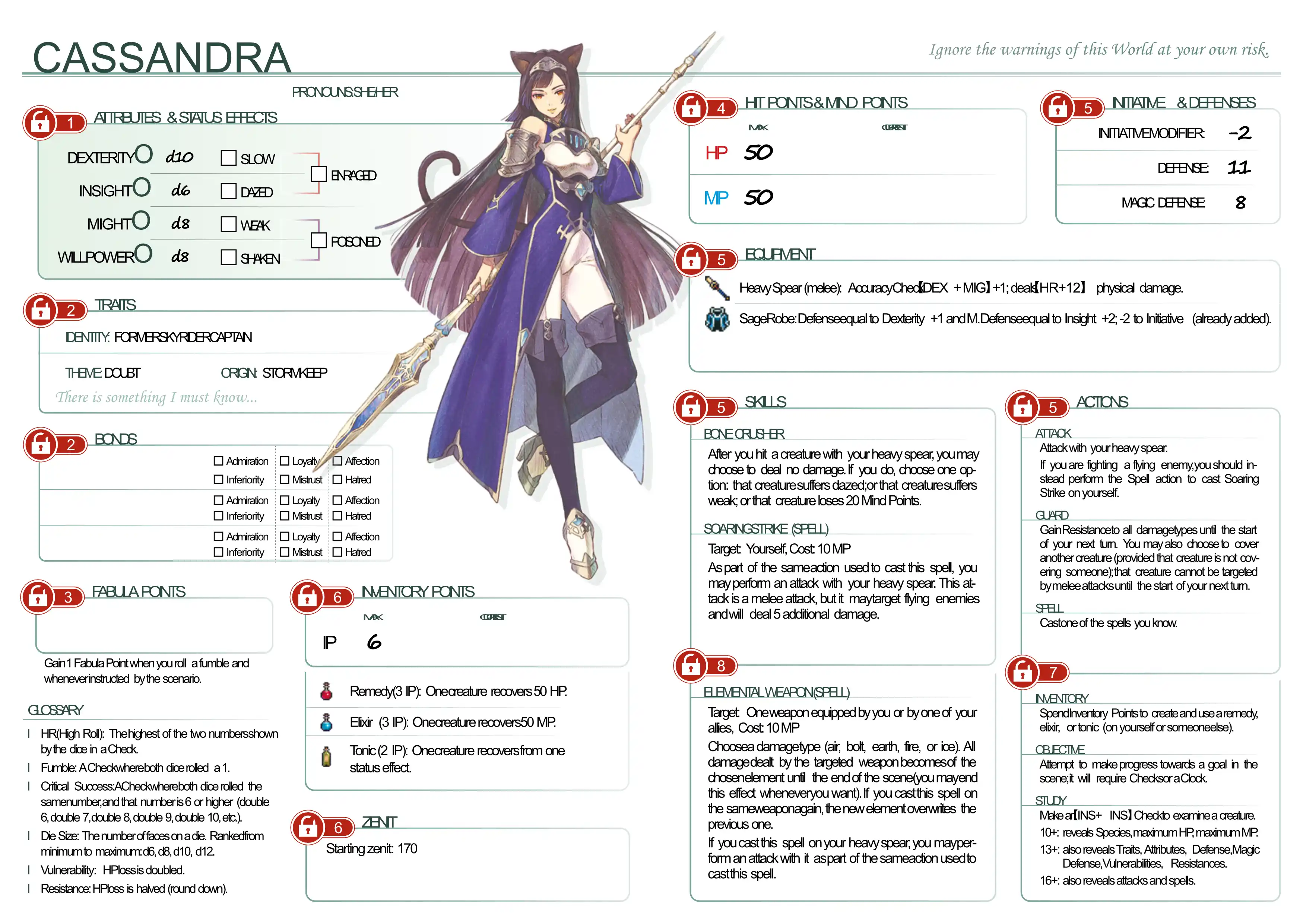
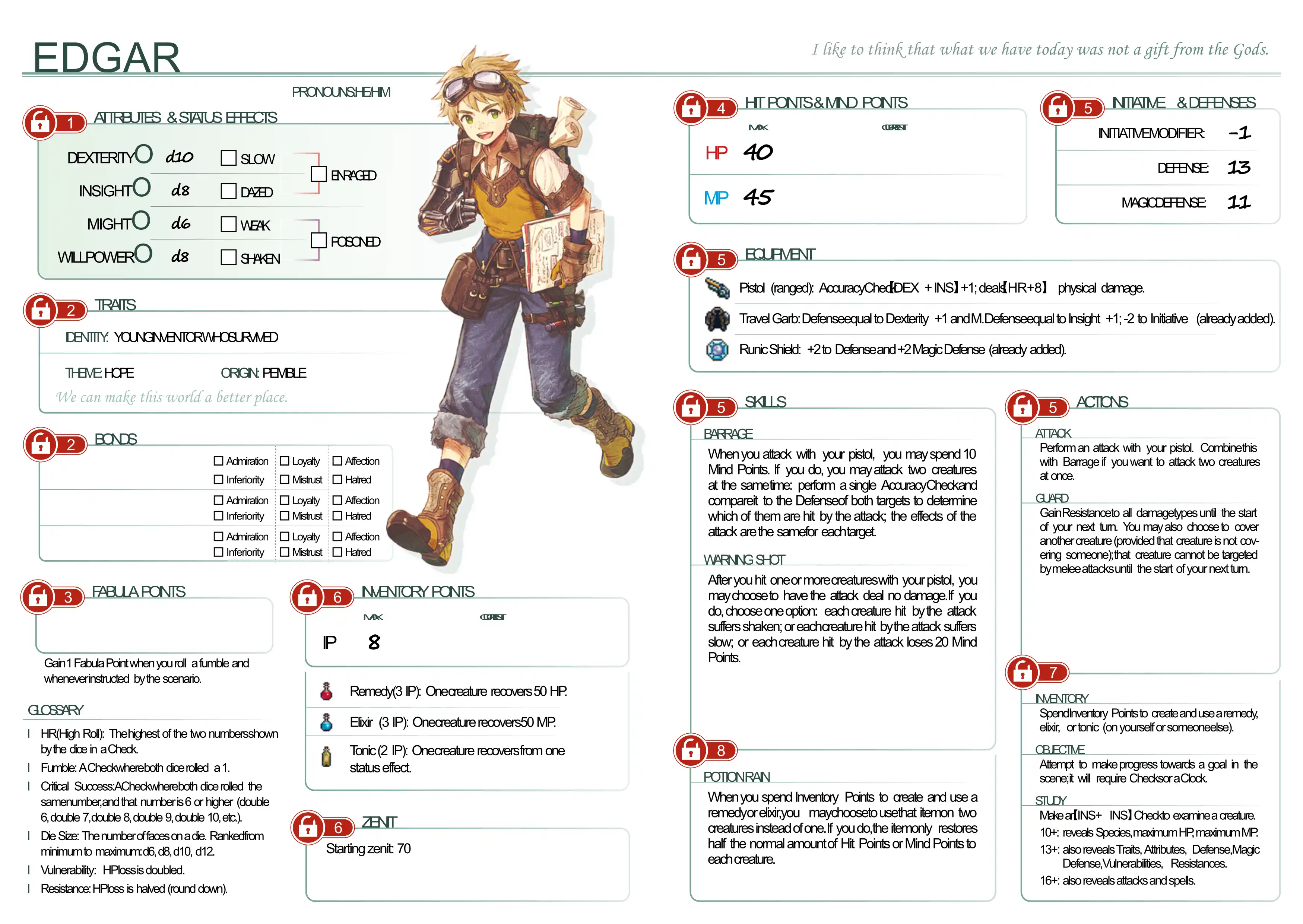
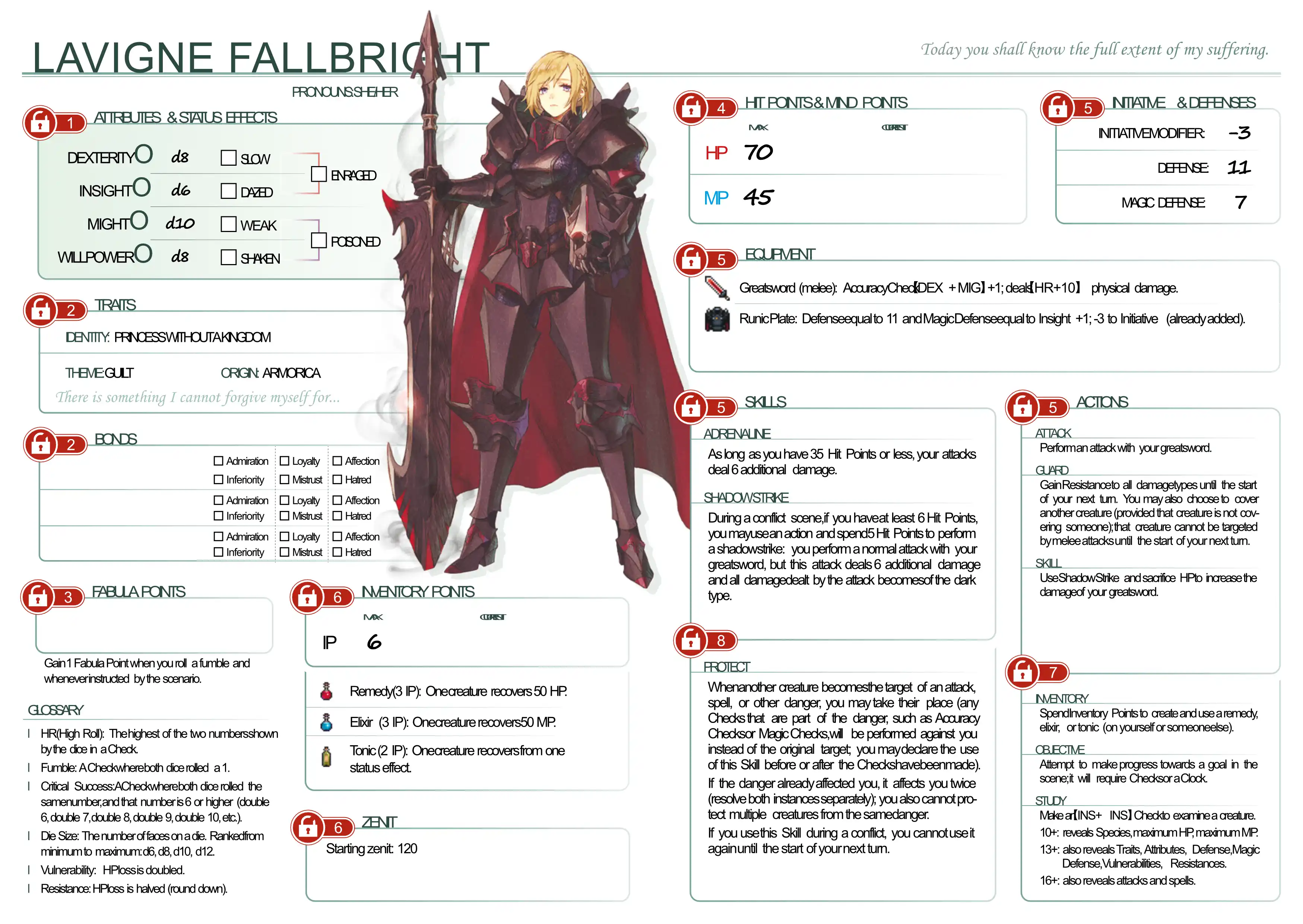
Fabula Points are a currency that flows back and forth through play; heroes spend them to invoke their Traits and Bonds to reroll dice or push their results higher. They can even be spent to introduce new elements into the story itself. It's a system that keeps characters personally invested in every roll.
Character growth happens through Classes — there are fifteen of them — and every level goes toward developing one. Because Classes can be freely mixed and matched, no two characters end up playing the same way even if they share some of the same choices. Characters (typically) start at level 5 and can climb to level 50, with a full campaign designed to shine across roughly twenty to fifty sessions. That's a proper JRPG arc. The GM — playing the role of collaborative storyteller rather than adversary — populates the world with locations, threats, and fully realized Villains who have their own agendas and react to what the heroes do. The idea behind this system is to leverage the characters bonds, choices, and class choices to determine what happens in the campaign.
For a GM, this means your game might start out as a relatively simple/local conflict - say between a relatively normal mage and a lord in a border conflict, and then as the players help resolve this either one of those could escalate into a major crisis that could encompass the entire world.
Expand to see the example classes
| Classic Character | Feels Like... | Role | Class Mix | Playstyle |
| Alchemist | FF Chemist / Apothecary | Utility / Support | Tinkerer + Wayfarer | Crafts gadgets and potions to support the group. Resourceful and flexible — always has something useful for any situation. |
| Black Knight | Cecil (FF4) / Dark Knight | Offensive Melee | Darkblade + Entropist + Weaponmaster | Dark, draining melee fighter. Hits hard and saps enemy strength to fuel their own power. |
| Gambler | Setzer (FF6) / Cait Sith | High Risk / Striker | Entropist + Rogue + Weaponmaster | Fast, lucky, and unpredictable. Leans into chance mechanics that can swing wildly — high risk, high reward. |
| Gunslinger | Irvine (FF8) / Trigun vibes | Ranged / Tech | Sharpshooter + Tinkerer | Ranged specialist who enhances their shots with magitech infusions. A precision fighter with a technical edge. |
| Healer | White Mage / Rosa (FF4) | Pure Support | Orator + Spiritist | The backbone of the party. Cleanses, heals, and encourages allies. Keeps everyone in the fight through trust and restoration. |
| Magitechnician | Edgar (FF6) / Magitek Pilot | Tech Mage | Loremaster + Tinkerer | Combines sharp battlefield assessment with advanced magitech gadgets and elemental spells. Supports and damages through gadgetry. |
| Monster Mage | FF5 Blue Mage / Beastmaster | Creature Controller | Chimerist + Wayfarer + Weaponmaster | Speaks to and learns from monsters, mimics their spells, and travels with a faithful animal companion. |
| Ninja | Edge (FF4) / FF5 Ninja | Fast Striker | Rogue + Spiritist + Weaponmaster | Elusive and lightning-fast. Dodges attacks, inflicts status effects, and strikes back at exactly the right moment. |
| Pirate | Faris (FF5) / Balthier (FF12) | Aggressive Melee | Elementalist + Fury + Weaponmaster | Fierce and reckless. Channels thunder magic and pure aggression to overwhelm enemies through brute force and provocation. |
| Pugilist | Tifa (FF7) / Zell (FF8) | Tank / Brawler | Fury + Weaponmaster | Bare-knuckle brawler built to take hits and dish them back harder. Withstands punishment and pulverizes anything in reach. |
| Ranger | FF Ranger / Scout archetype | Ranged / Scout | Sharpshooter + Wayfarer | Nimble outdoors expert. Warns allies of danger, lands precise ranged shots, and navigates any terrain with ease. |
| Red Sorcerer | Red Mage (FF series) | Hybrid Mage / Melee | Elementalist + Spiritist + Weaponmaster | The classic jack-of-all-trades: spellblade techniques, elemental magic, and healing. Versatile and self-sufficient. |
| Sage | Sage / Tellah (FF4) | Elemental Blaster | Elementalist + Loremaster | Pure elemental caster. Hurls ice, lightning, and fire while leveraging deep battlefield knowledge to maximize damage. |
| Samurai | Cyan (FF6) / Auron (FF10) | Defensive Warrior | Guardian + Spiritist + Weaponmaster | Disciplined and honorable. Masters defensive techniques and channels soul magic to empower their blade and protect allies. |
| Soldier | Cloud (FF7) / Knight archetype | Front-line Tank | Guardian + Weaponmaster | The wall between your party and harm. Protects allies, guards the vulnerable, and crushes enemies with power attacks. |
| Spell Fencer | FF5 Mystic Knight | Enchanted Striker | Elementalist + Spiritist + Weaponmaster | Infuses weapons with elemental and spiritual energy for charged melee attacks. A disciplined, highly tactical fighter. |
| Summoner | Rydia (FF4) / Yuna (FF10) | Summon / Support | Arcanist + Spiritist | Calls bound creatures into battle and weaves protective and restorative magic. Powerful support with big dramatic moments. |
| Thief | Locke (FF6) / Zidane (FF9) | Fast / Disruptor | Rogue + Weaponmaster | Quick and opportunistic. Steals from enemies, moves faster than anyone, and hits surprisingly hard with paired daggers. |
| Troubadour | Bard / Salsa archetype | Social / Buffer | Orator + Spiritist + Wayfarer | Rallies, taunts, and awakens allies to greater power. A social force on and off the battlefield with rousing abilities. |
| Valkyrie | Beatrix (FF9) / Lenneth | Aerial Warrior | Elementalist + Guardian + Weaponmaster | Combines wind and vortex magic with spear mastery and defensive skill. A heroic frontliner who controls the battlefield. |
Scenes are the basic unit of play, and they work exactly like you'd expect from the genre — each one has a clear focus, a beginning, and an end, moving the story from moment to moment. For complex multi-step challenges, Clocks (pie-chart trackers visible to everyone) add real tension — a ticking ritual that needs to be stopped, a ceiling about to collapse on a monster, a four-day countdown before the enemy airship launches. It's a simple tool that makes every action feel like it matters and keeps the pressure high in a way that feels very at home in the genre.

Fabula Ultima is a great fit for groups who love story-driven, character-focused play and want a system that genuinely captures the feel of the games that defined the genre. If you've ever wanted to *be* in a Final Fantasy story rather than just play one, this is the closest a tabletop game has gotten.
Wonder, Growth & Heart: The Japanese Influence on TTRPGs
Japanese media — Studio Ghibli films, Final Fantasy, Dragon Quest/Ball, The Legend of Zelda — has always told a different kind of story when compared to western fantasy and the style of TTRPGs inspired by Tolkien and traditional european fantasy. That difference has quietly shaped a whole corner of the TTRPG world.
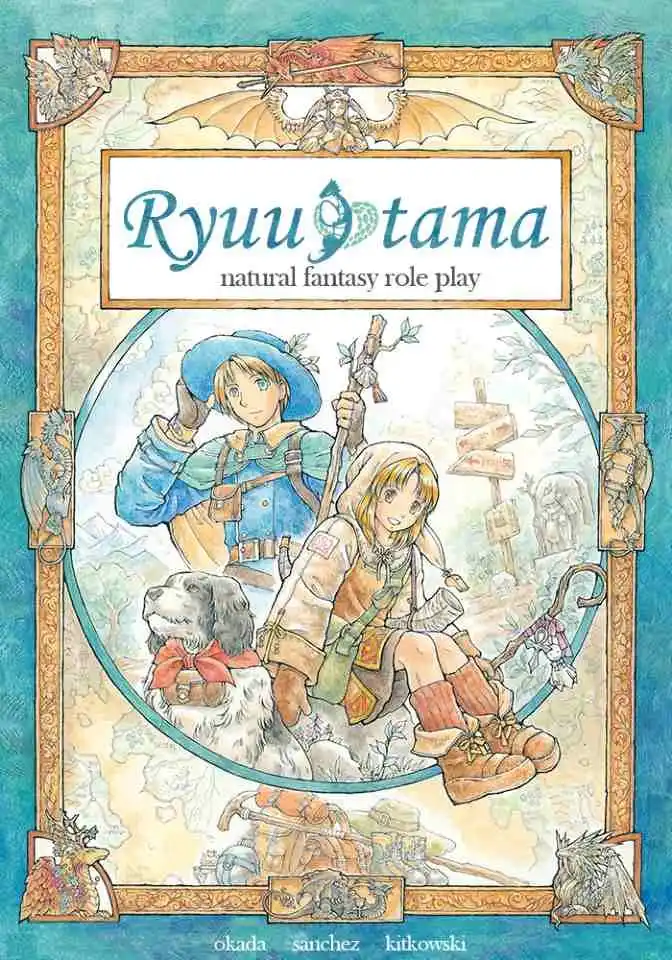
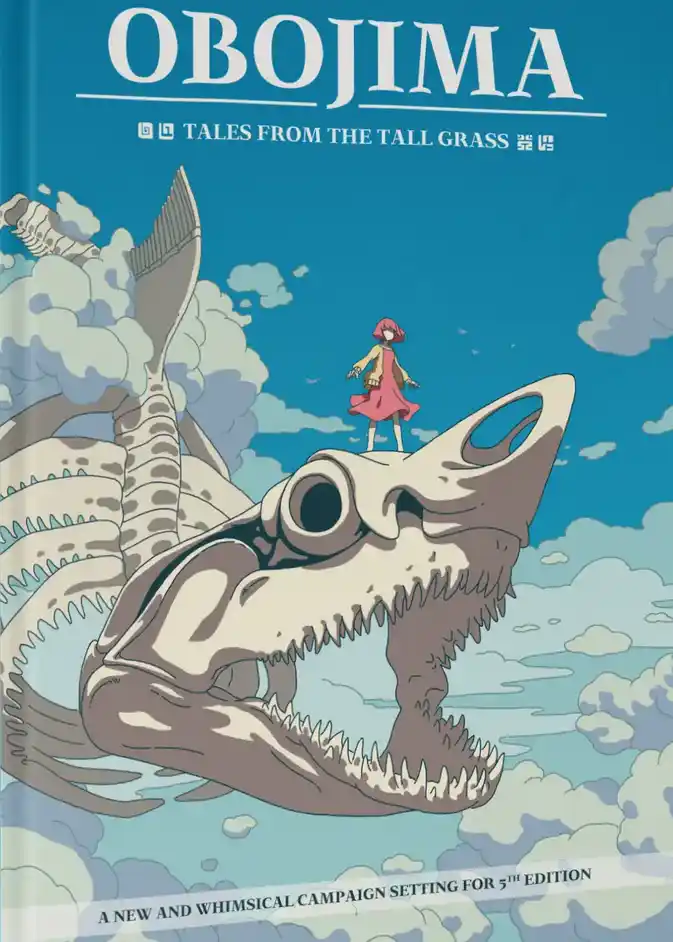
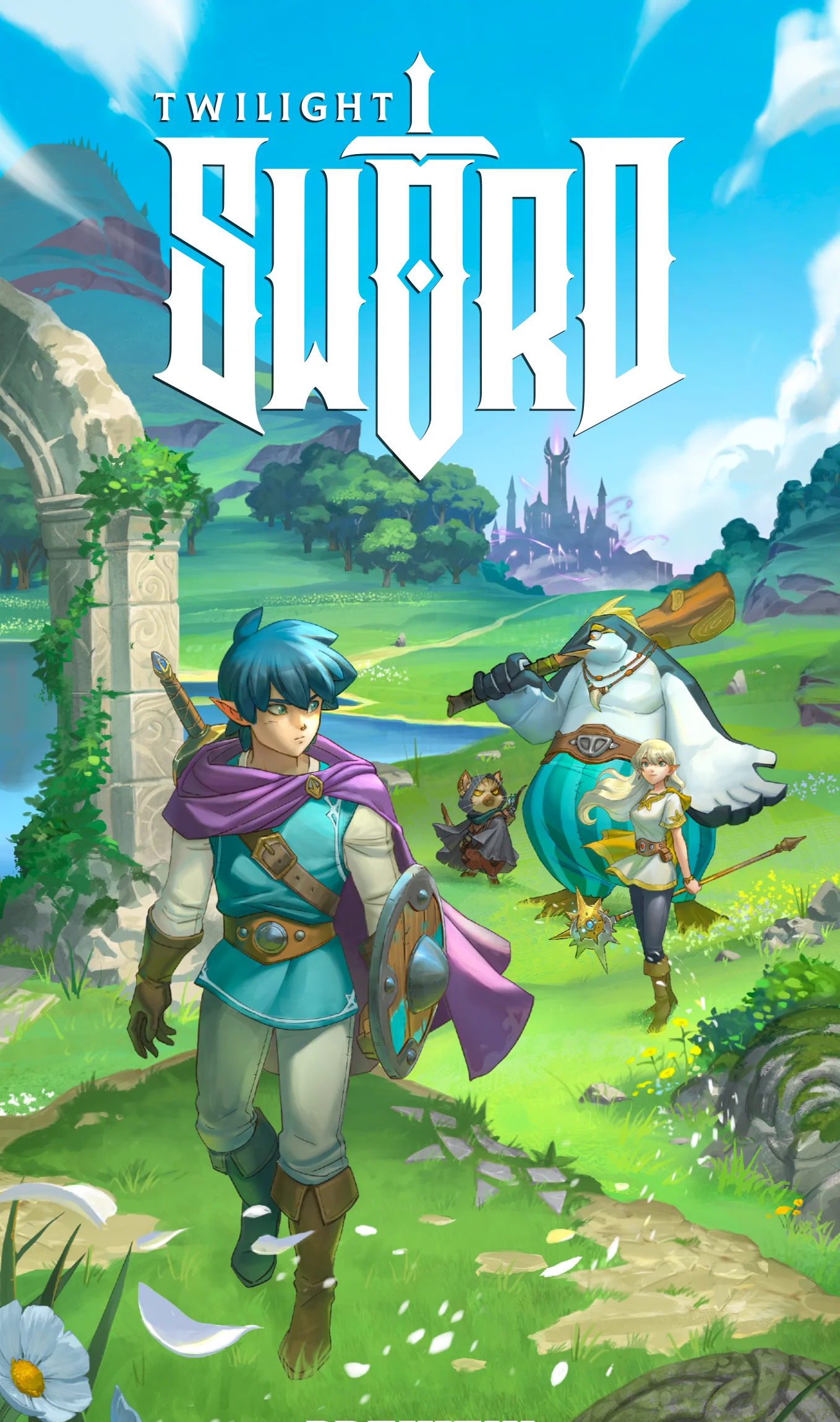
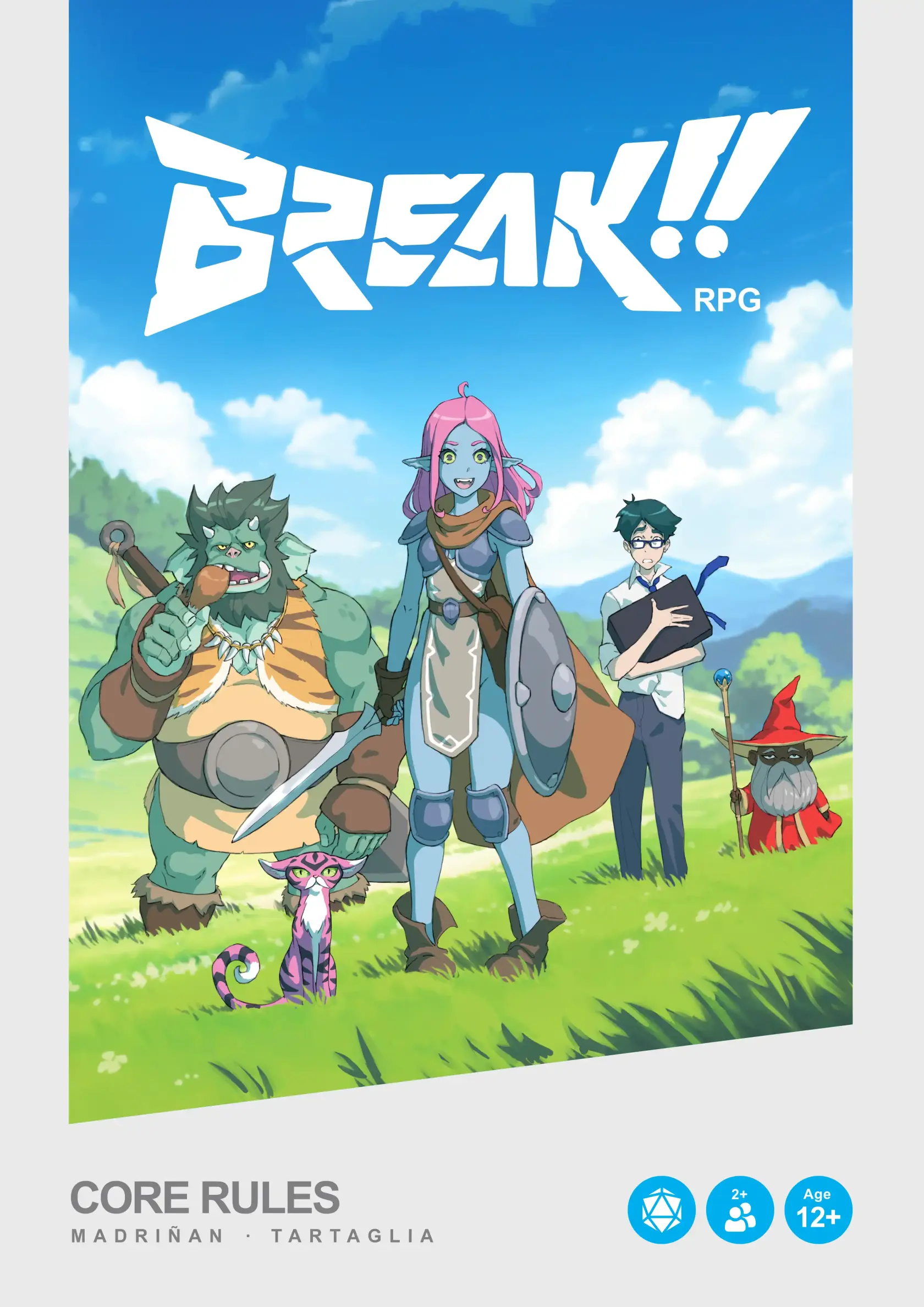
What unites these games is a shift in what you're actually working toward. Instead of optimizing a build to win every encounter, you're asking: who is my character becoming? The struggle still matters — Ghibli stories are not soft or easy, and neither are these games— but the struggle players and the GM experience is in service of growth, not just victory. Games like Ryuutama, Fabula Ultima, Break, and Obojima carry that forward, leaning into collaborative world-building, emotional bonds between characters, and stories that are shaped by the players as much as the GM.
The TTRPG genre has been growing in this direction for years, and it's no coincidence. A generation of players grew up with Final Fantasy and Miyazaki before they ever picked up a d20 — and they brought that sensibility to the table with them.
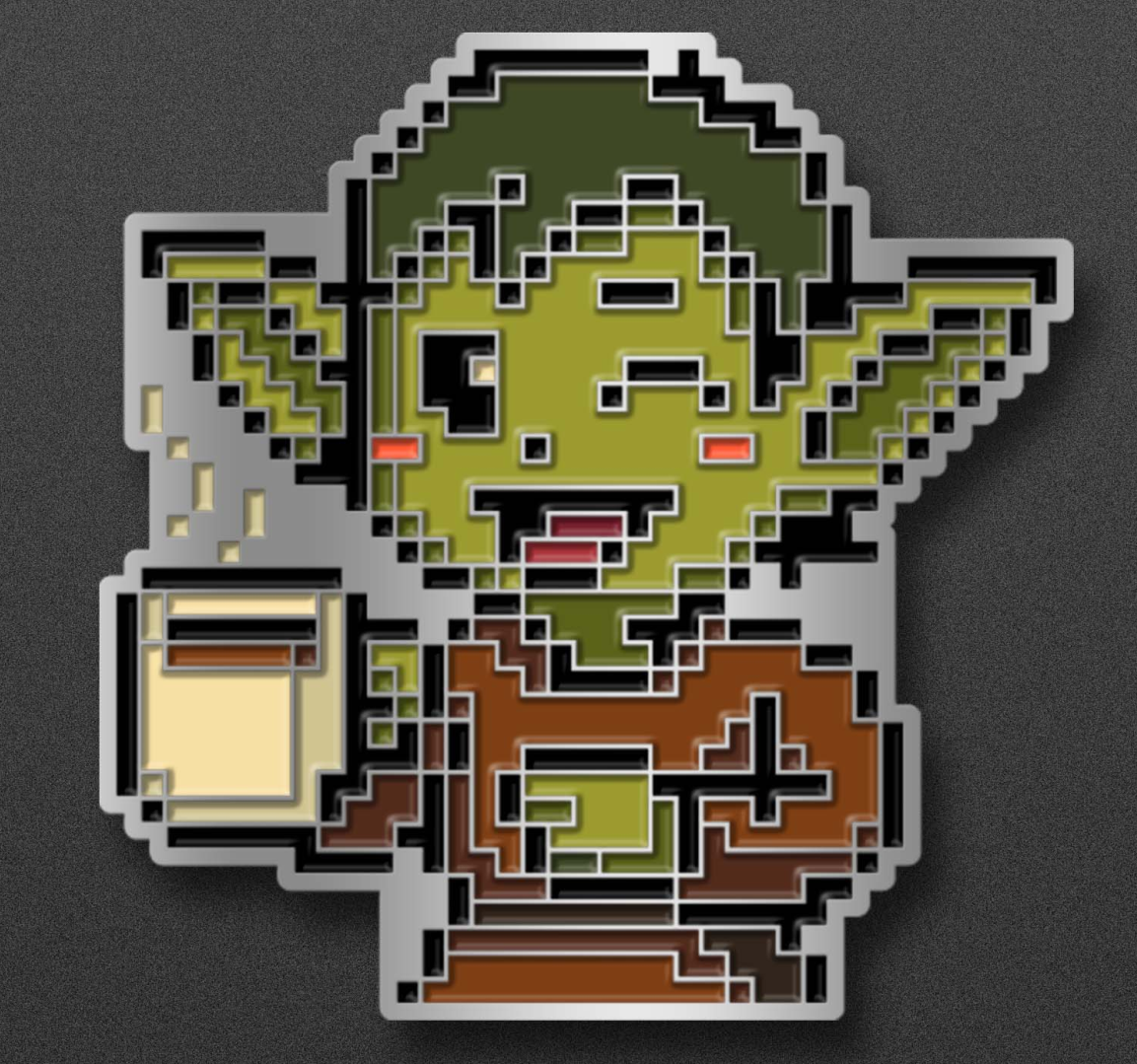
Collectible Pin
1 x Limited Series 1 Coffee Goblin Pin for Attendees that Purchase a Drink.
Buy any drink during the event and receive a free Limited Series 1 Pin featuring our smiling Coffee Goblin mascot — yours to wear proudly as a first edition adventurer of Espressos & Epics. Supplies are limited, so sip early!
Links and Downloads
Fabula Ultima - Press Start Guide (Free)
Fabula Ultima - Load Game Guide (Free)
Fabula Ultima - Bonus Collection (Free)