Fabula Ultima - Japanese Influences on TTRPGs - March 15, 2026
March 15 at 1PM at Meanwhile Coffee
Sign Up on Discord!
Also come roll some dice at Reston Plays Games where we will be teaching:
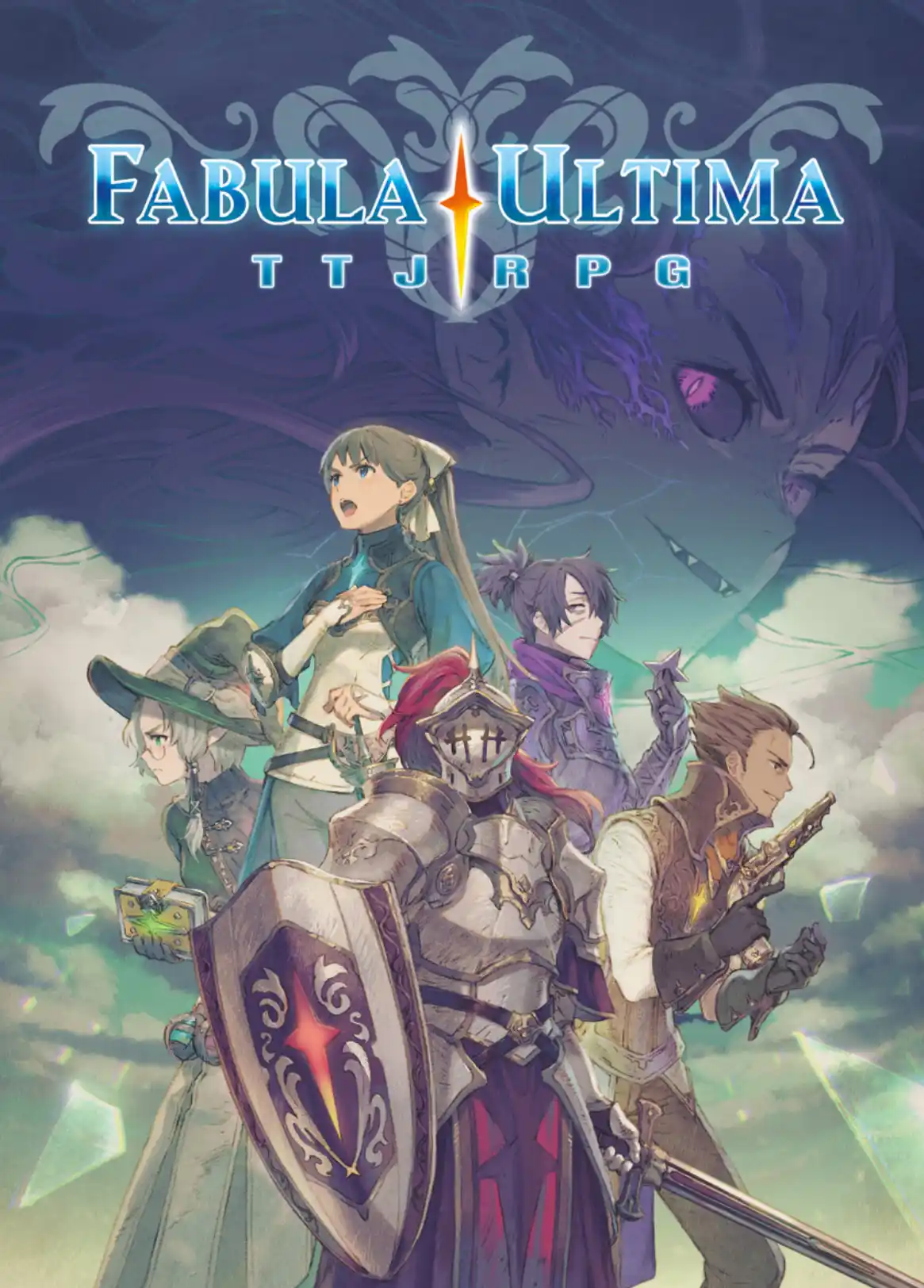
A collaborative tabletop RPG built from the ground up to put you and your friends inside the epic, emotional, world-saving adventures of your favorite JRPGs.
Fabula Ultima calls itself a TTJRPG — a Table Talk JRPG — and that label tells you almost everything you need to know about what we are getting into here. Inspired by classics like Final Fantasy, Chrono Trigger, Octopath Traveler, Dragon Quest, Bravely Default, and many JRPGs, this game is engineered to recreate the feel of those stories at the tabletop. Larger-than-life heroes, powerful villains with devious plans, worlds on the edge of ruin, and characters who grow and change through struggle — it's all here. You and your group build your own story together, little by little, rewarded for playing your character in a way that fits who they actually are.
One of the most distinctive things about Fabula Ultima is that it has no default setting. Your group builds the world from scratch — kingdoms, ruins, monsters, mysteries — it's all yours to invent. To keep things feeling like a true JRPG, every setting is anchored by The Eight Pillars:
|
Ancient Ruins and Harsh Lands |
A World in Peril |
Clashing Communities |
Everything Has a Soul |
| Magic and Technology | Heroes of Many Sizes and Shapes |
It's All About the Heroes |
Mystery Discover and Growth |
These are the core principles that every Fabula Ultima world follows.
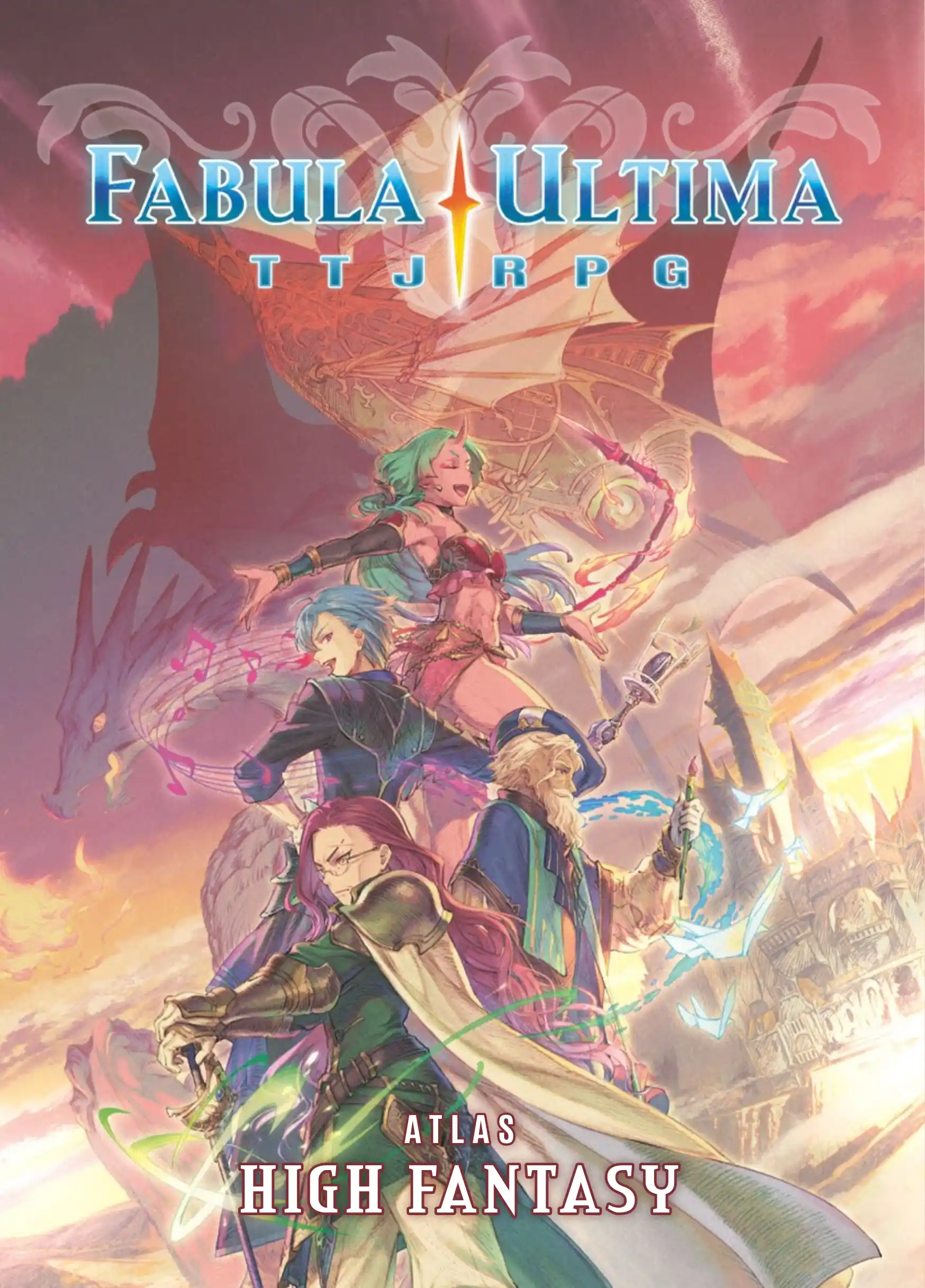
They keep your world grounded in the genre without locking you into a specific story. The game also offers three flavors of world to help spark ideas — High Fantasy, Natural Fantasy, and Techno Fantasy — though plenty of groups will blend all three, just like the games that inspired this one.
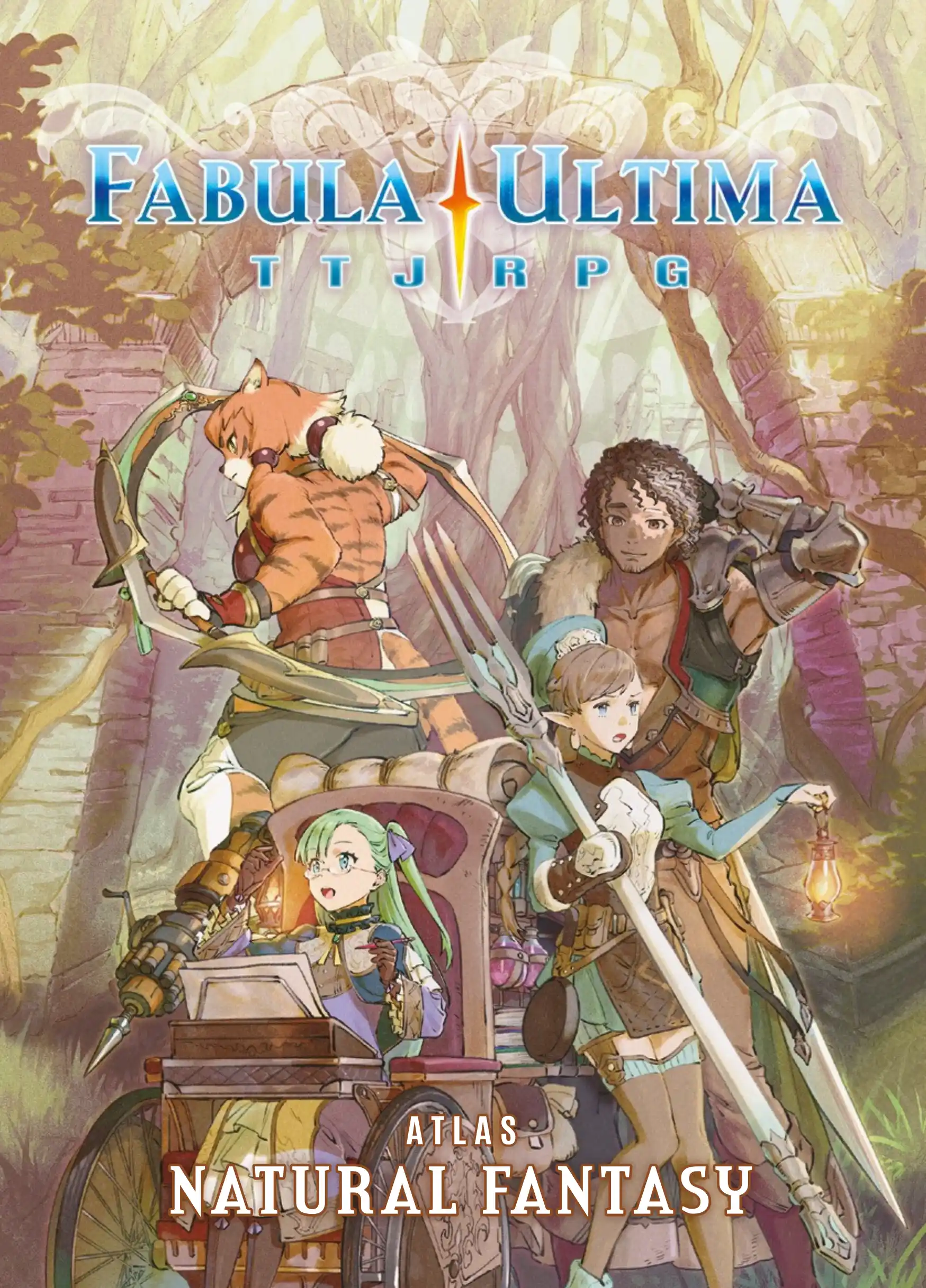
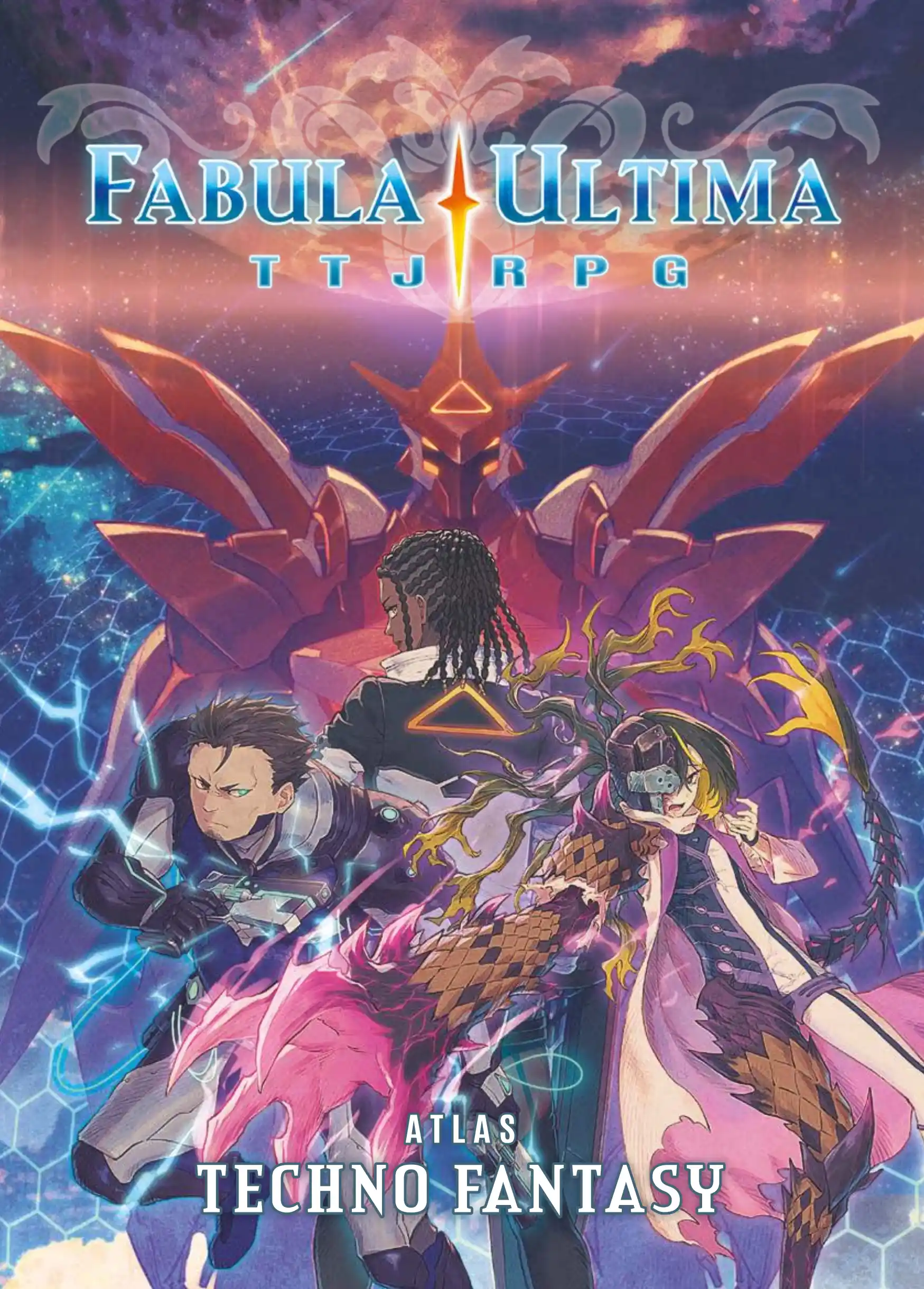
The heroes in Fabula Ultima are extraordinary individuals, and the rules don't pretend otherwise. A child with incredible magical powers and a veteran warrior who can take on an entire army are equals here — what matters is strength of spirit. Each character is defined by three Traits (an Identity, a Theme, and an Origin) and up to six Bonds — emotional connections to people and places that carry real mechanical weight at the table. Heroes can also have complex, contradictory feelings in those Bonds: admiration and inferiority toward the same rival, affection and hatred toward a villain from your past. Those tensions make for great storytelling and stronger mechanics.
The core resolution mechanic is the Check — you roll exactly two Attribute dice (Dexterity, Insight, Might, or Willpower), add them together, and compare the result to a Difficulty Level. Roll double 1s and you've fumbled: automatic failure, but you earn a Fabula Point. Roll matching 6s or higher and you've scored a Critical Success: automatic win plus an Opportunity — an unexpected narrative twist you can spend to shape the scene.
Fabula Points are a currency that flows back and forth through play; heroes spend them to invoke their Traits and Bonds to reroll dice or push their results higher. They can even be spent to introduce new elements into the story itself. It's a system that keeps characters personally invested in every roll.
Character growth happens through Classes — there are fifteen of them — and every level goes toward developing one. Because Classes can be freely mixed and matched, no two characters end up playing the same way even if they share some of the same choices. Characters start at level 5 and can climb to level 50, with a full campaign designed to shine across roughly twenty to fifty sessions. That's a proper JRPG arc. The GM — playing the role of collaborative storyteller rather than adversary — populates the world with locations, threats, and fully realized Villains who have their own agendas and react to what the heroes do. There's no predetermined plot; the players' choices drive everything.
Scenes are the basic unit of play, and they work exactly like you'd expect from the genre — each one has a clear focus, a beginning, and an end, moving the story from moment to moment. For complex multi-step challenges, Clocks (pie-chart trackers visible to everyone) add real tension — a ticking ritual that needs to be stopped, a ceiling about to collapse on a monster, a four-day countdown before the enemy airship launches. It's a simple tool that makes every action feel like it matters and keeps the pressure high in a way that feels very at home in the JRPG genre.
Fabula Ultima is a great fit for groups who love story-driven, character-focused play and want a system that genuinely captures the feel of the games that defined the genre. If you've ever wanted to *be* in a Final Fantasy story rather than just play one, this is the closest a tabletop game has gotten.
Japense Influences of TTRPGs
<More Coming Soon>