You are Hanataz

Carnival.png

Please also read the Being_Hanataz.pdf for more details about being a member of a Hanataz Troupe. 
The information is also below after the Adventure Introduction.

Adventure Introduction

You have been with the Hanataz troupe known as the Blue Veil for as long as you can remember. Some of you were born here… some were brought. Some may have even been purchased or traded for. Whatever your circumstances, you are now Hanataz – and will be so for the rest of your life.


The Hanataz… wayfarers… “Carnivaliers.” Road travelers with no homes save for the wagons, and no kin save for the troupe. It is the life of a vagabond. Many of the folk of the north believe your lives are cursed. Some say you bring ill fortune. Some say you carry a shadowed taint. 


In truth, many of you do… for when the Blood-Touch of the Abyssal, Fey, Elemental, Draconic, or others are detected in a child, the parents often give such children to the Hanataz. They do this to avoid having the children be ostracized, imprisoned, or even killed by superstitious and fearful people in their hometowns. Some parents even do this if their child is a Half-Elf or has been stricken with a disease or affliction that disfigures or cripples them.


But, even though the Hanataz are regarded with suspicion, your 
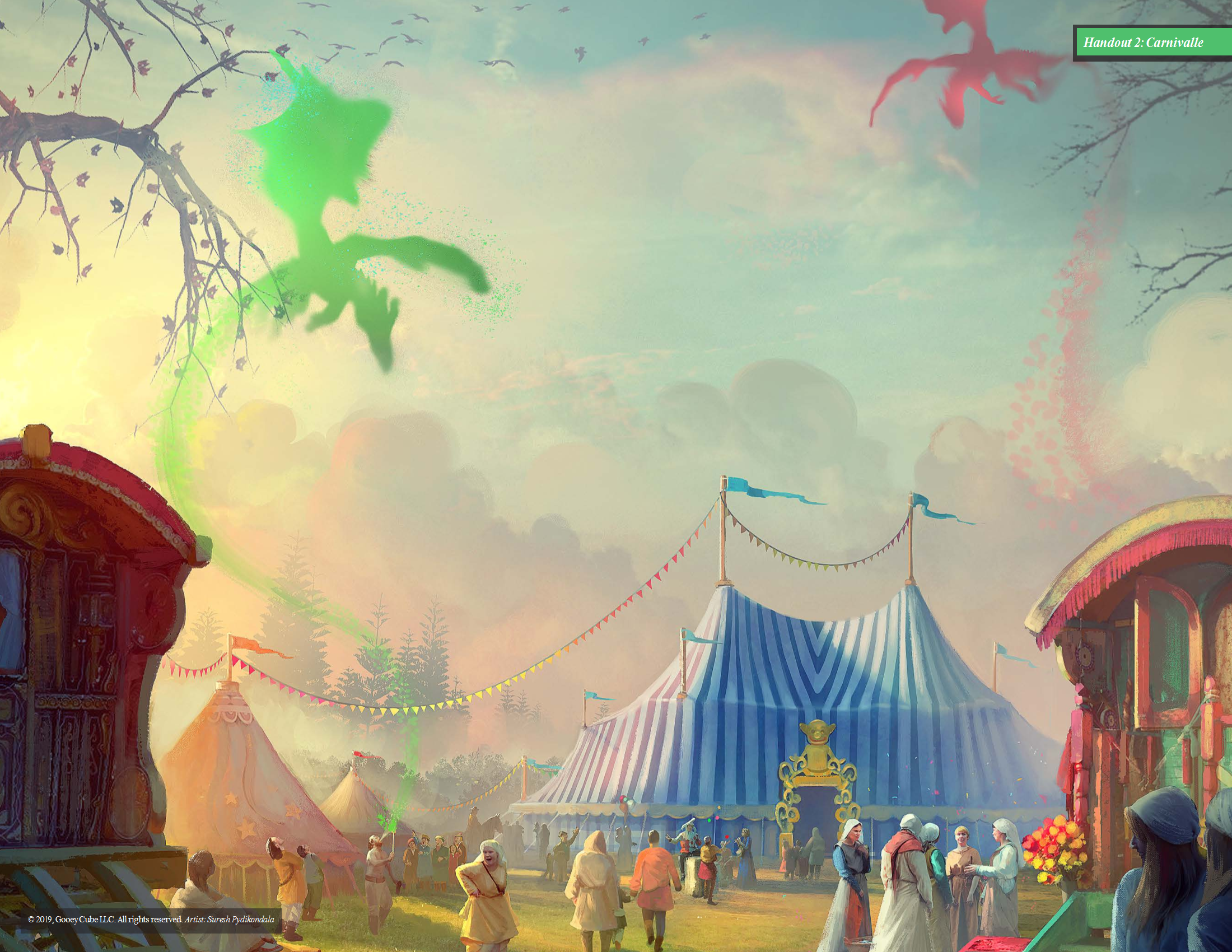
arrival on the outskirts of a town or village causes the locals to flock to your camps and see the shows you put on, which are called “Carnivalles.” These events are popular among the common-folk, who come to watch your women dance, cheer your performances, and gasp at your freaks. All while they eat your spicy foods and drink your strong “spirits.” 


Oftentimes, the “Townies” will bring their local champions and wager on them in wrestling matches against your stout-folk, or in contests of skill with bow and blade. Gambling is also common at a Carnivalle, and there are always games of chance being run for those willing to place their bets. Lastly, and perhaps the most popular of all, the people come to hear the portents of their futures from your Seeress.


You never stay long in one location. Someone always blames you for a picked pocket, or starting a fight, or some evil happening that seemed to arrive with your coming. Most priests decry your arrival saying you bring immorality, debauchery, and drunkenness; that your women are whores, and your men thugs and thieves. And so, you travel… from the outskirts of one settlement to another. Never welcome in the town proper… but seemingly always greeted by those who would seek out your particular, and unique offerings.


It is the 12th day of Dezu’un. The last month of the year… in the annum named the Year of the Rogue Moon. In just two weeks, the month of Dezu’un will give way to Jazu’un and the new year. Soon after, the true cold of the northlands will come screaming like a banshee from the Icingraez and drive into the very bones of all who dwell in the Central and northern territories of the continent of Verdestia. 


You will set a “hard camp” before then, likely within the vicinity of the city of Dragon’s Cross, and there will be no more traveling for nearly three months. Not until the first of the Winterblooms push through the melting snows to spread their red petals… and flutter in the spring breezes like newborn butterflies. 

As Dezu’un comes to a close, Wintersdance will soon be celebrated in the cities, towns, and villages of Verdestia – and indeed across most of the world of Zyathé. This festival begins on the 20th of Dezu’un. Wintersdance is a time of great joy with many parties and much revelry… coupled with gift-giving and all manner of festivities. The celebration is long… extending to the first day of the new annum 16 days later. 


Some, however, do not welcome the arrival of the new year. There are whispers that the days that are coming will bring times of great evil. That the prophecies of powerful sages speak of a time of great fears and horrors that rapidly approaches.


Indeed, even the name of the coming annum is ominous. For it is called… The Year of Dark Dreams.


If the sages of old are to be believed, this year will bring great turmoil to the world; horrible wars, deadly plagues, and many, many deaths. Some in the troupes say it is the “end of days” and that the Seeresses know it… but will not speak of it. These fears lie upon you as shadows in your minds – with the unalterable fact that time is moving slowly forward towards the inevitable. Whatever it may be. You have more immediate concerns, however. The Carnivalle is soon to begin. It is nearly highsul on the 12th day of Dezu’un… Darktide’s Eve… which is the night before the 13th day of the 12th month. Beginning this evening, and lasting until Sulrise on the 14th, is a time of evil omens. 


It is also the last day of this Carnivalle – and the last Carnivalle of 
the season. A good thing, too… the Blue Veil has been running the festival outside the town of Nevermore for the better part of a week, and tensions are getting uncomfortably high. Though the common folk love the shows that your troupe puts on… as always… the leaders of the town are predictably less enthusiastic about your offerings. Beyond the all-too-common bigotry, however, there have already been two visits by the Townsguard, and more than one accusation of theft placed upon your people.


Nevertheless, Borag and Calnassé have been determined to make one final day’s profits before moving on. Everyone is busy prepping for the show. The last day of Carnivalle is typically the most stressful, as it is almost always very well-attended. The younger Frenta are busy watching the Yunstas; though, thankfully, you have passed that stage as the children are a handful to be sure.


Your group, known affectionately and sometimes with exasperated sarcasm as the Zatis, or “Helpers” in the common tongue, are capable enough to assist directly with the Carnivalle. Your primary tasks are to patrol between the wagons and tents to provide security for the troupe. If past experience is any indication, you’ll spend the day breaking up fights, making sure the locals don’t get too familiar with the dancers, watching for thieves, and generally keeping things peaceful and profitable until evening comes and the Carnivalle is closed up for the night. 


In the course of your rounds, you are expected to help out wherever needed throughout the day. And, if you have a little extra time, no Hanataz is forbidden from picking up a few Silvs…


Despite your youthful restlessness, you’re happy Borag and Calnassé trust you to help – and you are, perhaps, even eager for a dust up or two.

The Blue Veil Troupe

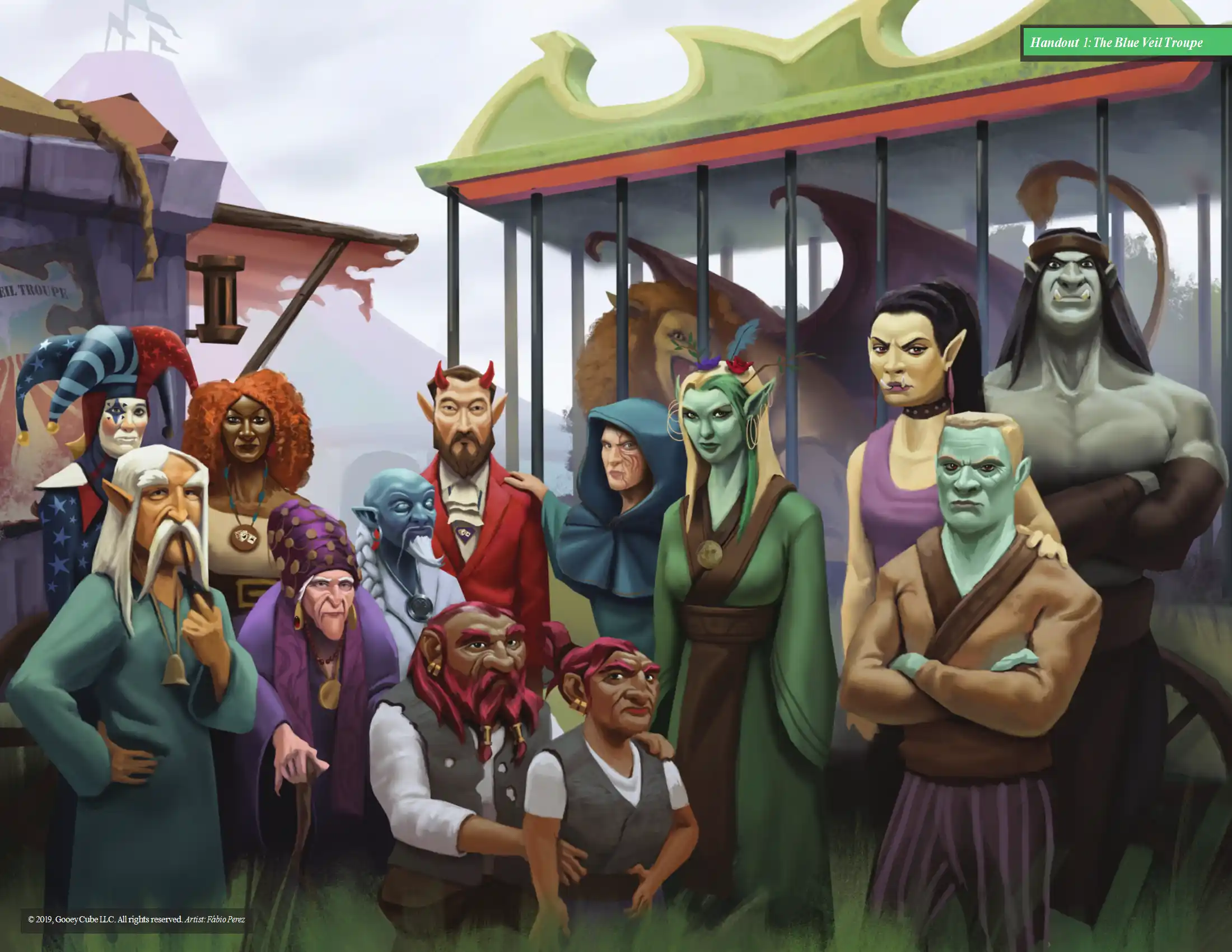
handout_1.webp

This section provides information about the Blue Veil troupe and introduces you to quite a few of the key members. Note that there are a number of others who are not mentioned here. Your GM will introduce you to these folks as the game advances. The Blue Veil is the only family you have and you are a close-knit group.

The Blue Veil is the name of one of a number of Hanataz caravans that ride the roads of the continent of Verdestia – which is considered the most northwestern of the civilized continents of the world of Zyathé. Like all Hanataz troupes, the Blue Veil are a close-knit group with much strong kinship. For the most part, they traverse the lands of the Republic of Zyranthea and the Sovereignty of Andvalla, which are the most western and the most southern civilizations of the continent. Because of the Blood-Touch that most troupe members carry, the Hanataz are outcasts from the civilized world. As such... they are a traveling people with their only homes being the wagons in which they ride.


You are a member of the Blue Veil troupe. And because you are a younger person, you are referred to as “Frenta”... which is roughly translated as “youth” in the common tongue that is spoken in the civilized lands. As a Frenta, you are in training to work the shows, to contest against those who would wager their coin, to help aid and defend the troupe, and, ultimately, to take over leadership when the current Bonduran are too old to carry on with their duties. The term “Bonduran” means “Protectors” when translated into the common speech. Most troupes have eight to twelve Bonduran who serve on the troupe council. Typically, however, there are one or two individuals that serve as “Prema Bonduran” and these are the primary leaders of the troupe.


Borag_Vegla.webp

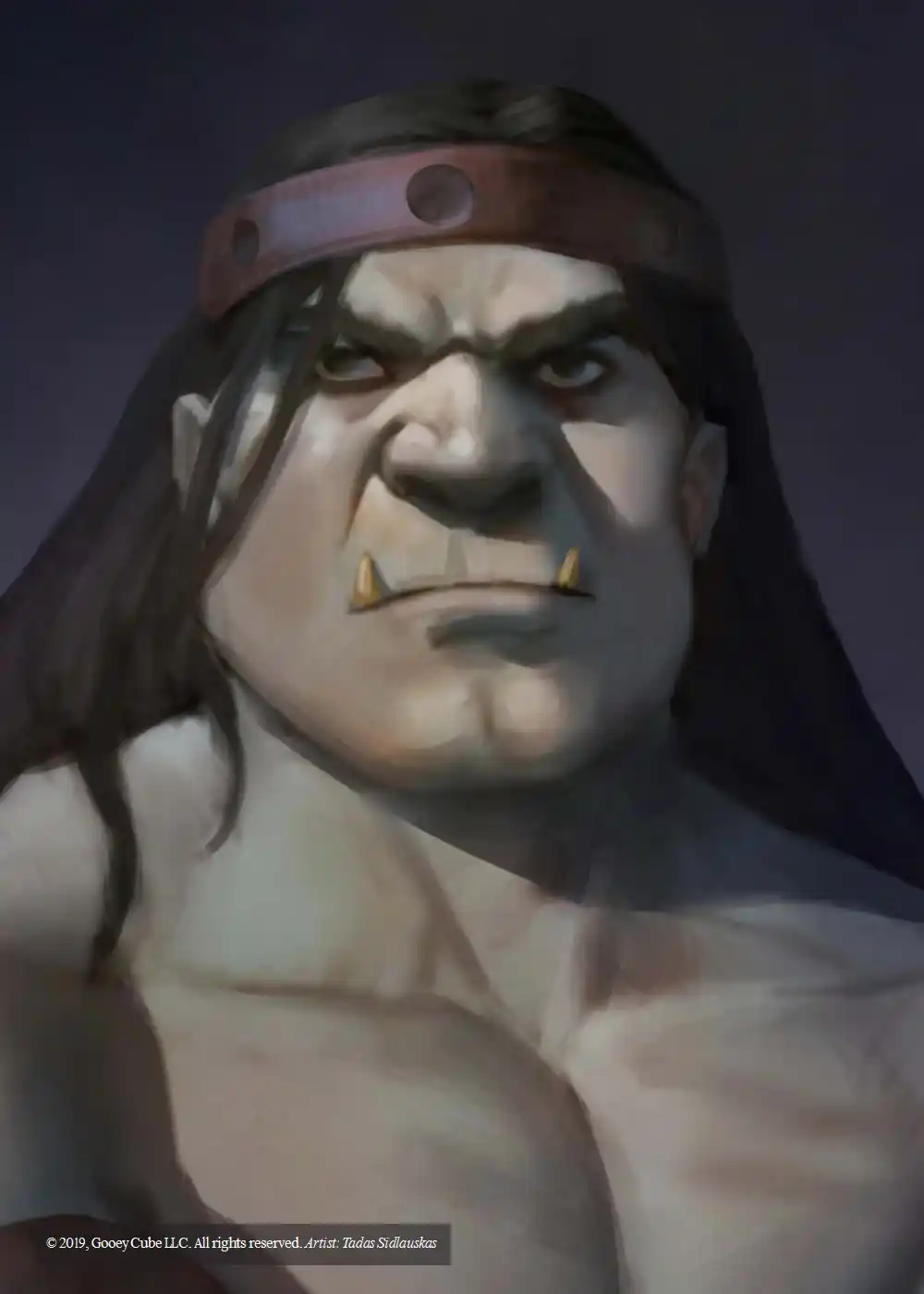
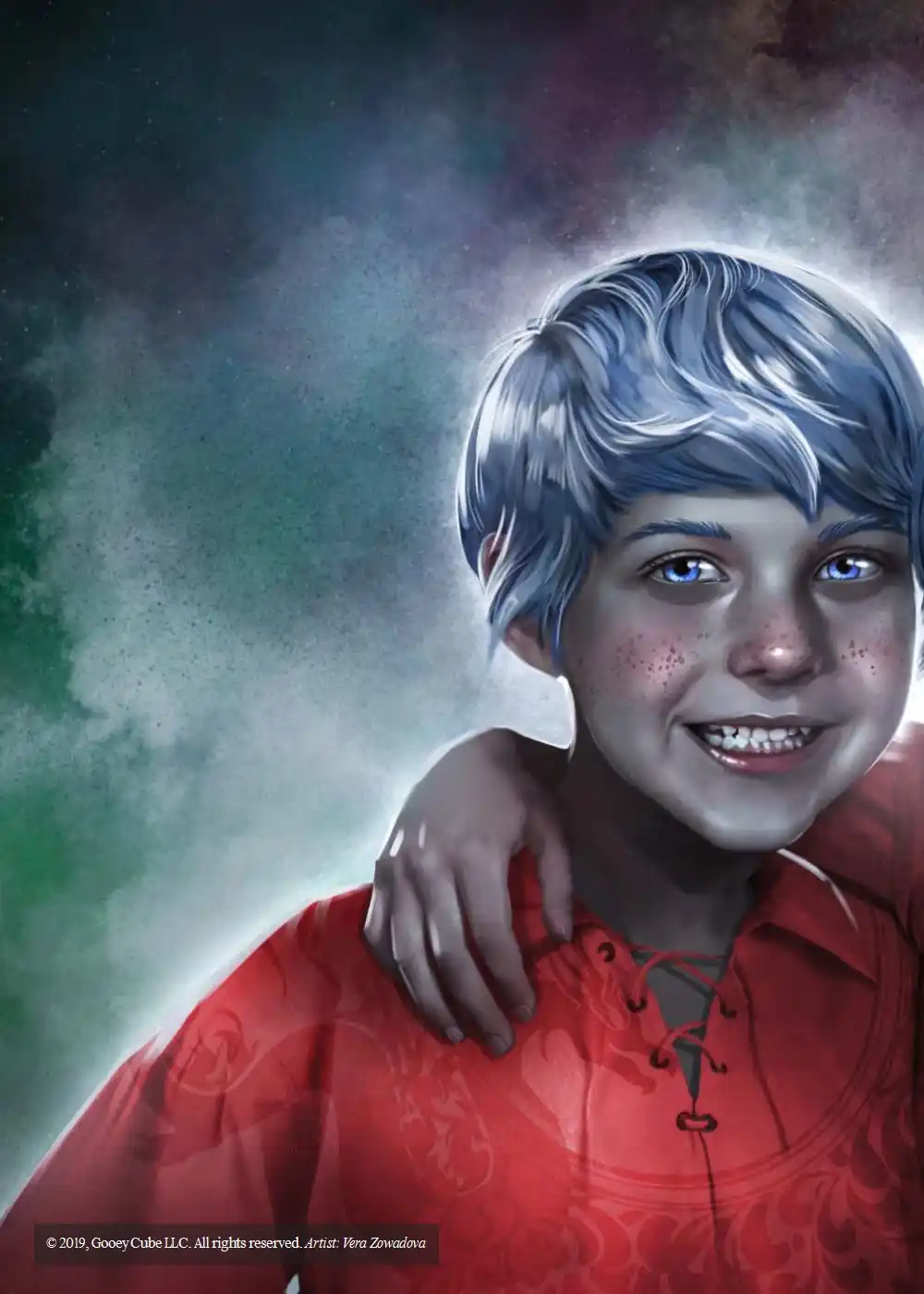
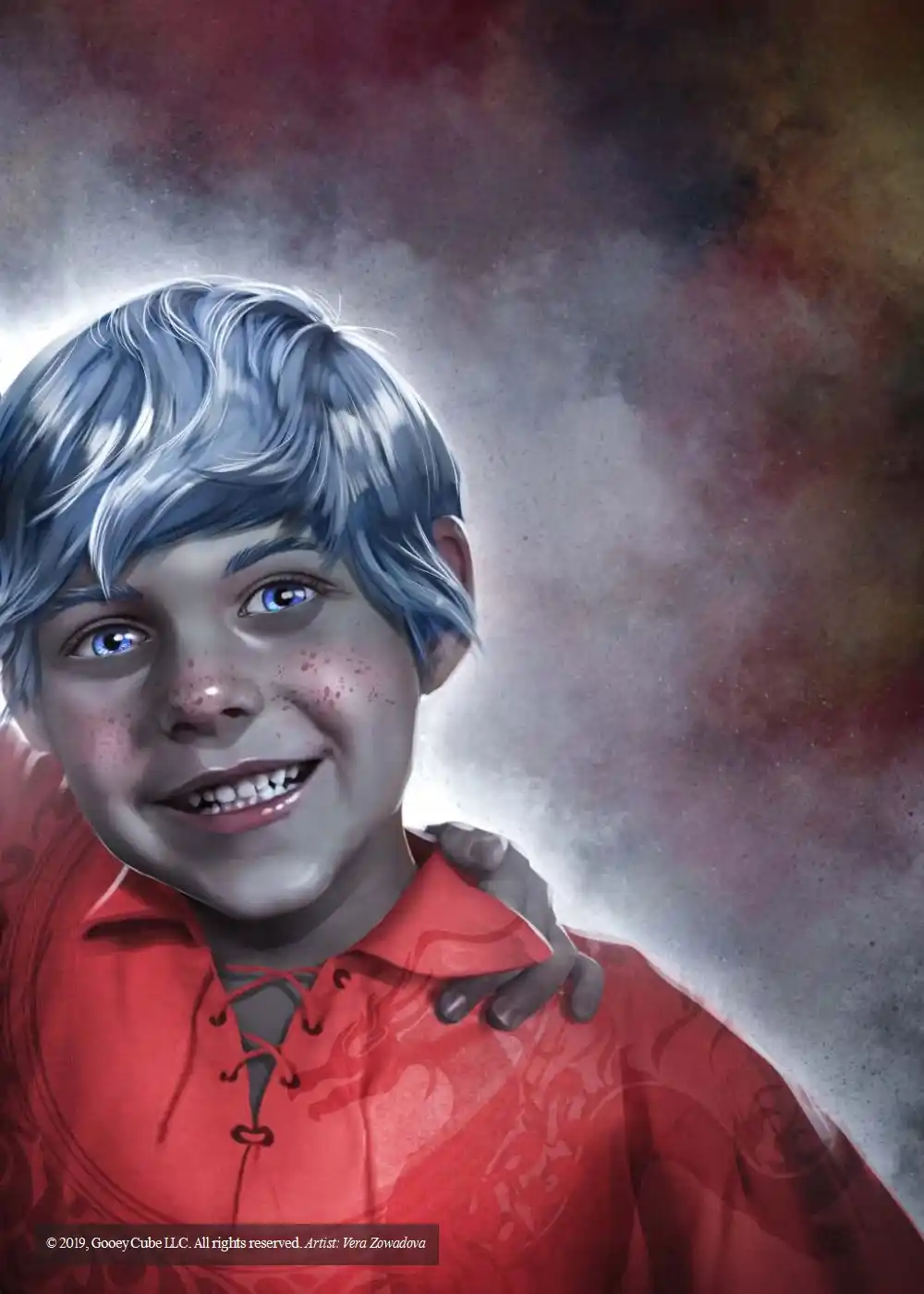
The Prema Bonduran of your troupe are named Borag and Calnassé. Borag is “The Strong Man” of the Blue Veil and is a massive and incredibly strong Humanoid, owing to the Ogre blood in his veins. Nearly seven-foot tall with broad shoulders and a thick frame, he can wrestle five (or more) strapping farmers at once and win... consistently. But physical strength is not his greatest asset... for he is a good and honorable man; true to the members of the troupe and carrying a fatherly love that lies deep in his heart. Each of you have felt his encouragement and his admonishment... seen his tireless efforts to keep the troupe healthy and safe... and watched his patient and kindly ways – even with the littlest members of the Blue Veil. For you have also seen him wrestle a horde of these Yunstas... the Hanataz word for children... with a broad smile on his face as those same little ones pin him to the ground – laughing with glee as they bounce atop his enormous frame.


Calnasse_Vegla.webp
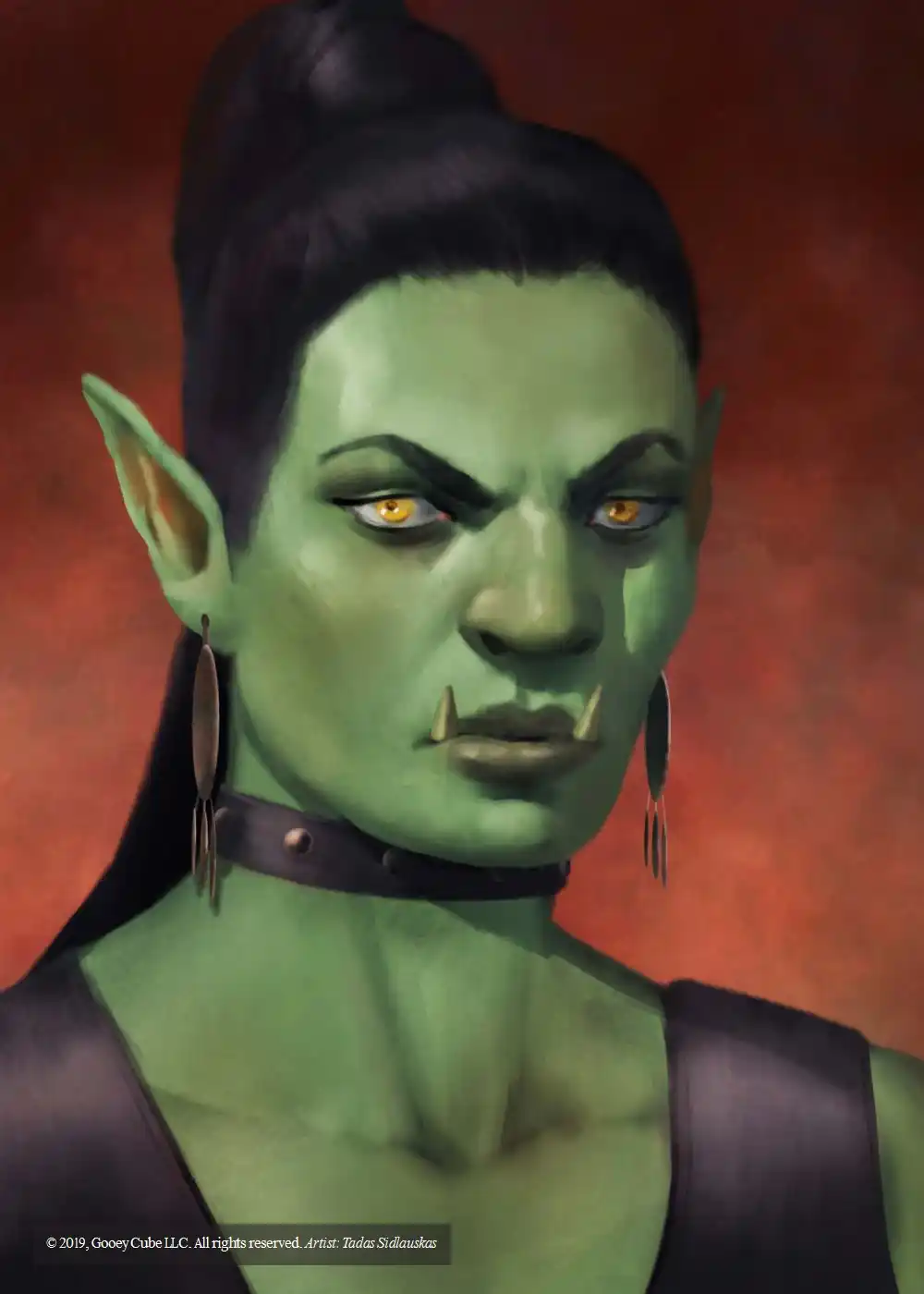
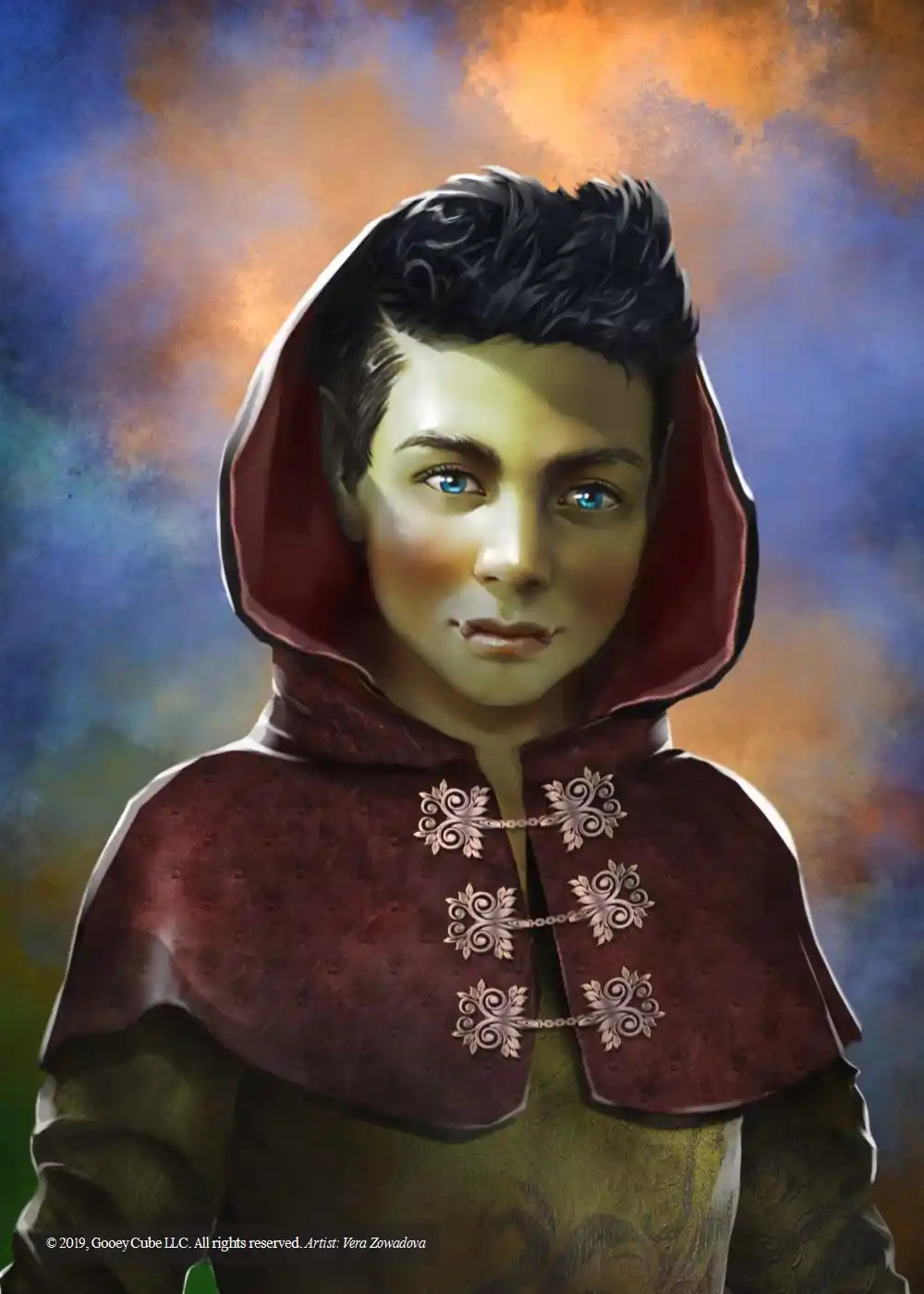
Calnassé is a Half-Orc and is nearly as strong as Borag, allowing 
her to take on four or more farmers herself. But, because she is 
smaller than the Ogre-Man – and her frame more lithe – she is 
typically able to win more coin. Most believe her to be the far easier opponent – a mistake that has led to many painful sprains, and many more empty purses. Calnassé is also cunningly smart and has helped the troupe avoid many problems with her quick thinking and extensive knowledge. But, like Borag, these are not her greatest qualities... for Calnassé is so much more than a strong and capable leader. In truth, she is as much a mother to you as any – with a will for your safety that is unmatched. Many times you have felt her embrace when the world brought you pain. And more times than perhaps you would like, you have felt the sting of her hand on your backside when you broke your honor.


As Prema Bonduran, these two are named as the Bravda and Vrenda of the troupe (which loosely means “All-Father” and “All-Mother” in common speech). It is a duty they never shirk. Borag and Calnassé have been married for many years and have three children. But the Hanataz way is not to dictate through rulership... nor does position pass by blood. Though Borag and Calnassé are the leaders of the troupe – both in name and by position – they serve under the guidance of the Bonduran Council and are appointed by them. But all troupe members – no matter their position – give deference and honor to Mother Salvensa, the wise and powerful Seeress of the Blue Veil.


Mother_Salvensa.webp
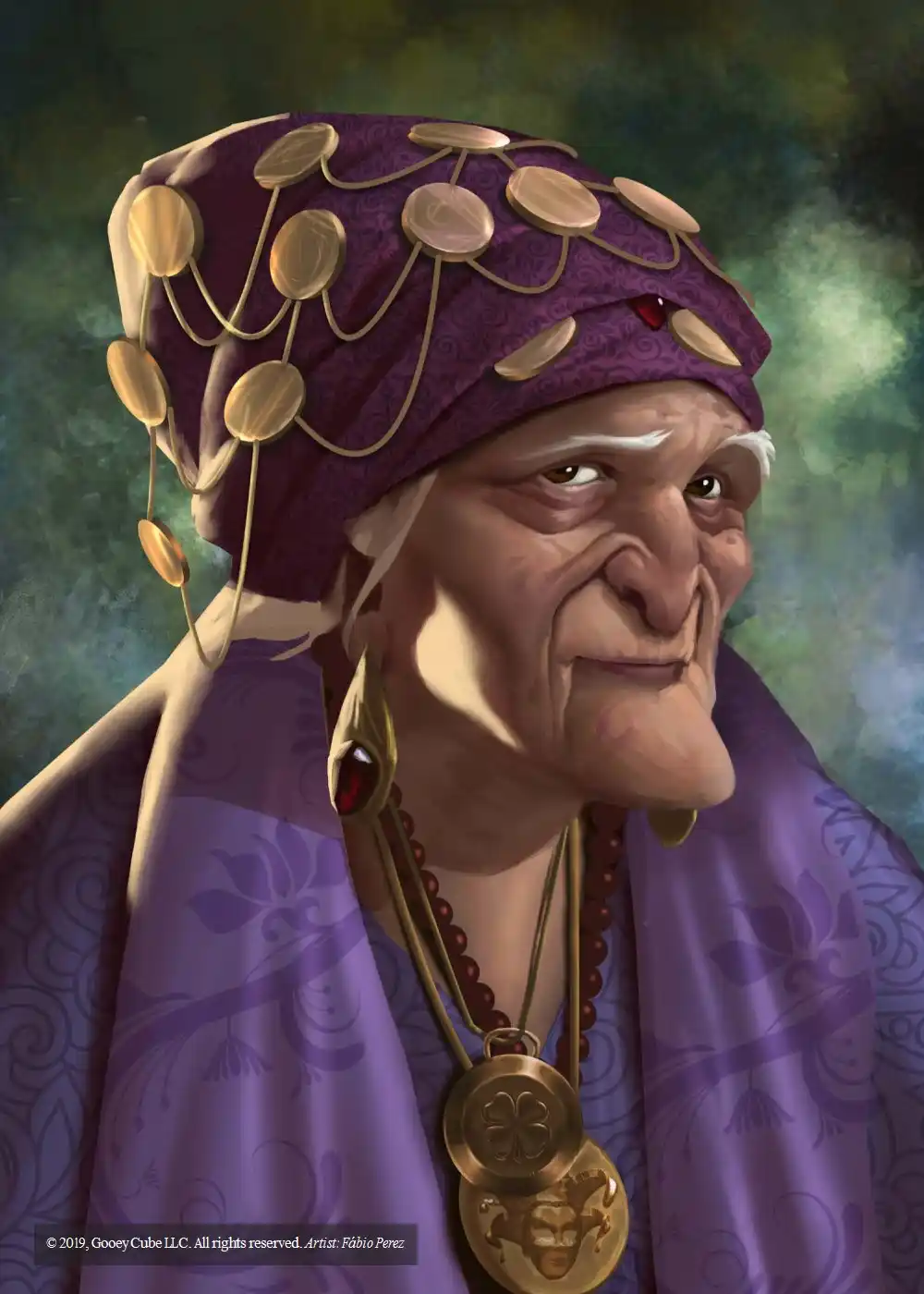
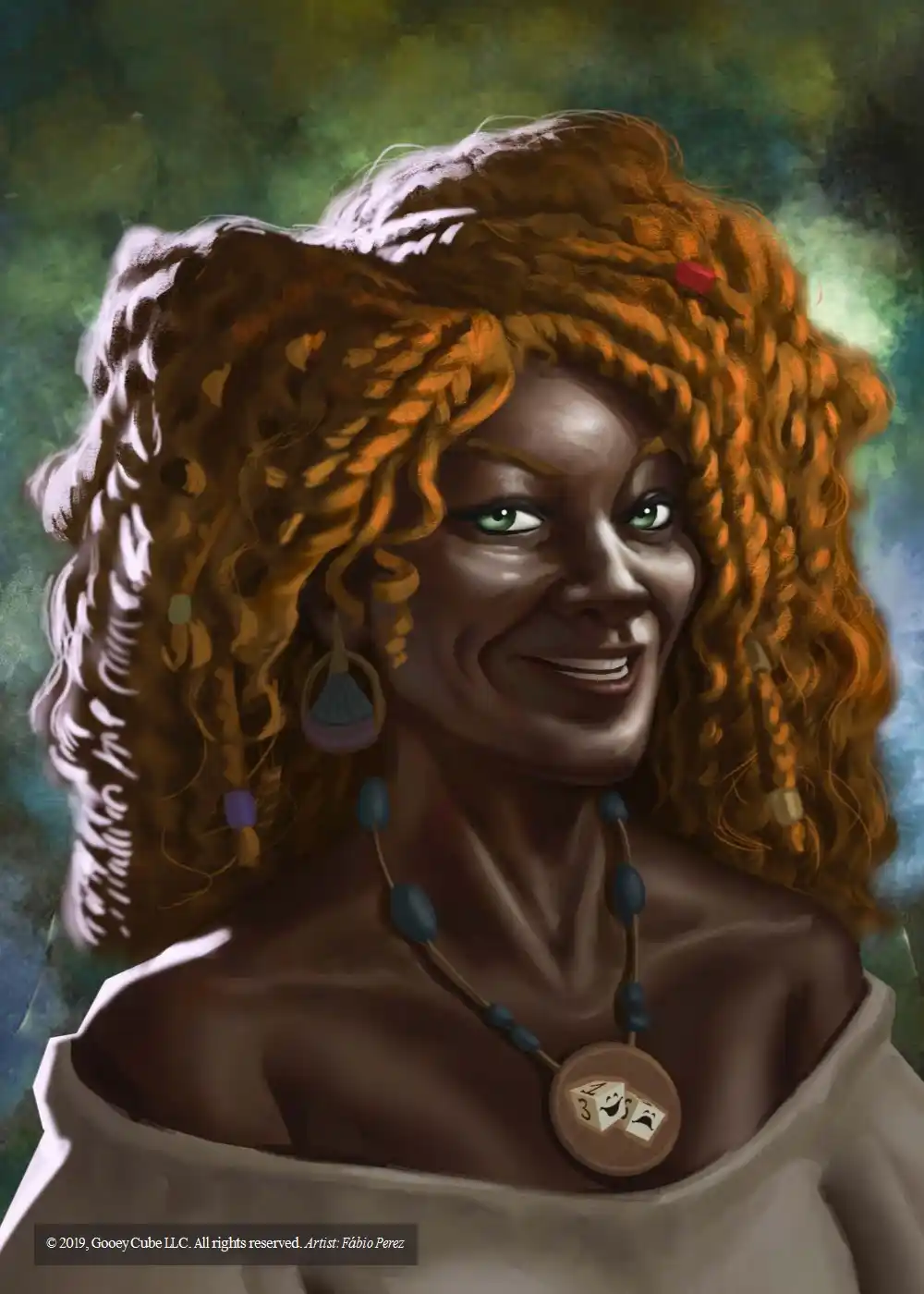
Mother Salvensa is the matriarch of your troupe and a Diviner of no small ability. The people of the villages come to hear their fortunes from her – ill or fair – and to drop their coin into her old, worn, strongbox. Though quite advanced in age, her magic is still potent, and she can both heal and harm if the troupe is in need. She is a kindly woman with white hair and a wrinkled face that is often broken with a toothless smile. Her wisdom has served the troupe well since she became Seeress many decades ago. She is also as kind and loving as any grandmother could be... and often as mischievous as an imp.


Together, these three lead the troupe with strength, integrity, and wisdom; following the ancient code of the Traveling Folk. And, should the caravan be assailed, all three will make much trouble for those who would seek to bring violence upon their people.


Vestia.webp Skizzig.webp

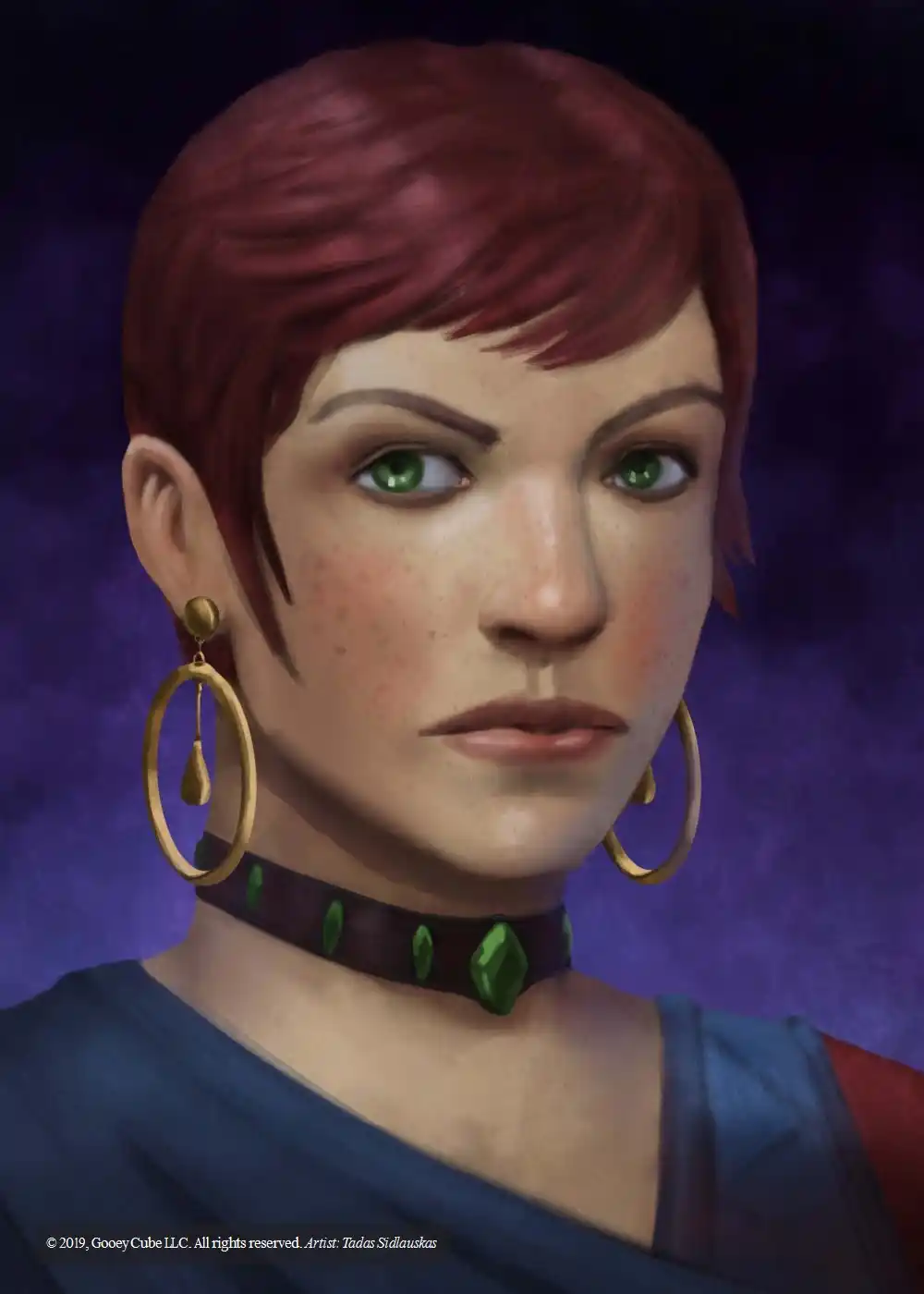
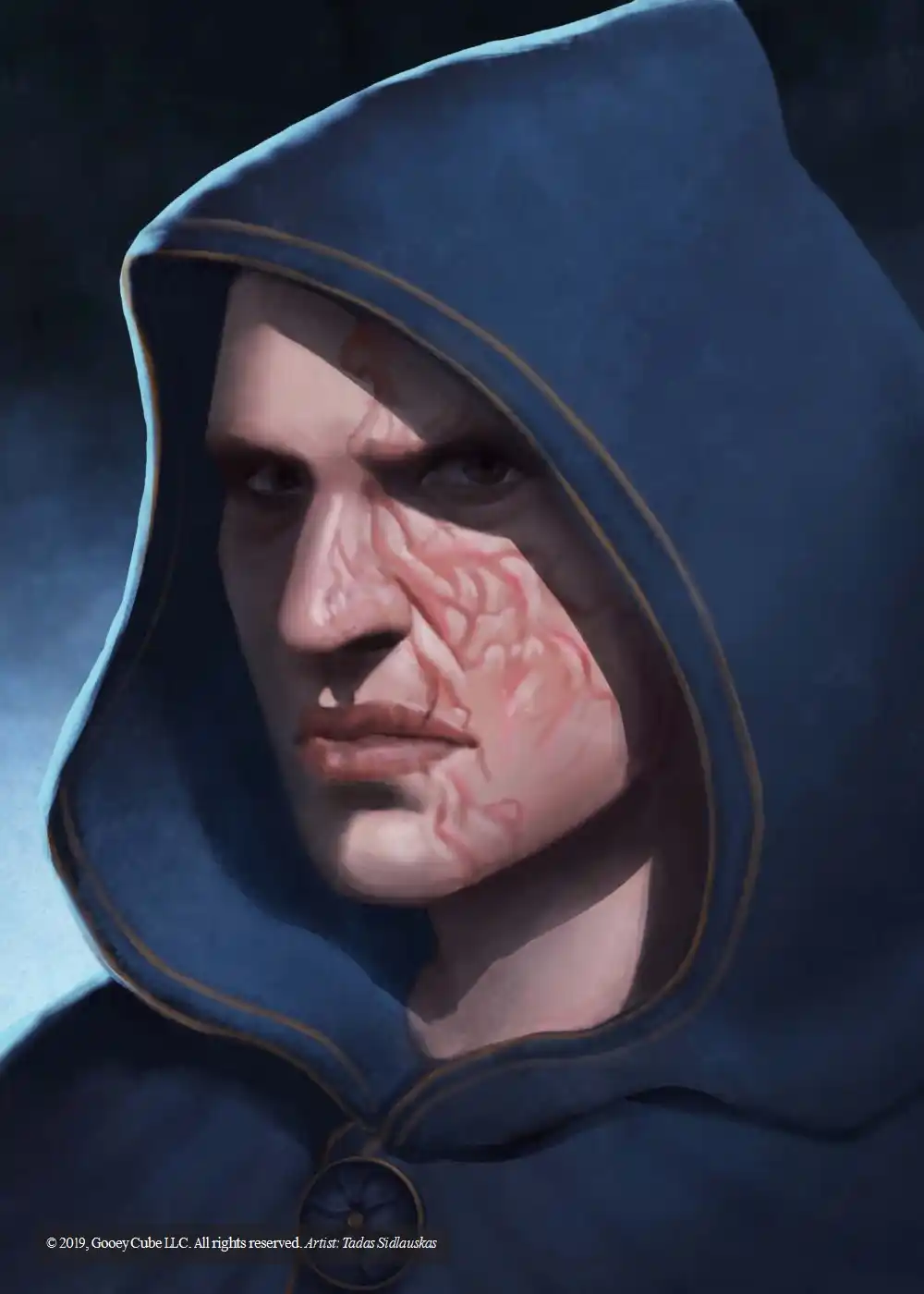
But they would not be alone should a group of bandits or a roaming Orc war-party attack the Blue Veil. For within the troupe are a number of dangerous and capable foes... ready and able to defend the wagons, the elder-folk, and the children of the Hanataz should the need arise. Your thoughts run immediately to Vestia, the Mistress of Secrets, who is also a member of the Bonduran Council. She is a Human female with short, red hair and a freckled face. She has silvery eyes that evidence the Blood-Touch of the Fey – but, unlike many, the Touch is subtle. As such, she is often able to enter towns surreptitiously... to purchase important items for the troupe, make contact with an agent or ally, or gain information about a town’s intent toward the troupe. She is also a Sorceress of no small skill. There is also her partner, Skizzig – whose face and body are scarred from terrible burns in his youth. He is a Wizard of considerable ability.


Together, the two have used their magicks on more than one occasion to destroy those who would harm your kin – including the time you witnessed them burn alive an entire war party of Goblins that sought to slay your folk and loot your wagons. But Vestia and Skizzig’s magic is not just used for the defense of the Blue Veil. For when the people of the villages and towns come to the shows that your troupe puts on – which are called Carnivalles – the pair bring forth ancient magicks of the Hanataz. These illusions and phantasms were spell-crafted long ago by the first mage of the Traveling Folk, and are unknown to magic-users outside the troupes. Some say they date back to even before the Woe of Ruin... to the time of the Ethernic Civilization. The spells are sacred and secret, passed down from generation to generation.


They create booming bursts of dancing fire in the sky... conjure 
colorful phantoms that fly and dance like great wispy ghosts... and summon strange and wonderful creatures of sparkling light that awe and amaze those who attend their performances.


Kray_The_Blade.webp

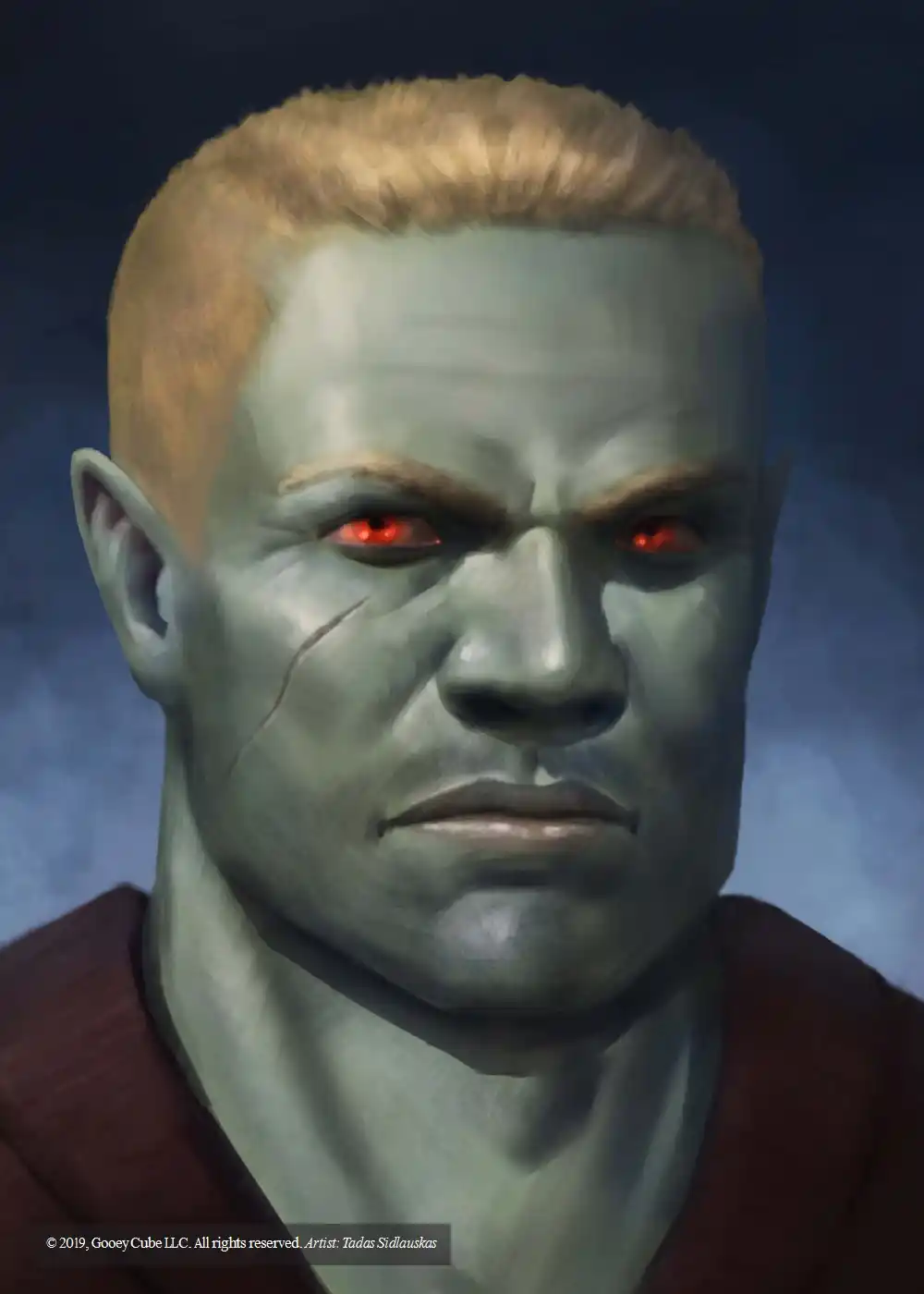
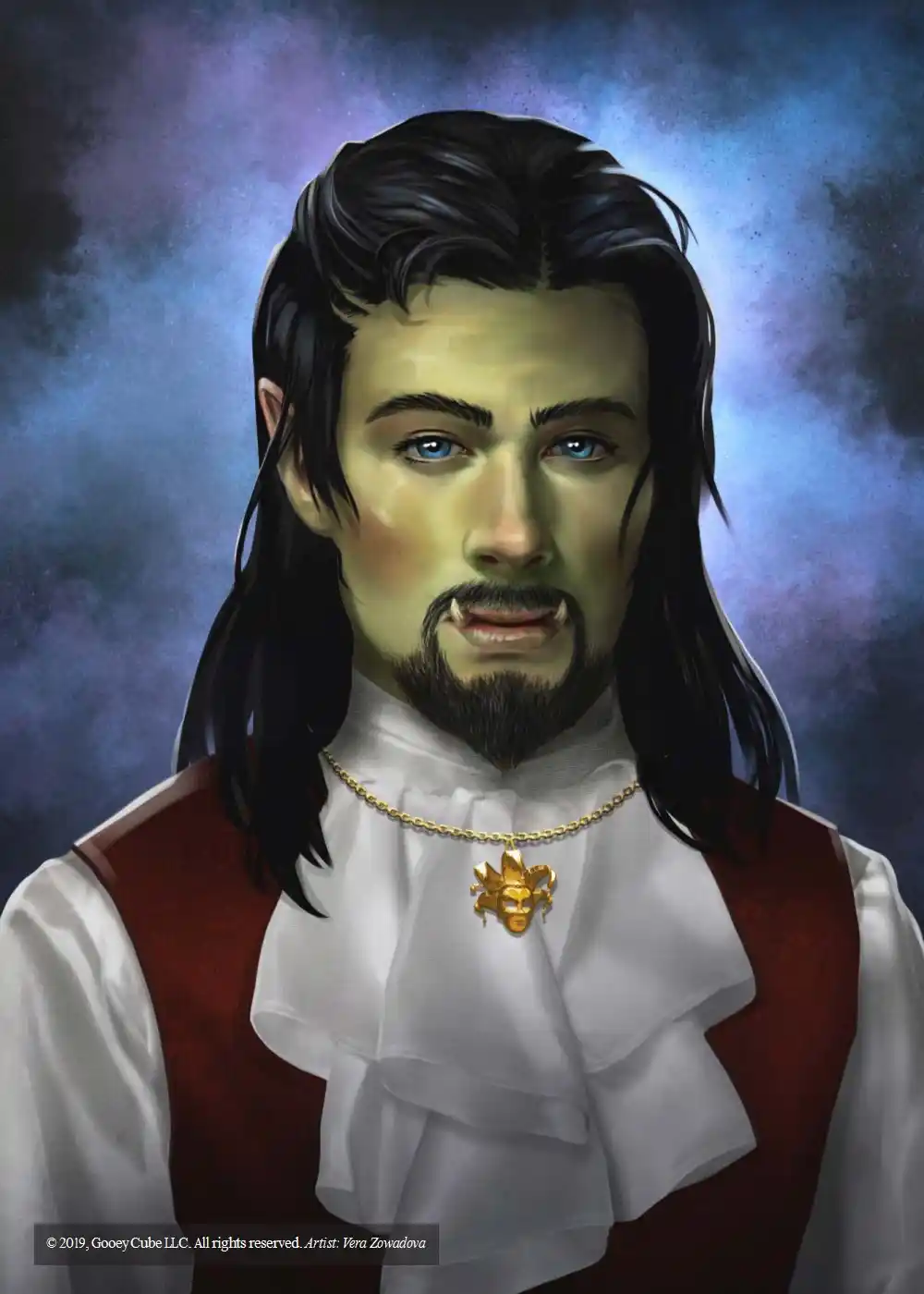
There is also Kray the Blade, whose skill with throw-knives, sword, and bow has rarely failed the troupe – even when contested against Elf-folk and Verdestian Rangers. His abilities have won much coin to fill the troupe strongbox in Borag and Calnassé’s wagon. Kray is a quiet man... measured... with a strong face and an intense gaze that seems to see to your very soul. He has a greenish tinge to his skin, though none know his heritage.


Many of you have been trained by him as there are few in the camp who possess his talents. Kray is also a member of the Council, though he rarely speaks in meetings.


Brayan_of_the_Blind_Wind.webp

Another member of the Bonduran is Brayan who is known as the 
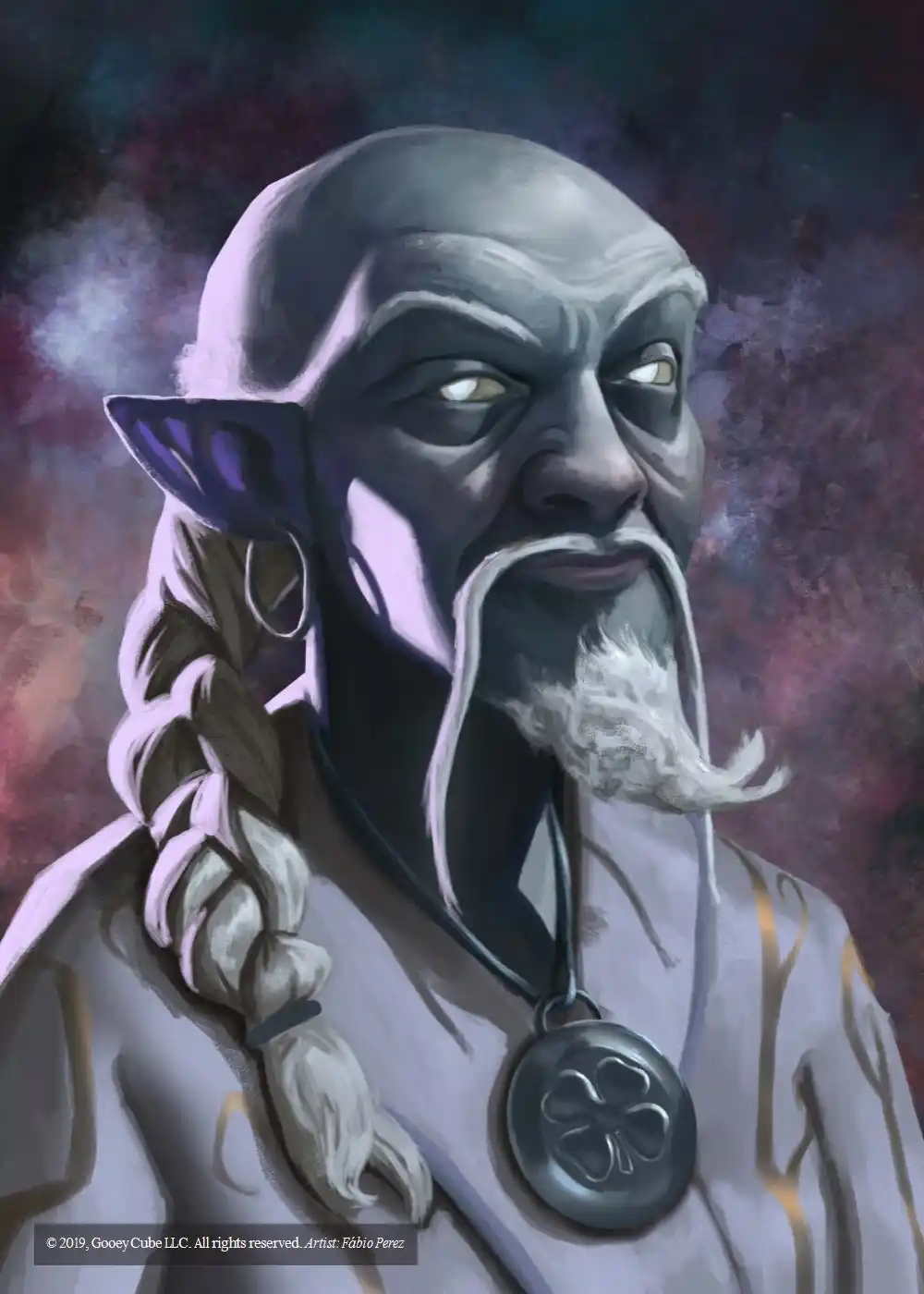
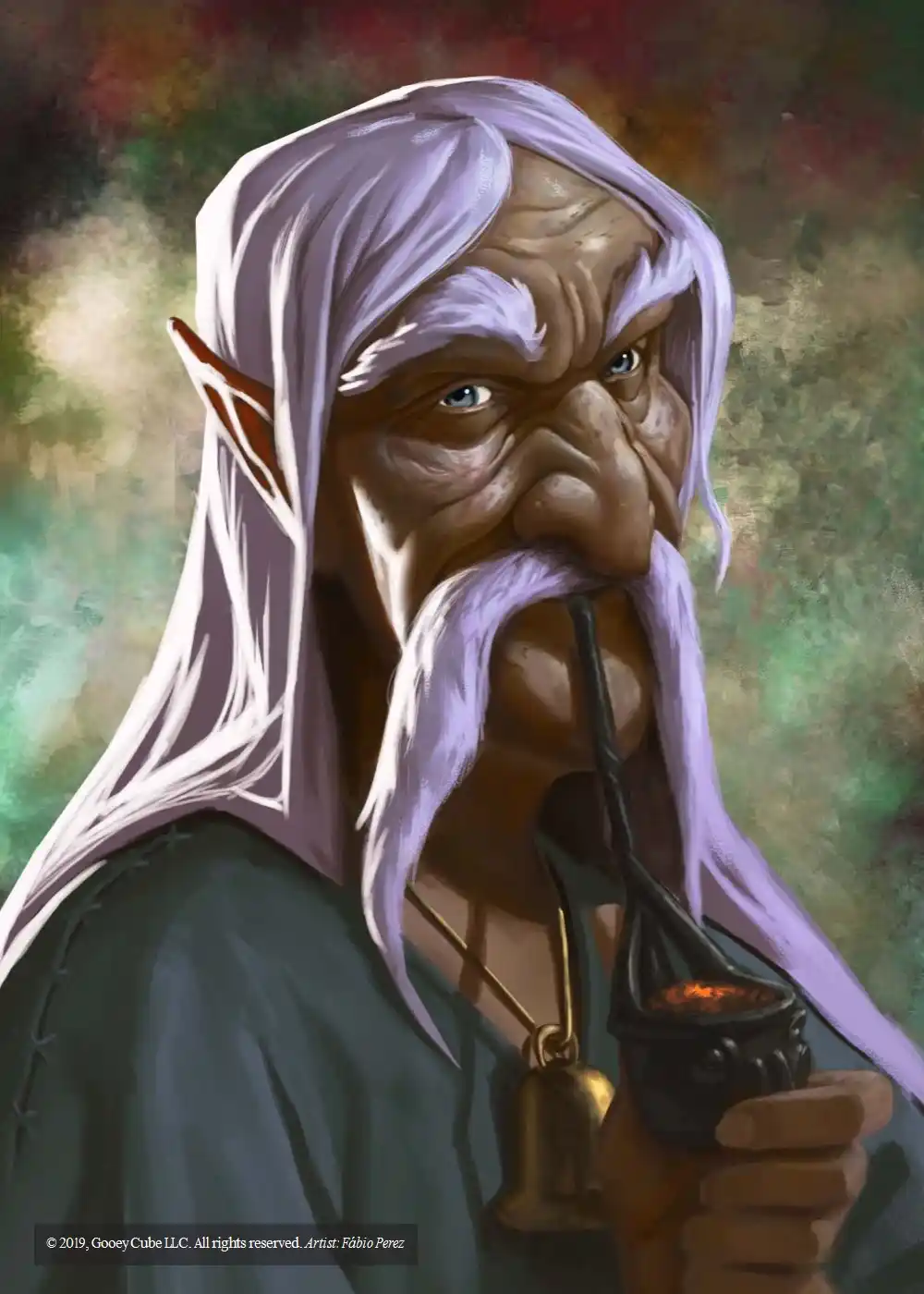
Blind Wind. He is an older, Wood Elf male with long ears, gray hair, and bluish skin – owing to the Blood-Touch of Elemental Air. He was once an honored Monk in Kizmya’s Order of the Four Fates, but was banished from that same Order many years ago for some serious transgression. In spite of his banishment, Brayan is no less skilled and his blindness doesn’t appear to hinder him at all... whether he is contesting with his bo-staff, or counting the coin in the winner’s purse from that same battle. Brayan is a wise and soft-spoken person who has taught you many lessons through the years.


There are others as well that would aid the troupe in times of attack, should one occur. But aggression against the Hanataz caravans tends to happen infrequently as the fighting prowess of the Traveling Folk is well known across the continent.


Portrait_28_Greyson.webp Portrait_29_Grelda.webp

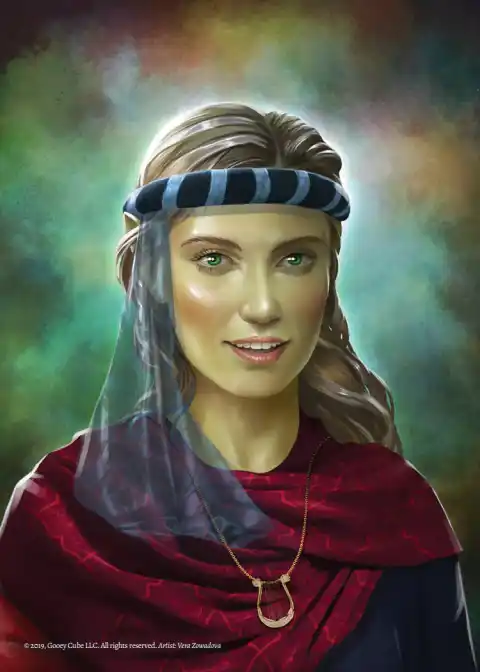
The blue-eyed heartthrob of many a lonely maiden, the artist formally known as Greyson is a Bard without compare… excepting Grelda of course. His silver tongue and clarion voice have been known to cause entire crowds to swoon and feint from excitement. Or so his re-tellings have claimed.

Grelda is exceptionally talented with the harp and flute, but her true gift is in her rapturous voice. Where Greyson’s voice can make a dozen women swoon, Grelda’s can make a hundred men weep. Even the trees and stones seem to listen whenever she graces the world with her singing.

Not all in the troupe are Fighters and Wizards, however. Yet all contribute in one way or another. This is the way of the Hanataz.


Mavea.webp 
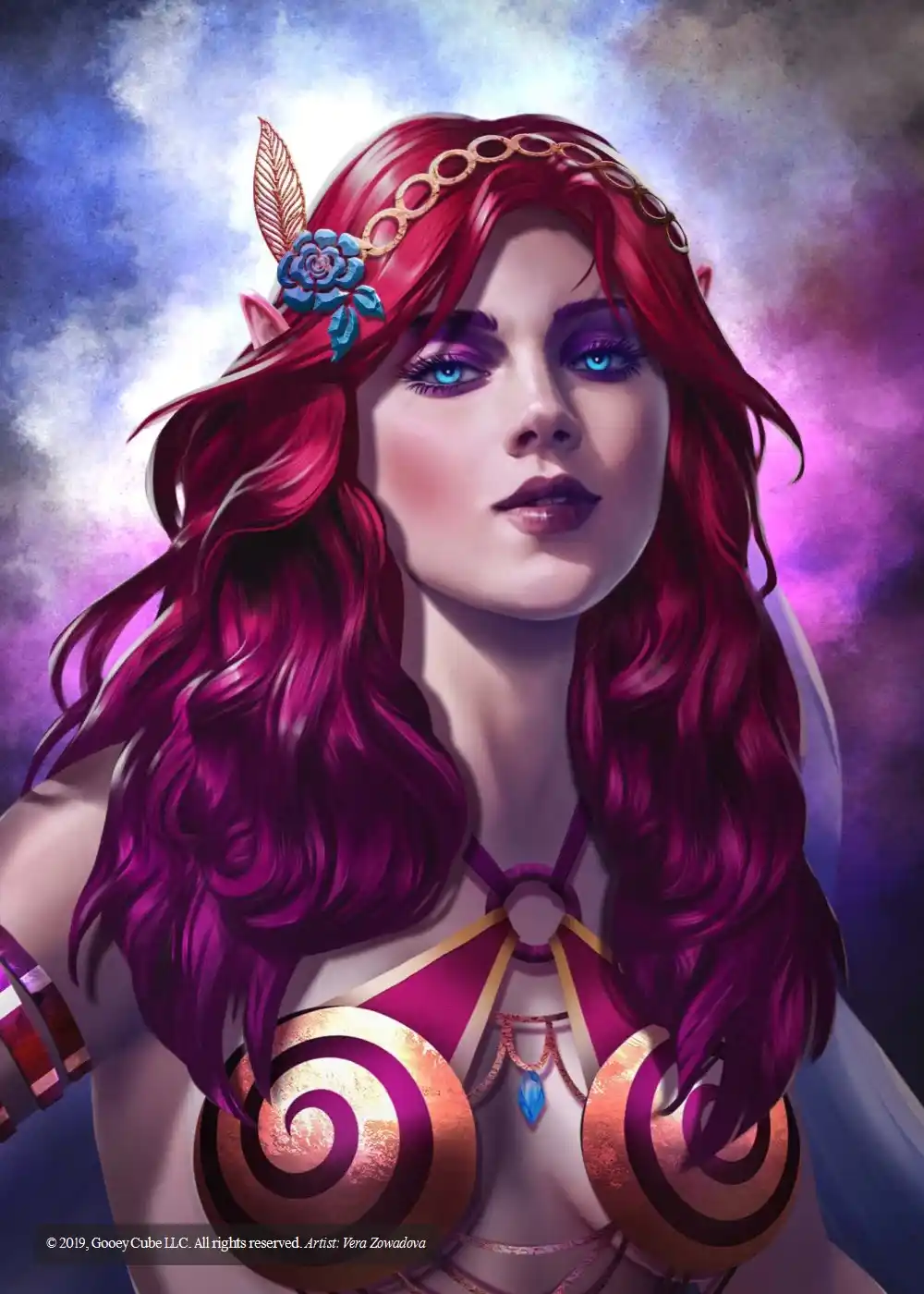
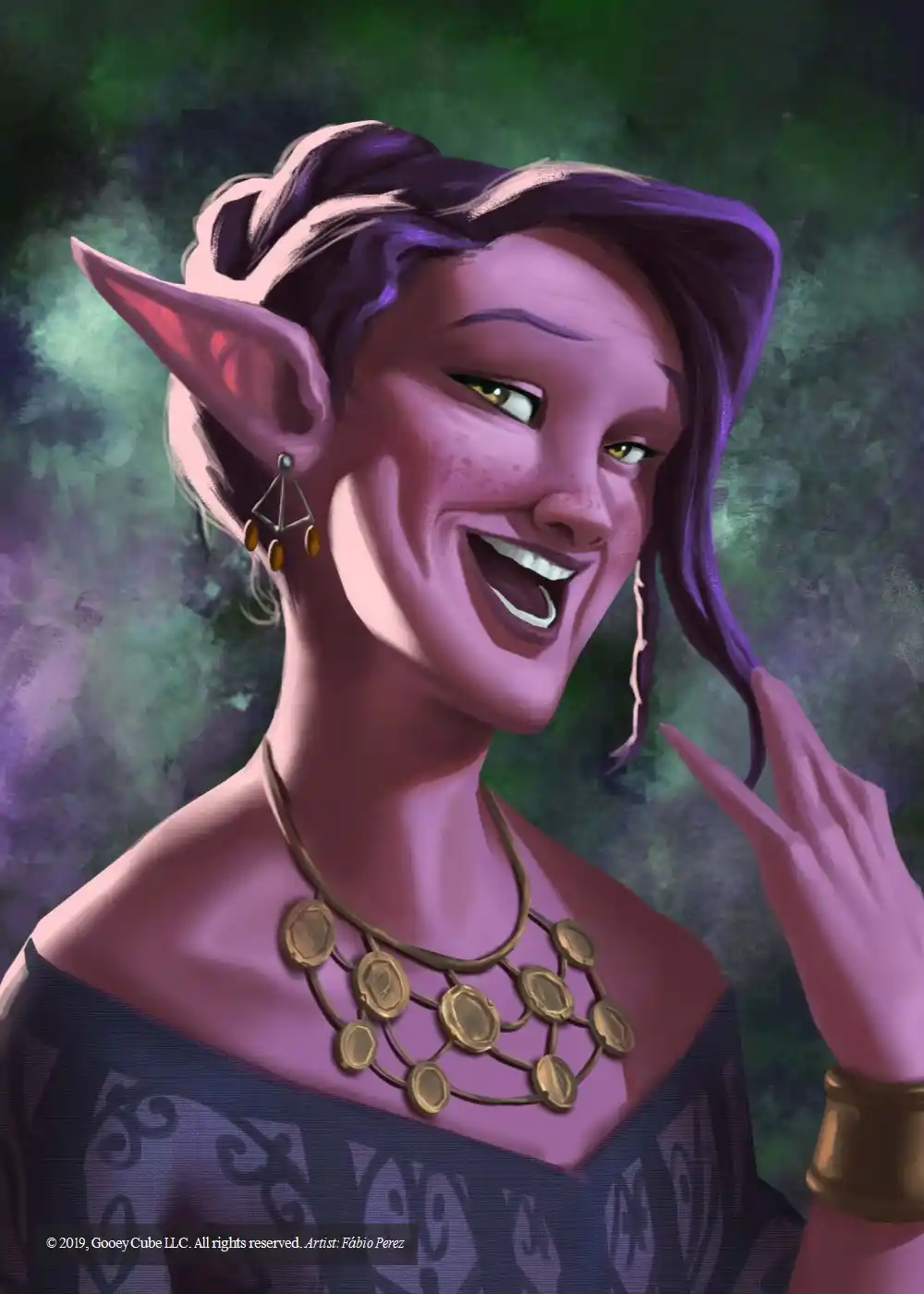
Mavea, along with her two older sisters, Elnass and Saevra, are all Spelldancers. These three have mastered many of the famed, magical Hanataz dances... including the Fire Dance, the Dance of the Phantoms, and the Six Movements of the Alsa’frese. These magical performances – like the Hanataz magicks practiced by Vestia and Skizzig – have been passed down since the early days of the troupes and are a secret well-kept by the Spelldancers. Their performances are crowd favorites, and many come to the Carnivalles for the sole reason of watching the women dance. As such, much coin comes to the Blue Veil due to the considerable expertise of the women. The three sisters are also exotically beautiful due to the Blood-Touch of the Noble Fay’aree. Elnass and Saevra are in their mid-thirties and have children who are rather near Mavea’s age. While Spelldancing is primarily an entertainment magic, some of the movements may be used for defense and/or aggression should the need arise.


The Spelldancers are not the only entertainers in the troupe. There are also Greyson and Grelda – a Human and a Half-Elf – married for some years now. Both Bards of excellent skill... with crisp clean voices of song... and quick, cutting wit. Their shows are popular with the crowds and are always well-attended. Grelda, in particular, can bring strong men to tears with her singing. Some say that the pair ran afoul of the Selen’hadrine and are in hiding with your troupe. None believe that Greyson and Grelda are their real names.


Selvra.webp

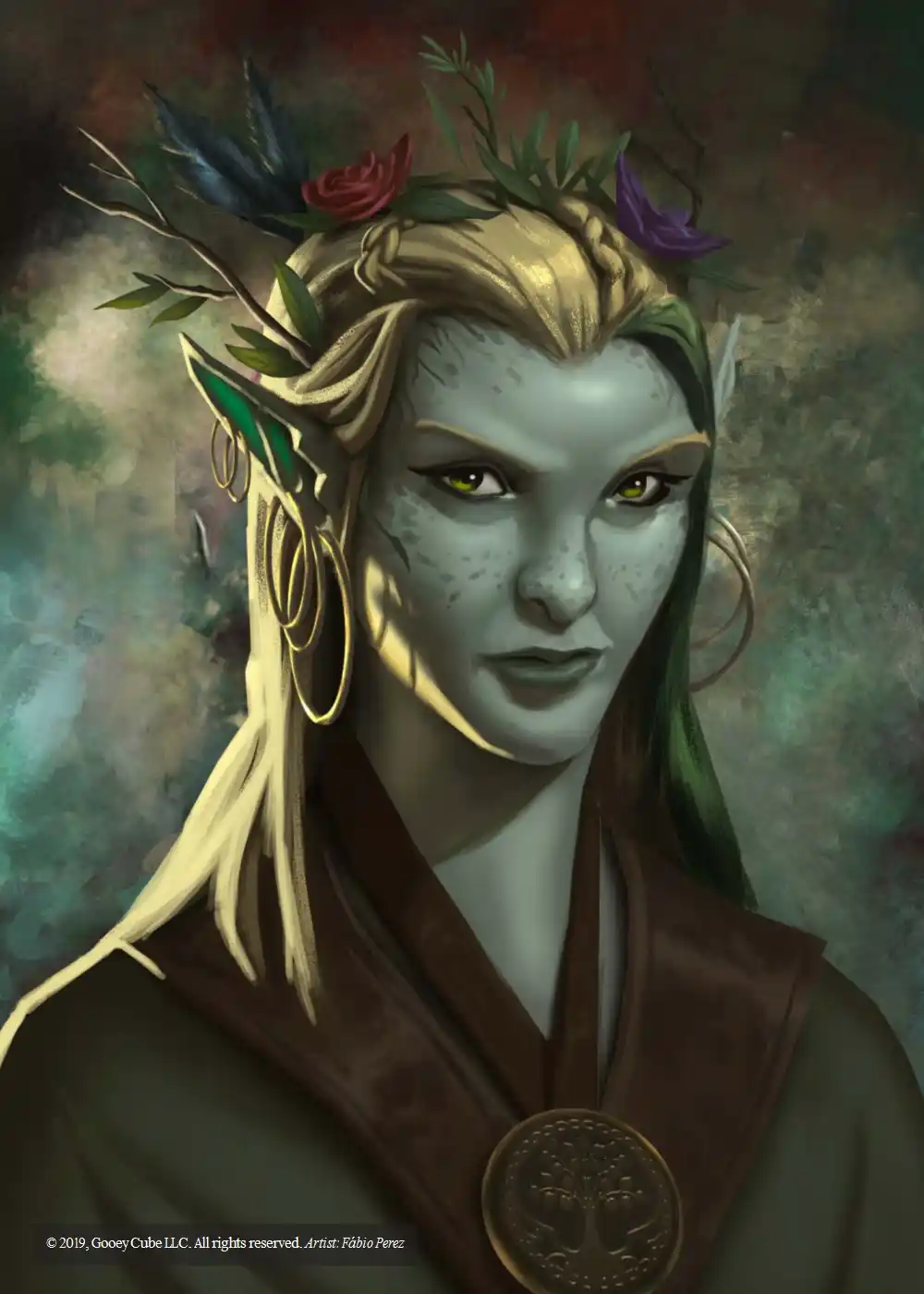
Beyond these, the troupe is also favored to have Selvra the Beastmaster, whose show with her tamed Owlbear and Manticore is perhaps the greatest attraction that your troupe offers. The beasts obey her completely and do her bidding without hesitation. How she is able to command and control these monsters you will never know. 


But the show is amazing and never fails to impress an audience. 
Selvra is a Druidess and bears the rather obvious Blood-Touch of 
Elemental Water (and an Abyssal Blood-Touch as well).


Columbina.webp Zani.webp portrait_29_Taeleen.webp


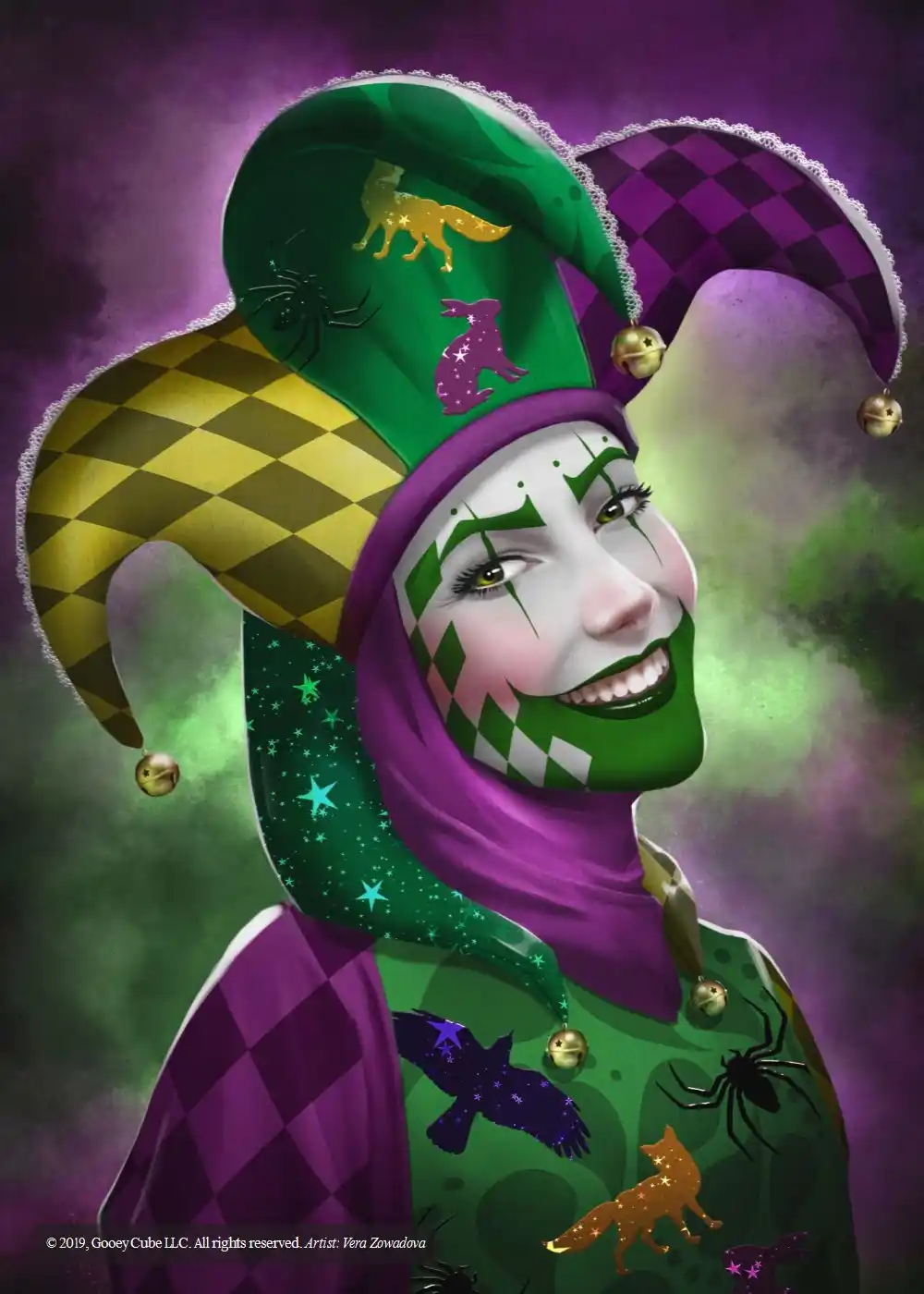
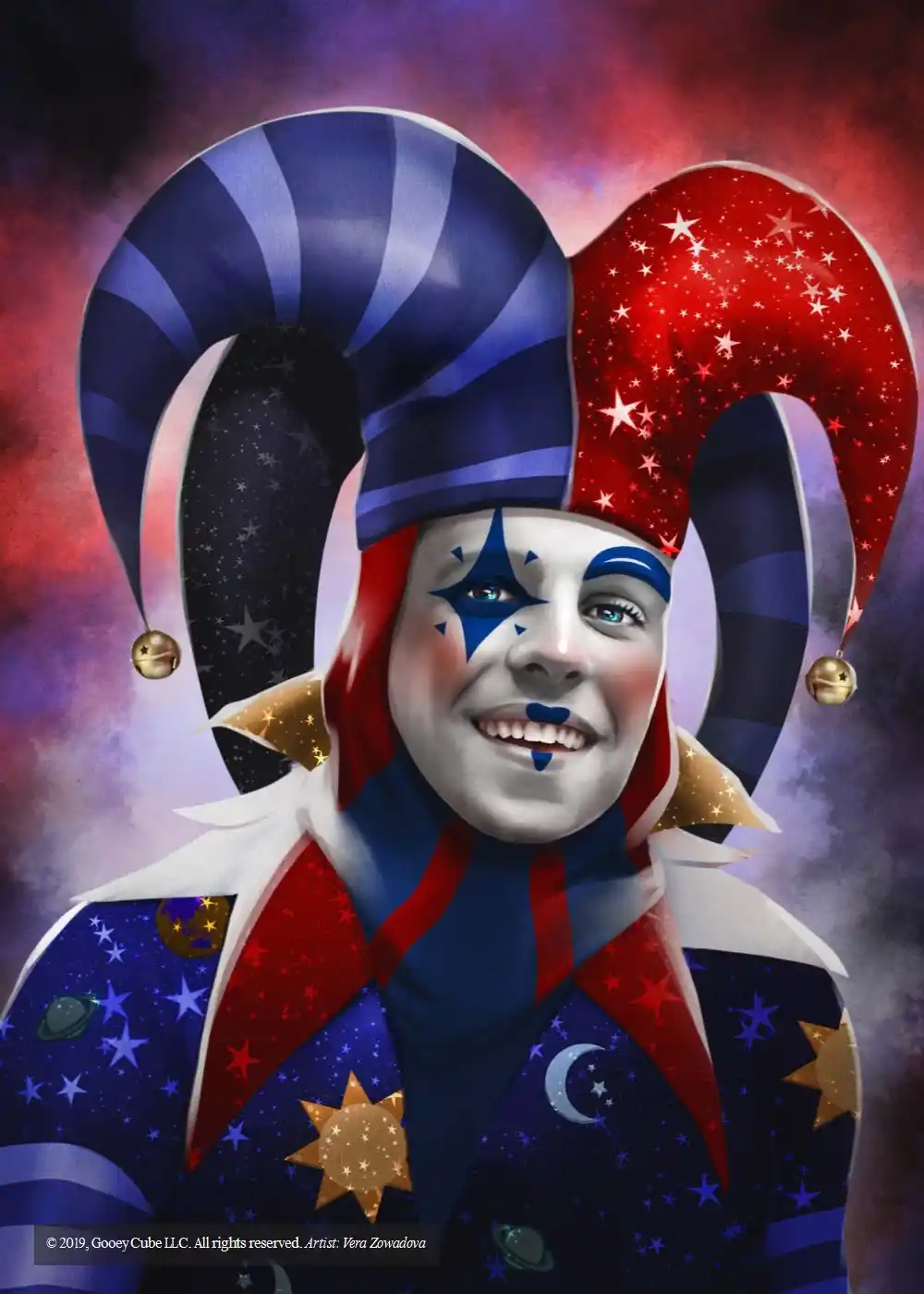
Then, there are the Jesters... Columbina and Zani. These brightly 
dressed clowns run slap-stick shows that delight audiences across the sovereignties. They are energetic, enthusiastic, and experts at making folk laugh. They are also quite annoying as they rarely step out of character even when there is no show going on. Their understudies Taeleen and Fizbin are learning with them.


Tevren_Ziss.webp Freasha_Firehair.webp The_Great_Clasby.webp

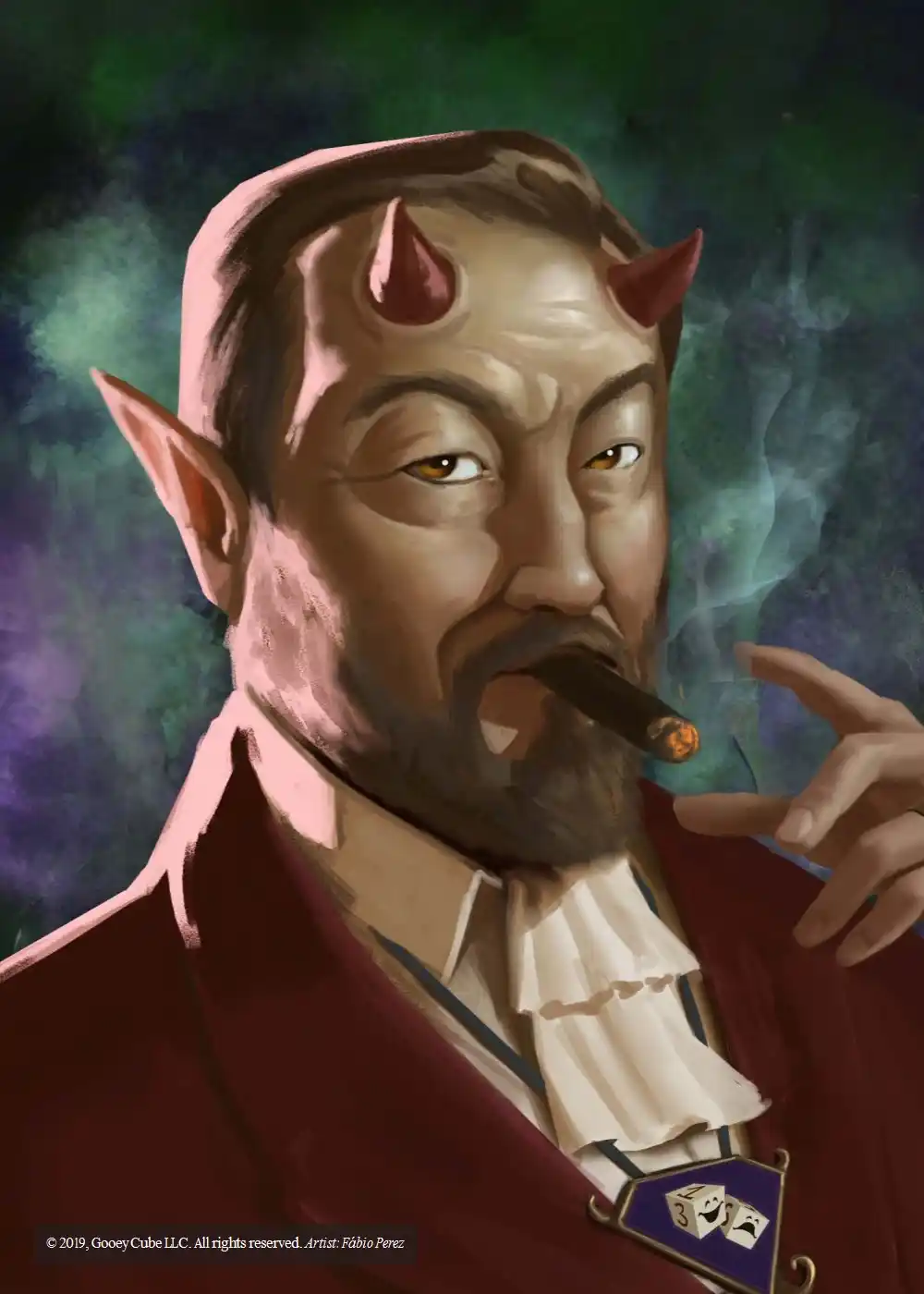
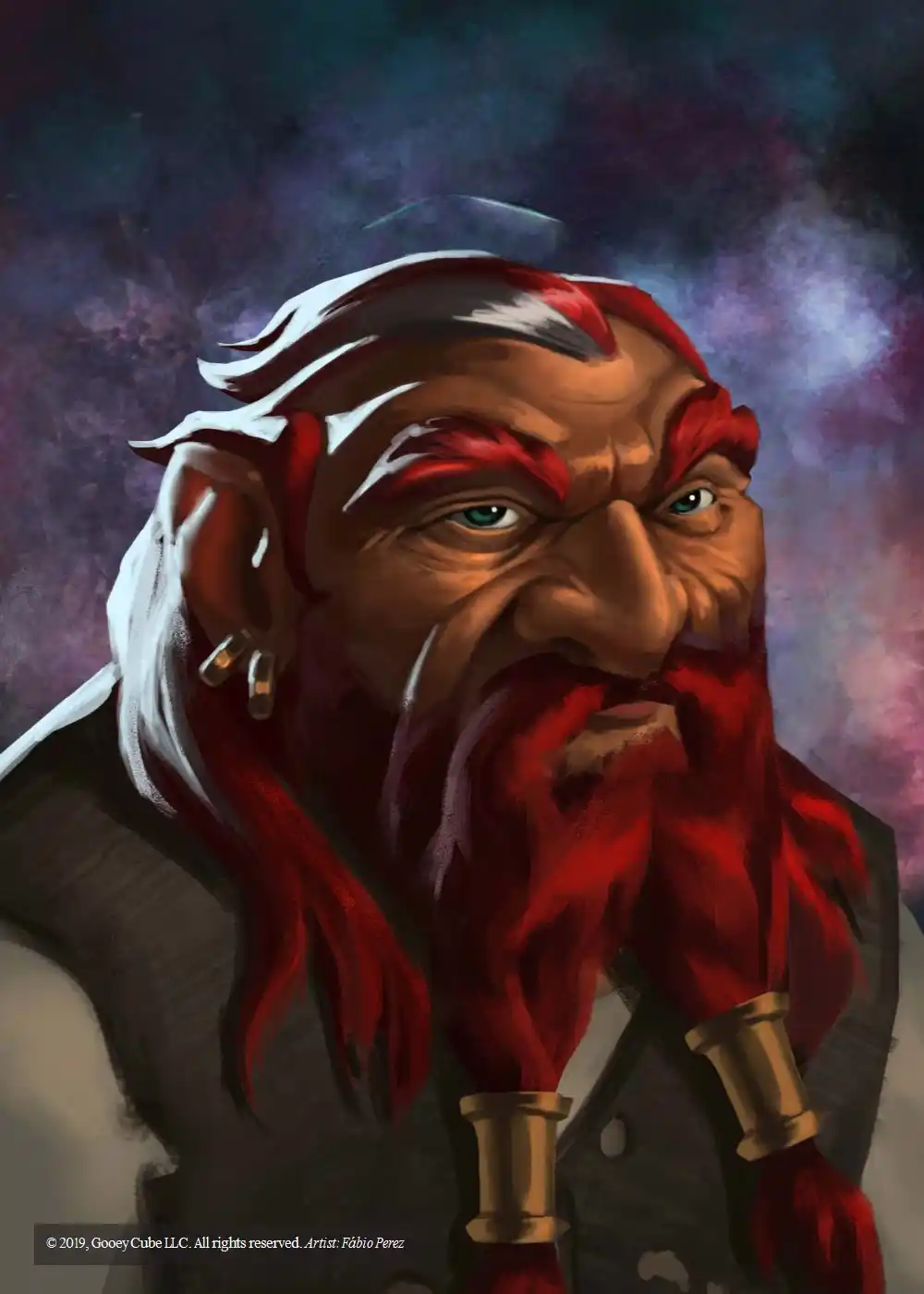
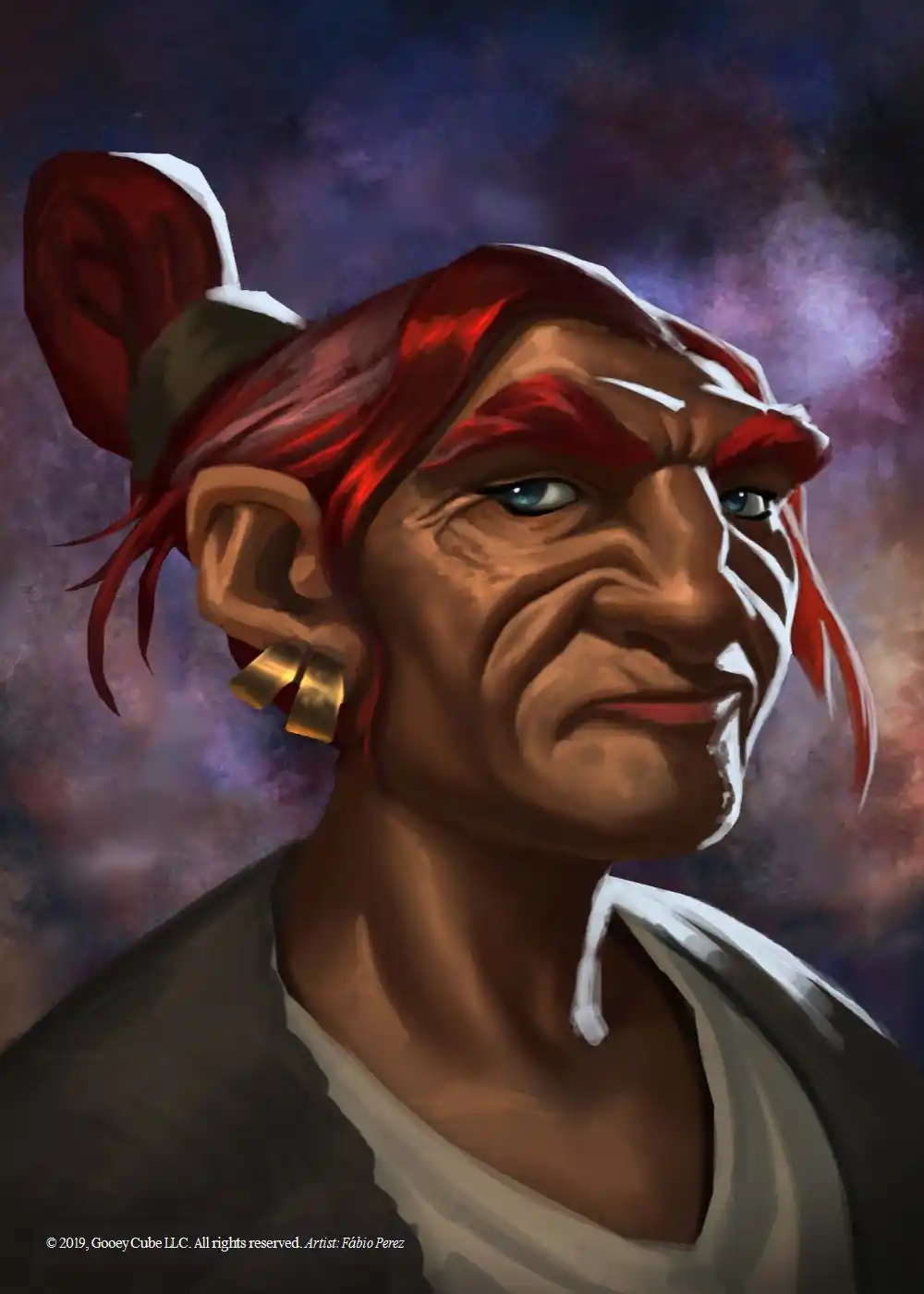
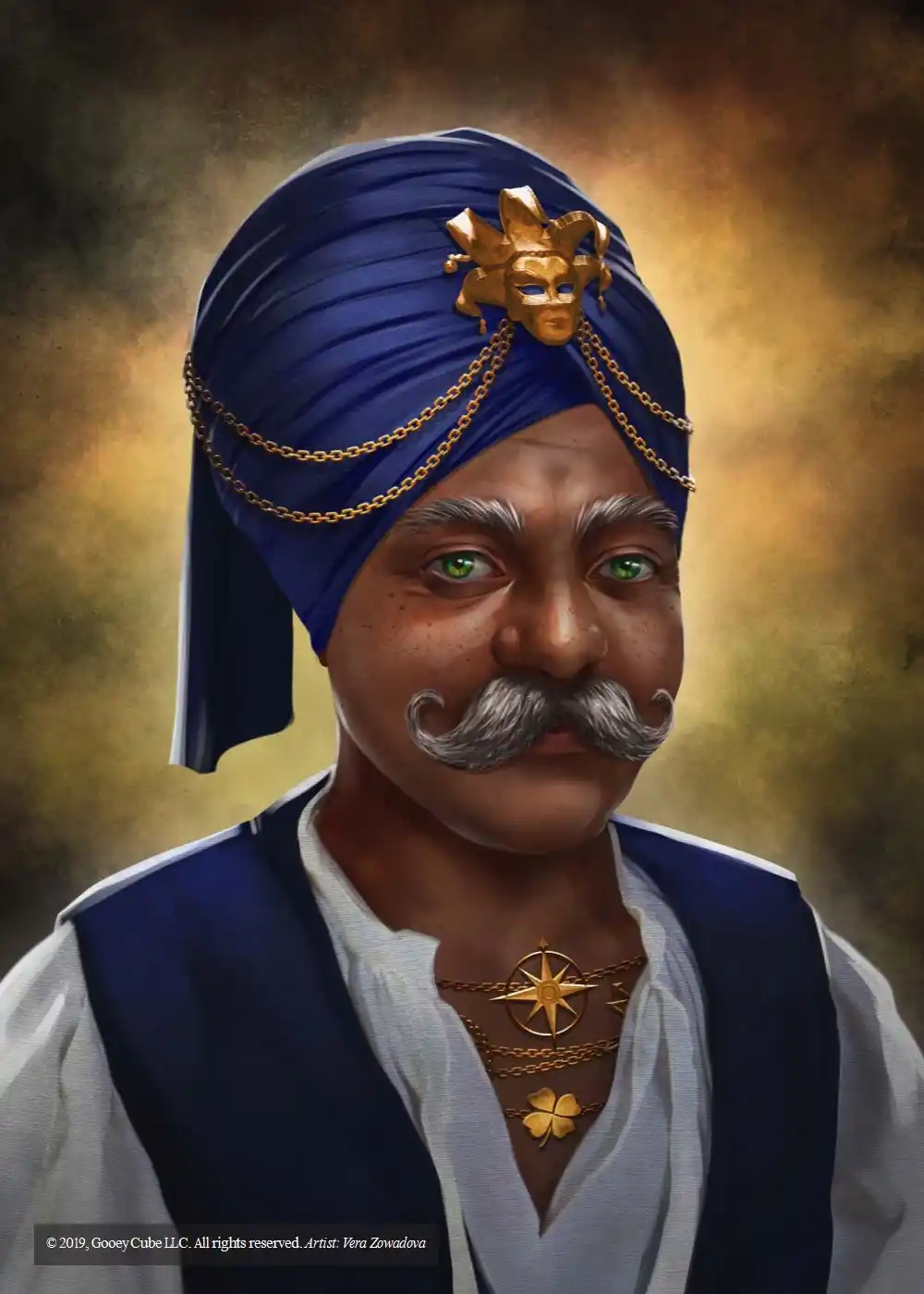
Entertainment is not the only offering that the crowds come for at the Hanataz Carnivalles. Gambling is also one of the main attractions. In this, the Blue Veil are blessed of the gods to have Tevren Ziss, Freasha Firehair, and The Great Clasby. These three are gamblers with great skill in both knowing the odds, and in reading the faces of those they play against. They run games of Fool’s Down, Nubs & Lords, Blackdie, Kizmya’s Wheel, and many others to gain coin for the troupe. They win far more than they lose. Tevren is a mix of Orc and Elf blood and is quite handsome. Freasha is a Sundestian who bears a nearly unnoticeable Draconic Blood-Touch. Clasby is a Human that is Blood-Touched by the Abyssal as evidenced by the small red horns protruding from his forehead.


Stoof.webp Leena_Drungan.webp

You are blessed of others, as well. There are Stoof and Leena, a 
Dwarven couple who are both afflicted with Twisted-Bones disease. They work the crowds and cover the bets for the troupe in contests of strength, agility, and skill. They are also excellent distillers and craft the clear, spicy spirits and the brown, sweet liquors that are mixed into drinks and sold to the crowds.


Sunessy.webp Frenne.webp

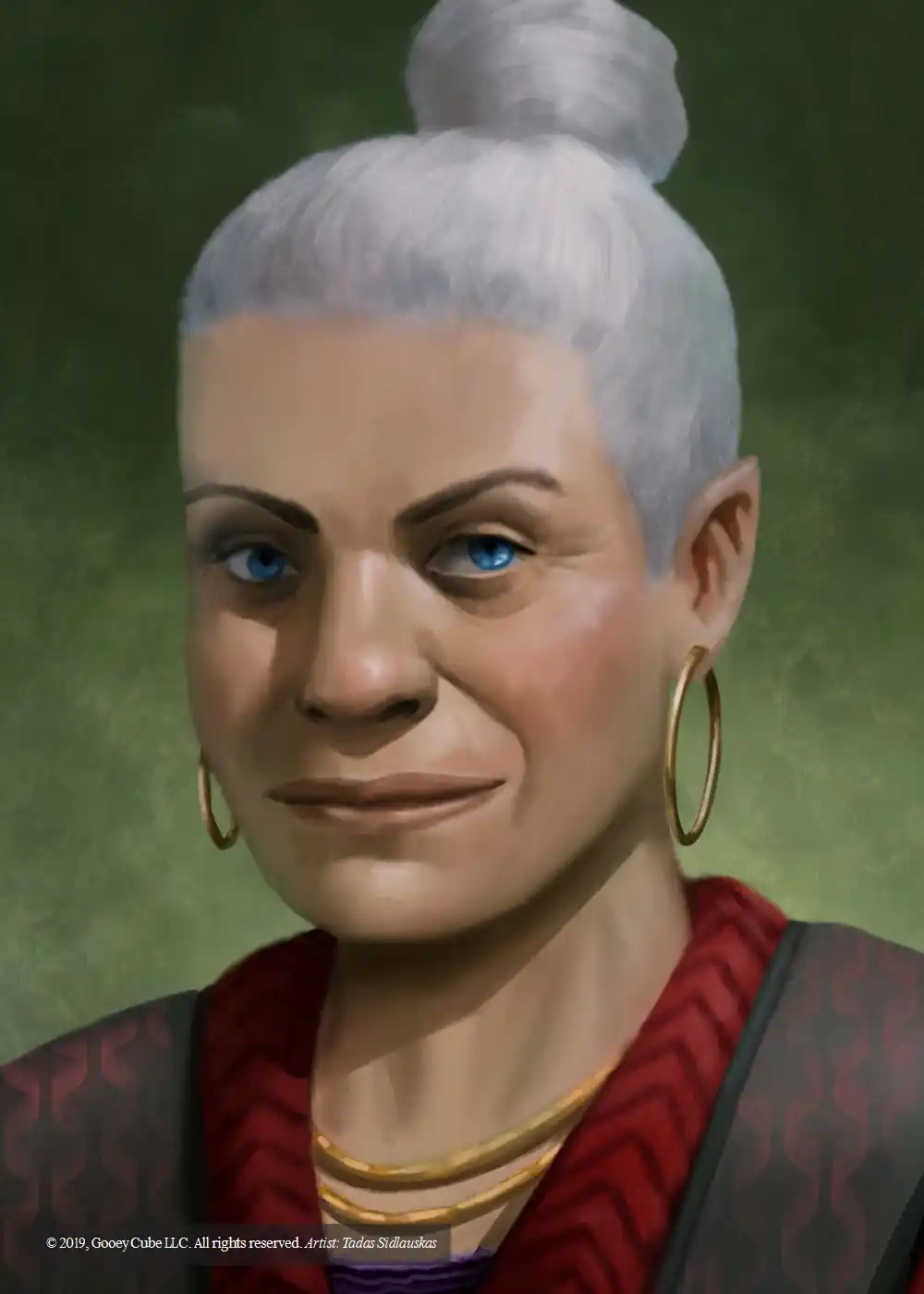
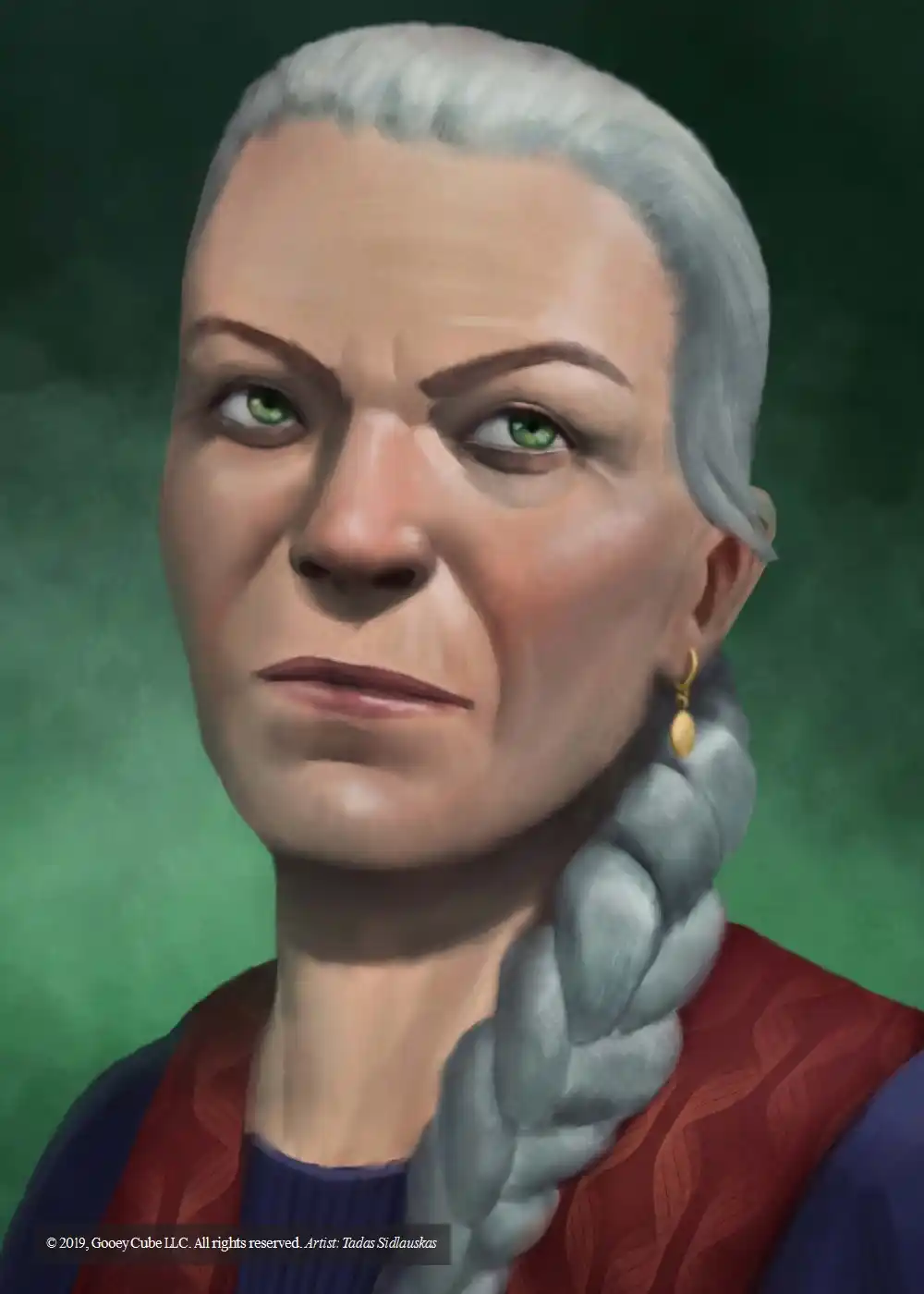
There are Sunessy and Frenne, the old spinsters, who both cook for the troupe and also make the richly-spiced and delectable dishes that are sold to the visitors at the Carnivalles. Since the Traveling Folk have to often make do with lesser cuts of meat and game, their skills both help put coin in your strongbox, and tasty morsels in your bellies.


Old_Strem.webp Anton.webp Chelsea.webp
And there are still others... Dren and Calva Steele who blacksmith for the troupe and keep the wagons rolling; Old Strem – the grandfather of the troupe – whose stories enrapt the Tent-Fires; Anton, the jovial priest who seems to always run afoul of the troupe’s Jesters; Hantz and Fendi, two little old Gnomes who are the troupe’s carpenters; Chelsea who is Half-Sarth, and both deaf and mute; and many more who make up the Blue Veil.


They are all your friends and companions... and the only family 
you know. As a Frenta, you are in training to become a part of the show in the years to come. Depending on your bent, you are being taught to perform, to fight, to gamble, to bring more attractions to the troupe – and yes, to perhaps pick a pocket, or run a little con, or seduce a lonely “Townie” for his or her last coin.


Even the very young are being groomed to serve. One of the jobs of the Frenta is caring for the little ones so the adults can manage the affairs of the troupe. It is impossible not to love them.


Creeda.webp Strend.webp Jovessa.webp

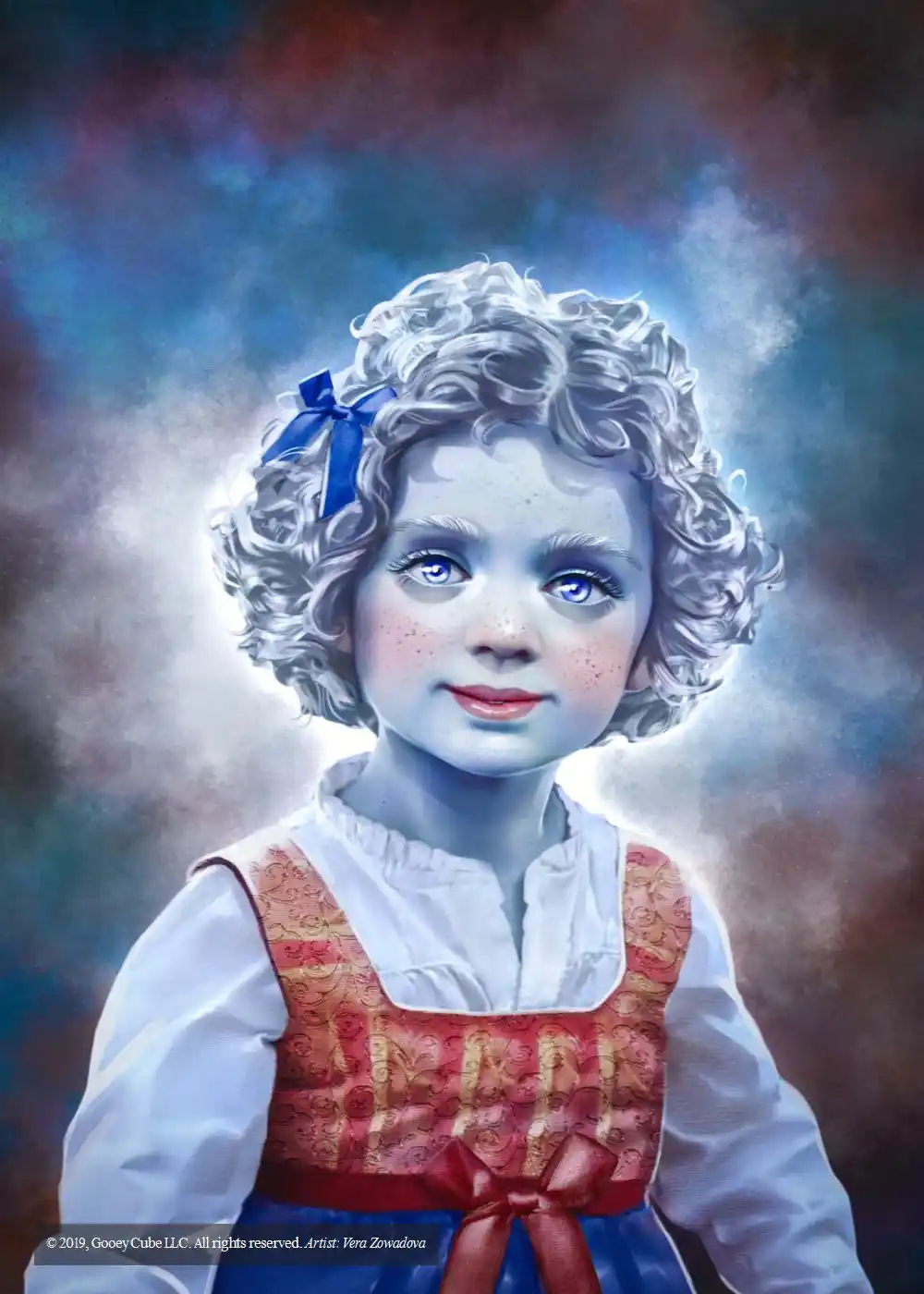
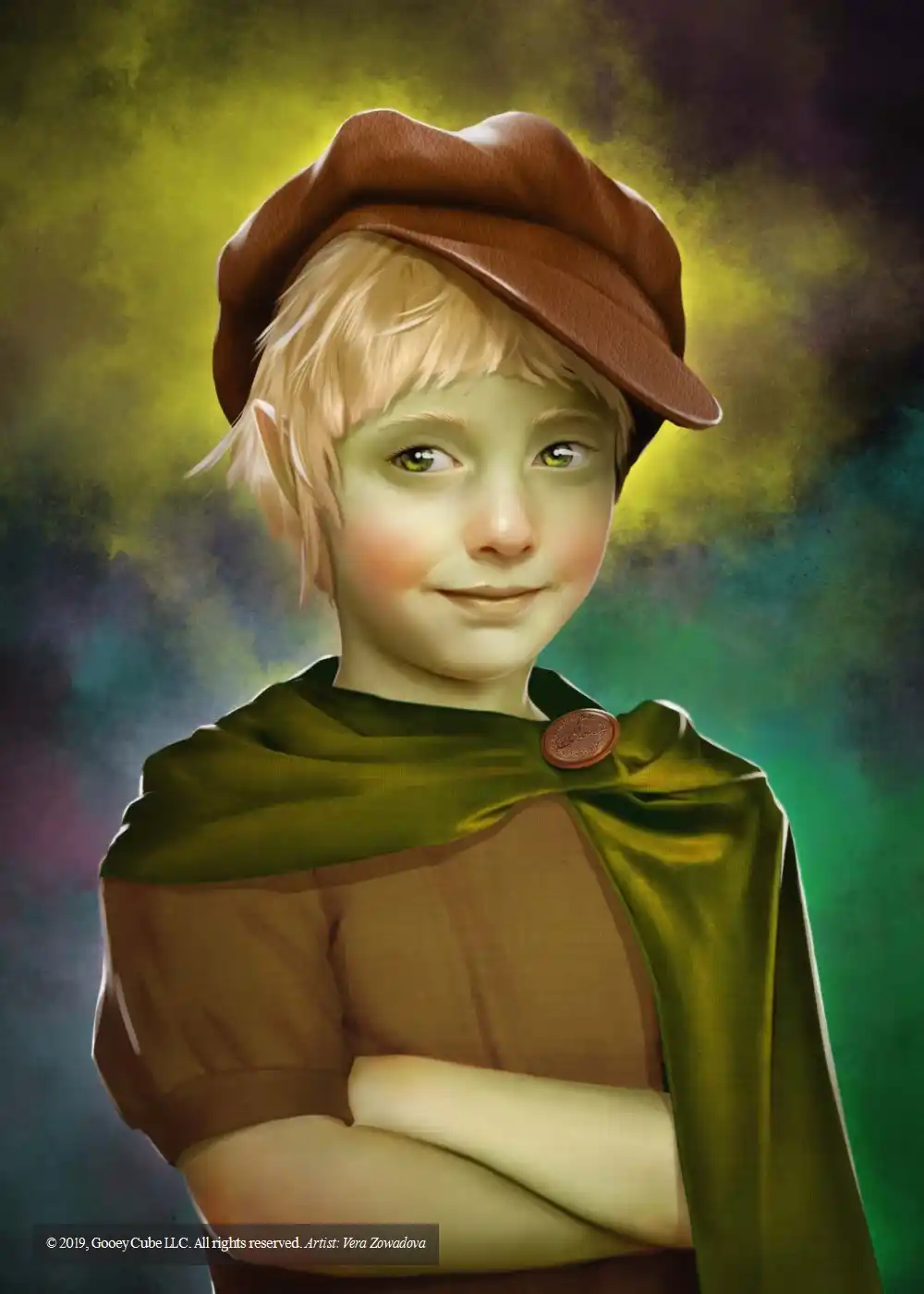
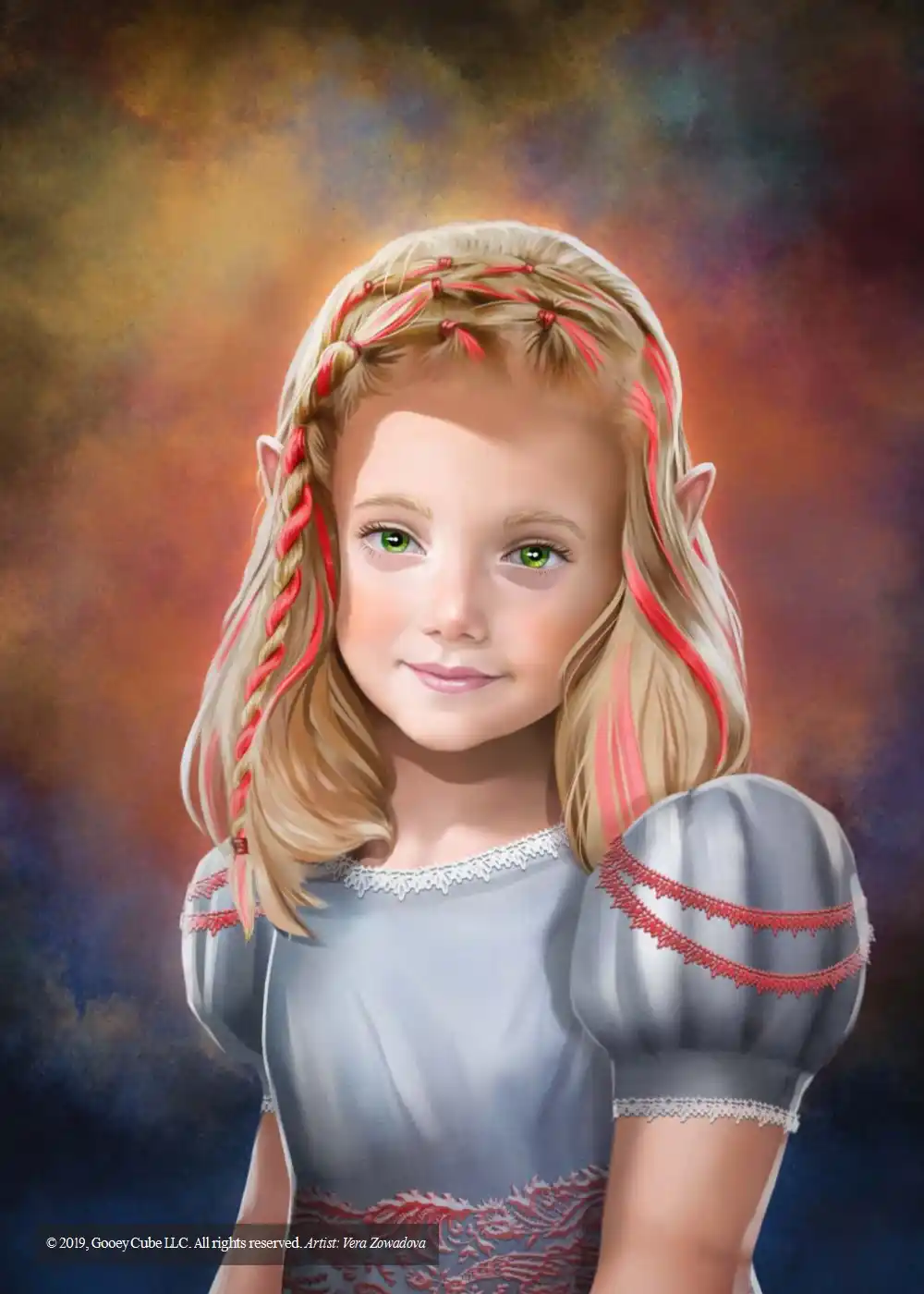
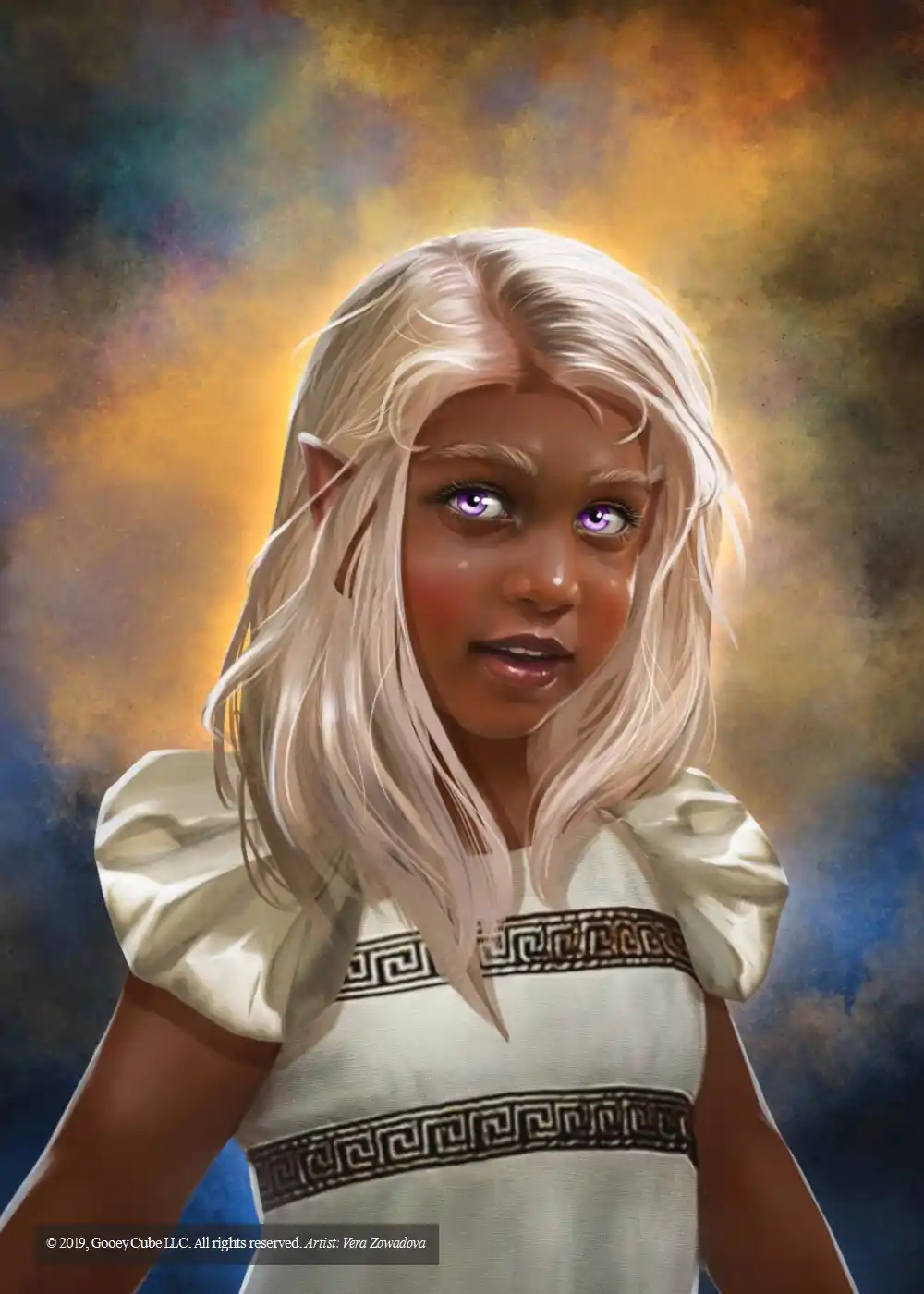
There is sweet Creeda, who at the age of four already has a voice that would charm even the stones... young Strend, who at seven is already showing talents with knives and bows... and tiny Jovessa, transfigured by the Skivers, but showing great skill in magic.


Kleista.webp Vezzy.webp
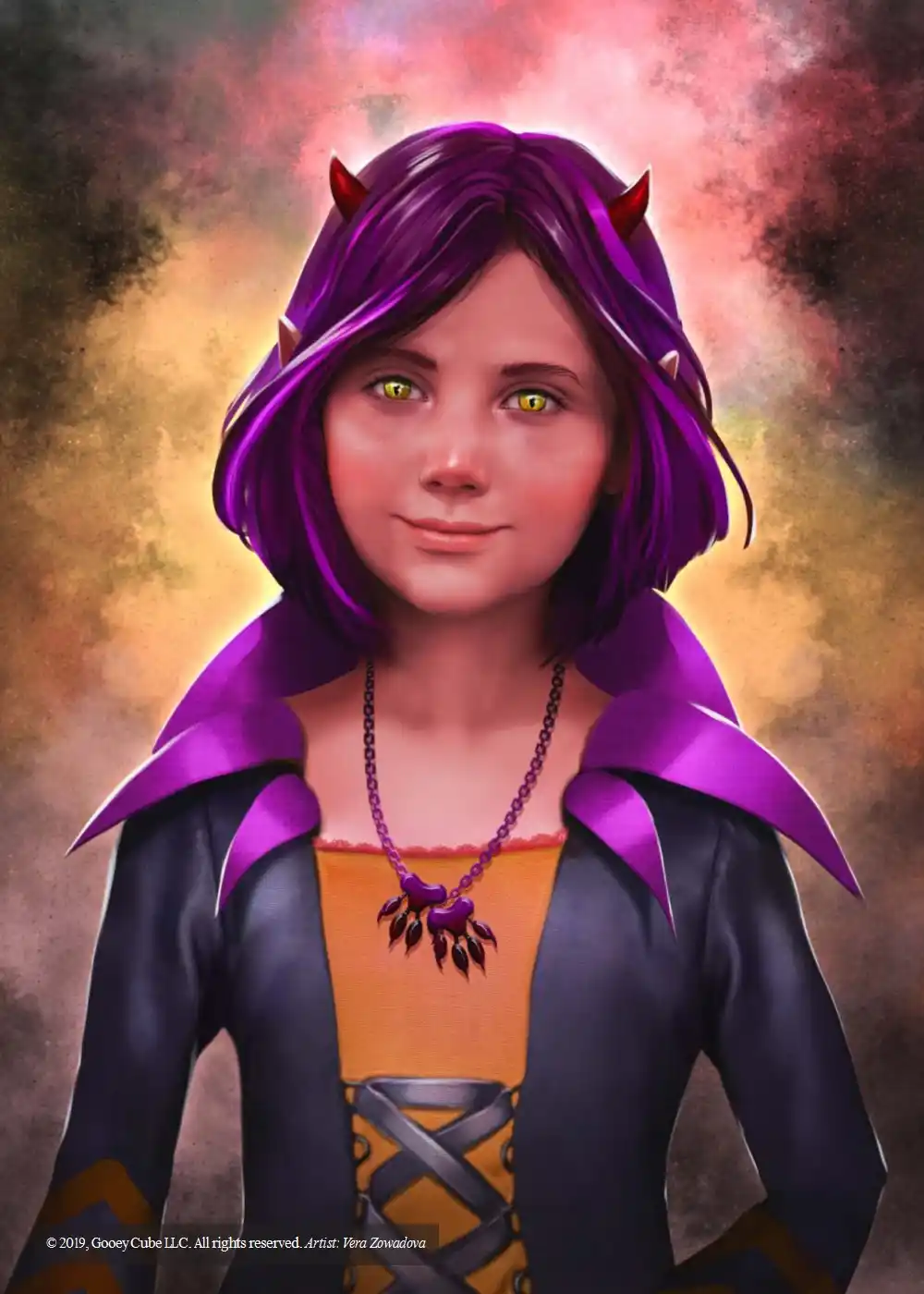
There is Kleista with her shiny eyes and tiny horns... Vezzy, mischievous and wild... she is gifted with The Sight, and will likely be “Mother Vezzy” in the years to come... Trom and Trem, eight-yearold twin boys who already can move through a crowd and clip a purse without being noticed... and Jannig, who is Borag and Calnassé’s burly, 11-year-old son.


Trom.webpTrem.webp Jannig.webp

Altogether, these many wonderful folk make up your kin, and you are thankful for each one of them. When you ponder what might have been your fate had you not ended up with the Hanataz – your thoughts go cold. The world is not kind to those of impure blood. Indeed, in some places you would not have been allowed to live. As you think on this, a smile comes to your face. Though you are not rich in material wealth; though others shun you for reasons you cannot understand... and though the road is the only home you know... it is good to be one of the Blue Veil troupe.

About the Hanataz People

The Hanataz are inspired by the Roma people who migrated from India to Europe some ten centuries or more ago. Some Roma people are, even in this modern day, still a Traveling Folk in much of the European Union. There are even some travelers in the US as well. But the Roma people are not the only group that are travelers. There are actually traveling people from a number of different ethnicities. These include the Irish, Scottish, English, German, Hungarian, and others. It is believed that one of the most famous, and well-known, groups of traveling folk to wander the paths and byways of Europe were of Bohemian origin, and it is from them that the inspiration for the Hanataz mostly stemmed from. Just like their real-world equivalent, the traveling peoples in the Wy’rded world routinely face prejudice and distrust from the populace at large, as their reputation for being vagabonds and vagrants can sometimes overshadow their generally well-meaning natures.

The Hanataz are the traveling people of the The Wy’rded World and may be found on all four of the “civilized” continents of Zyathé. They are the outcasts of “normal” society and are not welcome in virtually any town or village. As such, they have had to make do with no real home other than the road. As Hanataz, the troupe is the only family that a member knows. And their honor and devotion to the troupe is paramount.


The reason that so many “common folk” express such prejudices 
and fears toward the Hanataz is primarily due to the “Blood-Touch” of many of the Hanataz people. The Blood-Touch is a phenomenon that began occurring after the collapse of the Ethernic Civilization some 1,200 years ago (an event known as The Woe of Ruin). Since that time, each year, a small number of babes are born with strange and alien characteristics that mark them as a Blood-Touched individual. The Blood-Touch can be Deific (Havenal, Equial, or Abyssal), Draconic, Elemental, Fey, or even some unnatural blending of races such as “Ogre-Human” or “Lizardfolk-Elf.” 


Blood-Touch is identified by priests using the spell “Detect BloodTouch.” Parents often give their Blood-Touched offspring to the Hanataz to protect them from being ostracized, imprisoned, or even killed by superstitious locals. Some even do this if a child is Half-Elven, Half-Orcish, Half-Sarth, or any one of a number of different racial combinations – or if the child suffers from some horrible disfigurement or magic-resistant disease. “Pure of Blood” is a sign of status in the World of Zyathé. In more than a few places in the world, only those who are Pure of Blood may become members of government, serve as officers in the military, work in certain vocations, or even gain employment from the guilds. Though a Blood-Touch is often problematic for an individual, it can provide benefits to the one afflicted with it. For more information on the Blood-Touch, please see Secrets of Zyathé, our free player’s primer on the Wy’rded World. 


The Hanataz revere the gods Jinxx and Kizmya (the Trickster Lord and the Lady of Lucks, respectively) but also give great respect to Buffahn and Fuffahn (Lords of Brewing and Festivals), as well as 
Haleona, the Lady of Freedom; Brannad, the Rogue Lord (patron of good-natured rogues); Kaakeon, the Waylord of paths and roads; Mystos, Lord of Mysteries and Prophecy; and Chanze, Lord of Gambling. The full pantheon for Zyathé is outlined in Secrets of Zyathé.


In the world of Zyathé, the slang word “Shizzat” is considered a 
somewhat negative term and is sometimes used by those who are not Hanataz to refer to the Hanataz people. The Hanataz also use the word Shizzat to describe themselves among other troupe members (Shizzat or Shizz, individually… Shizzats, collectively). Note that a person who is not Hanataz who uses Shizzat in reference to the Hanataz folk might be viewed unkindly by a troupe member, generally depending on how the individual uses the word. 

All Hanataz troupes travel in brightly colored wagons and make 
camps on the outskirts of settlements… avoiding entering them 
other than to pass through. Since the Hanataz are effectively barred from coming into a town, provisioners often come to sell food and wares to the troupes. Interestingly though, Hanataz camps have become places of entertainment, where many of the same folk who would shun them in their home village or town come to see their performances which are called Carnivalles. 
Hanataz shows are for the commoners… not for the nobility… and are widely varied in their offerings. Gambling is popular in Hanataz Carnivalles; as are wrestling matches, jester-acts, skill-at-arms contests, and magical displays. Hanataz dancers are famed in the land as the primarily-female artists perform magical movements that mark them as Spelldancers. Escorts may also be hired and, as many of the Hanataz people have exotic heritages... this service is a popular attraction for lonely citizens. The troupes also serve interesting, spicy foods – and strong, flavored spirits – which are favored by the crowds. Lastly, all troupes have a Seeress who provides folk with views into their futures in exchange for coin.


Township leaders and many priests decry the arrival of a troupe and strongly encourage their populaces to stay away from the Carnivalles. That said, virtually everywhere the Hanataz travel, many still come to the camps to seek out the offerings of the Traveling Folk.


A number of Hanataz troupes may be found in Verdestia. These include The Fool’s Dance, The Red Wagons, The Blue Veil, The Silver Coin, The Night Song, The Purple Hue, The Bronze Bell, and The Yellow Lanterns.


There is also one permanent Hanataz settlement in Verdestia. It is a small town known as Alnea Drova which is located in one of the more dangerous areas of the continent – the Wargwood. Fascinatingly, the traveling troupes are not welcome in Alnea Drova and, in fact, would be turned away should they travel there. Individual Hanataz or small groups of such would not be turned away… but for a time would be viewed with suspicion. For more information on Verdestia, see the free Secrets of Zyathé player’s supplement available at GooeyCube.com

Legend of Zylea

This is a well-known tale amongst the Hanataz of their origin. It is told frequently over the camp fire, and even performed at Carnivalle's when a crowd might be interested in it.

Some caution as this has some minor adult content and dark themes.

Long ago, many centuries before the Woe of Ruin, there were
no Traveling Folk… for the Blood-Touch had never manifested
itself within any of the High Races. But there came a day when
the mother of all Hanataz was born. Her name was Zylea Aléana,
and she was conceived in the coupling between an Elven dancer
named Kylanee Aléana and an unnamed traveling Jester. The two
were said to have consorted on warm spring eve some two thousandyears ago under the smiling light of a full-faced Luneós – which is the major moon of the world of Zyathé. Nine months
later, on the 22nd day of the last month of the year – which is
called Fool’s Day – Zylea Aléana came into the world.


If the tales be true, she was beautiful to behold with an uncanny
wit and unnatural charm that could make the most surly King
laugh ’til he cried. Her tricks were astounding and her jests
greater than any comedic personage who had come before her.
By the time she was just 16 years old, she was entertaining in
the highest courts and playing on the grandest stages of the
Ethernic Civilization.


But Zylea had a secret that none except her mother knew. Namely – that beneath her thick make-up and billowing, clowney
clothes – she had skin of reddish-orange, dark blue scales upon
her back, and tiny horns beneath her hair. This secret was kept
well for a number of years until Saltruna Vaerdassan – one of the
High Elven Kings – determined that he would have Zylea for his
own. He devised a plan to have the woman entertain in his court
for the birthday of his brother.


But this was just a ruse to bring her to his magnificent forest
city… and into his majestic cathedral in the trees.


The night before she was to perform, the King made his way in
secret to the guest suite in which Zylea was abiding. There, from
a hidden niche, he watched her disrobe and bathe in the open
pool in her chambers. As he regarded her, he was even more
enraptured when he saw her exotic skin and beautiful shape
gleaming in the moonlight. He then came forth from his place of
hiding and exposed himself to her – his lust inflamed – his desire
for her greater than anything he had wished for in all his life.


But Zylea rebuked Saltruna, and slapped his face for taking
such liberties.


Ashamed, the King left her presence and retired to brood in his
bedchambers… and to plot his revenge upon the lass who had so
belittled him in his own castle. Thus, on the night following, at the performance for Saltruna’s brother, a stage-hook chanced
to catch upon Zylea’s costume, tearing much of it from her body
– exposing her secret for all the world to see. The King feigned
aghast at the site of her… and others in the audience followed
suit as they had been prepared to do by the King’s order. A group of priests in the audience named her a demon, and she was cast from the courts… never to perform again.


Indeed, her alien appearance marked her for all in the realm; and
she was turned out of villages and towns wherever she traveled.
Then one day, as Zylea walked alone on a road, hoping beyond
hope that she could find welcome in the next town, an old man in a Jester’s hat – driving a colorfully painted wagon pulled by huge blue horses – came up beside her. Zylea regarded the wizened figure who held the reins and was taken aback at the brightness in his eyes and the warmth of his smile. The man asked if she would like a ride, and did not seem at all bothered by her alien appearance.

Zylea agreed and the two rode together for over a year.


’Tis said that the old man told Zylea many things in their time
together… for he was wise beyond wisdom. He spoke of life and
love and purpose. He talked of the Lifesong and The Way of All
Things and the first flows of the Zyanthuus – almost as if he had
witnessed creation himself. He told Zylea that she was special…
that she would be the first of many… and that much depended on her – and on those who would come after her. He even named her people, which are called the Hanataz, even to this day. The word has no translation in the tongue of the common speech… but some have said it means “The Fool’s Dance,” while others say it refers to “The Last Laugh” in some great comedic performance.


One day, Zylea awoke to find that the old man had left. Sitting
beside her were a necklace upon which hung the symbol of the
god Jinxx; a large, leather-bound, magical tome; and the Jester’s
hat that the old man had worn. Nearby was the brightly painted
wagon and the great blue horses that pulled it. Zylea donned the
necklace and the hat, and cracked open the tome. An inscription
had been written on the inside of the cover. All it said was:


“The greatest jest is yet to be played. Learn well your part.”


The tome was said to contain all the spells of the Traveling Folk;
the methods for the crafting of their magical tents, the enchanted movements of their Spelldances, and the many incantations that create the phantasms and illusions that even today delight the crowds at the Carnivalles. Zylea studied the tome intently… learning the conjurations and the magical dances while she crafted the first of the magical tents.


Soon thereafter, people began to come to Zylea’s camp – called by some unseen compulsion. Like her, these folk also had strange afflictions, deformities, and alien characteristics. And like her, those abnormalities had made them unwelcome in their home towns. Over time, these folk built their own wagons and together, the group traveled the roads of the grand civilization – hosting the first Carnivalles and beginning the legacy of the Hanataz. And it came to pass that Zylea discovered she had the power of divination… allowing her to peer into the future and see shades of that which was to be. She named this gift “The Sight” and began to use it for the benefit of her people.


Some years later, just before the Woe of Ruin occurred, ’tis said
that the old man came once again to Zylea, who was now of an
advanced age. The old man guided her, and the troupe she oversaw, to a remote and hidden valley in the northern reaches; far from where the great calamity would originate. There, the troupe would survive the great destruction that followed and, in the aftermath, began to establish their place in the new world.
In the years following the Woe of Ruin, it seemed that more folk
than ever before were afflicted with the Blood-Touch – and the one troupe became two, then three, then several. Other troupes were raised up on other continents as well, and the Hanataz people – though still ostracized from the general populations – achieved some measure of prosperity in the centuries that came afterward

 
In the year 222 SC – which is 222 years following the Woe of
Ruin – Zylea was laid to rest in a secret shrine on the continent
of Verdestia. Her writings and teachings, however, lived after
her and have been preserved by the many Hanataz troupes that
travel the roads of the world.

Legend of Fool's Day

A legendary tale of war and revenge known to the Hanataz and many historians of the world. This details the war of the Gods far before the Woe of Ruin. Written in the style of the pettiness and debauchery featured in the greek gods, and other tales from that era. 

Some caution as this has some minor adult content and dark themes.

Long before the Woe of Ruin, far in the dim reaches of history,
Flem’eretch – the first god of decay – plotted with the other
gods of evil to destroy the gods of goodness and neutrality. The
evil gods’ hatred had been kindled in the preceding millennia
as their worshipers were continually subject to exile from the
civilizations created by the worshipers of the good and neutral
gods. In the war that followed, the entire Eterniverse was nearly
destroyed and a number of good and neutral gods were killed
by the gods of evil. One of these was Endreana, the Lifegiver,
the first goddess of growing things. She was destroyed utterly
by Flem’eretch in a terrible act of treachery, when the god of rot
went to treat with her under the pretense of brokering peace.


Now the jester-god, Jinxx – and the goddess of luck, Kizmya – both loved Endreana, who was as kind and caring of a goddess as lived in the Havens – which is the place where all the gods of good abide. And though Flem’eretch was powerful and the walls of his citadel strong, the pair determined to seek vengeance against him.


In those days, Flem’eretch, not the goddess Szilk, was the patron- god of the Duna’hadrine – which are the Dark Elven people. The god would often take them to his bed-chambers to satisfy his insatiable – and grotesque – lusts. Though few survived these encounters, most Dark Elves considered it a great honor to be so summoned.


And it came to pass that Jinxx put in place the greatest trick the
jester-god had ever devised – enhanced and augmented by all
the luck that Kizmya could bring forth. Jinxx disguised himself
as an incredibly handsome Duna’hadrine carpenter… and then
placed an even greater disguise on Kizmya to make her appear
as a most beautiful Dark Elf stone-mason. The pair then came to
the magnificent temple of Flem’eretch – in the great city of Vendu’un deep beneath what are now called the Wyrmrest Mountains. The temple had been damaged in the war, and Flem’eretch himself had commanded that it be immediately restored.


Jinxx then ensured that Evereeka, the high priestess of the temple, took notice of the pair as they worked on the restoration of the temple proper. Two days later, the gambit paid off, and the two were brought to the shrine of summoning deep below the main tabernacle. The priests there bathed them, dressed the pair in thin, silken robes, and anointed their bodies with precious oils.


Then, a sickening portal of magic – much like a curtain of dripping green ooze – was opened before them.


Stepping through, the two found themselves in the opulent –
and disgusting – bed chamber of the lord of rot.


Without preamble, Flem’eretch came for them… his vile lusts enflamed to such feverish levels that the two gods sweated as he approached. He was a horrid and repugnant monster – a mountain of revolting, sickly-green flesh – with sores and decay covering his face and body. He smelled of fetid sickness and putrescence as no grotesque thing has ever smelled. His face was the purest of evil and gall dripped in sticky strands from his wet, purple lips.


He grabbed the male first, ripping off the gossamer robe and regarding his nakedness. The Elf was handsome to be sure… young, strong of body, and beautiful to behold. It was an impressive offering to say the least. The god’s heat increased at the thought of what he would do with him.


But then his eyes were drawn to the female.


There was something about her….


Pushing the male to the corner, Flem’eretch stepped forward
and slashed the silks from the female’s body with his wretched,
taloned fingers. For some moments he paused – transfixed
at her beauty. She was as no Duna’hadrine woman he had ever
seen. Her appearance was ravishing. She had skin as smooth as
onyx… her body supple, curved, and ample… her eyes were as
pools of the deepest red… and her hair a silky white flow hanging down to her waist.


The rot god was enraptured.

Now… this was as the two gods had planned, as Jinxx had given
Kizmya the most impressive disguise he had ever conceived –
and the goddess of fortune had added her powers of luck to the
disguise to further enhance its alluredness.


Flem’eretch was nearly hypnotized by the figure standing before
him. Drool fell in gobs from his mouth as his desire was driven
to a height he had never felt before. He had to have this perfect
creature… to take her until he could no more.


And then, when he was satiated, he would rot the flesh from her
bones.


Kizmya looked upon the festering mass standing before her…
and with a guile only the goddess of luck could muster… reached
forward to stroke the rotting flesh on his cheek.


But she finished the caress with a scratch that opened an oozing
wound on the god’s face.


Flem’eretch howled in anger at the impudence of the Dark Elf.
His anger, coupled with the burning heat of his longings, nearly
pushed him to insanity. He grabbed the Elf-woman and turned
her about. He would exact a vengeance upon her the like of which none had ever felt. Then, he would ravage the male who was now cowering in the corner. And… once his anger and lusts were satisfied… he would then send his Maggot-Spawn to slay the priestess who provided these two offerings for good measure.


’Twas then that the god of decay made a fateful mistake.


Taking his thoughts from his surroundings, he placed his focus
squarely upon the brazen Dark Elf before him… his mind set only
upon making her suffer as none had before. Pushing her to the
floor, he raised his taloned hand and raked it across her back. She screamed in pain as her blood poured from the gashes, and the festering foulness beneath his long nails infected her flesh.


Flem’eretch smiled hideously at her agony.


But then something happened that set the lord of decay aback.
The she-Elf began to laugh. Then, as the woman turned her face
to him, the rot-god saw, not the face of the Duna’hadrine, but
the face of Kizmya – with triumph in her gaze.


Too late, Flem’eretch turned towards the male Elf in the corner and to his horror he heard the jingling of the bells on the
jester-god’s hat.


Jinxx’ daggers met in Flem’eretch’s neck, severing his head
from his body. In the same moment, Kizmya stabbed a hidden
shiv into the rot-god’s chest – and then – thrusting her hand
into the cavity, tore his still-pulsing heart from his body.


The two then fled from Flem’eretch’s citadel – taking the head
and the heart with them – and rejoined their godly brothers
and sisters to continue fighting the war in the planes.


Kizmya would forever bear scars on her back from the terrible
raking she received… and Jinxx’ daggers would never again be
clean. Beyond this, the Lord of Fools would also bear a strange
affliction that would cause a painful, festering wound on his
neck to appear at random times.


The gambit played by the pair was called, forevermore, the most
foolish thing that any god or mortal had ever done.


And, as the day on which they performed their scheme was the
22nd day of Dezu’un, forevermore that day was named “Fool’s
Day”… which is still celebrated today.


In the aftermath, Szilk the spider-goddess seized on the opportunity that Flem’eretch’s death offered. At much risk to herself due to the ongoing war, Szilk came forth to bless the now patronless Dark Elven peoples. And it came to pass that many of
the priesthood proclaimed the spider-goddess as the new patron-god of the Duna’hadrine.